Sphere Fluidics and PAA introduce integrated micro-plate handling and single cell analysis capabilities

Integration of S-LAB with the Cyto-Mine Single Cell Analysis System increases throughput in antibody discovery and cell line development

11 Nov 2019
Laura Sisman
Administrator / Office Personnel

Product news

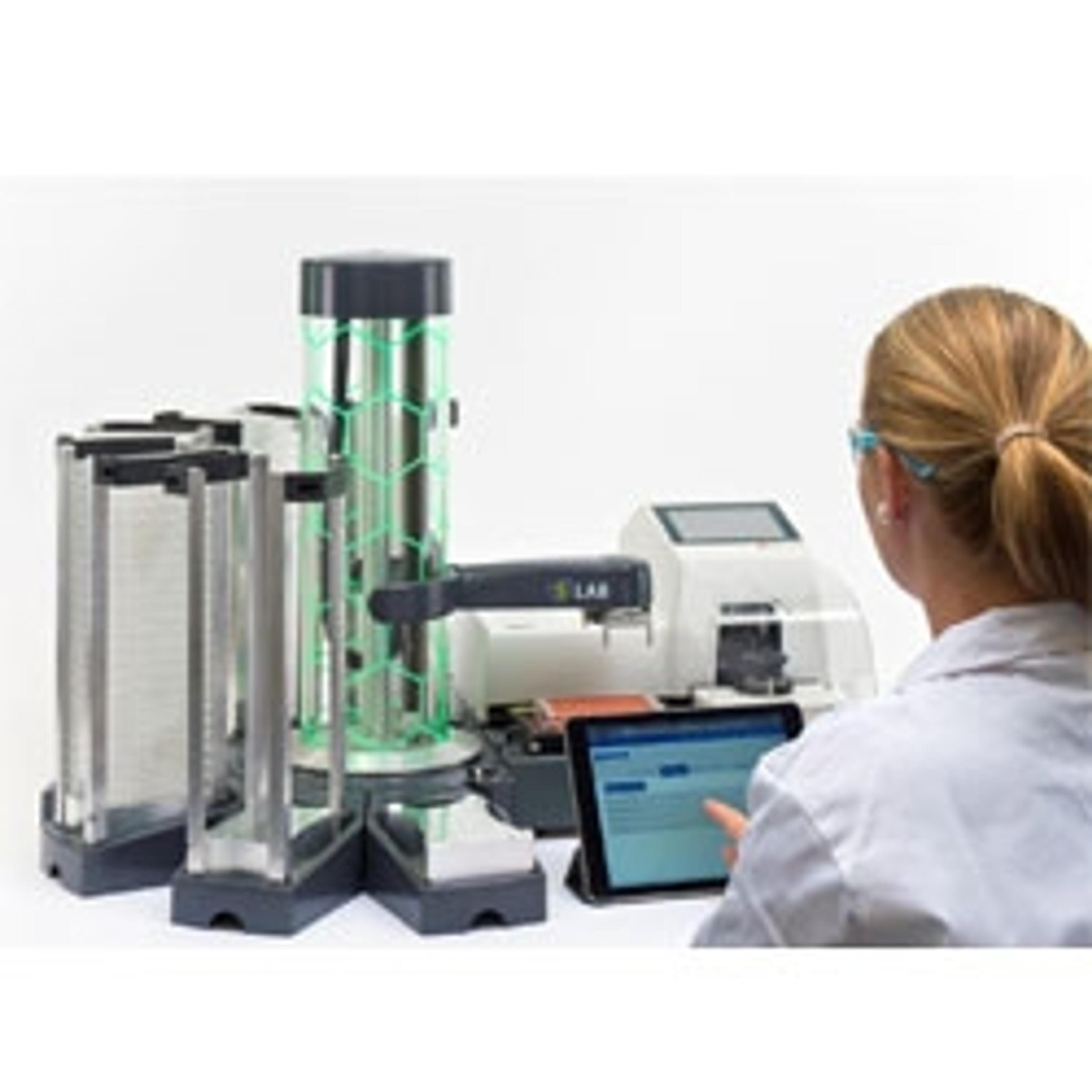
Sphere Fluidics and Peak Analysis and Automation (PAA), have announced the optimization of the Cyto-Mine® Single Cell Analysis System through integration with PAA’s automated plate handler, S-LAB™. The addition of S-LAB to the Cyto-Mine® provides researchers with a further streamlined solution for single-cell analysis in biopharmaceutical workflows.

Combining automated micro-plate handling with the Cyto-Mine® offers a simple solution to minimize hands-on involvement and reduce timelines in antibody discovery and cell line development. By replacing manual barcode scanning of multi-well microtiter plates and plate loading in the final picodroplet dispensing phase of the Cyto-Mine®, the integration of S-LAB increases user flexibility, overall throughput and efficiency. The integrated system combines single-cell screening, sorting, imaging, isolation, and clone verification, and can process up to 40 million heterogenous mammalian cells in a few hours. It has a small footprint to enable use in a cell culture hood, which, coupled with the de-lidding capability of S-LAB, ensures that the processed cells remain sterile.

The launch follows the announcement of Sphere Fluidics and PAA’s collaboration in January 2019 and consolidates 10 months of research optimizing the communication between both devices. PAA has utilized the flexible application programming interface (API) of the Cyto-Mine® Studio Software Suite to communicate easily with S-LAB across a range of analytical cellular procedures, offering a simple add-on for Cyto-Mine® users.

Dr. Rob Marchmont, VP of Sales and Marketing, Sphere Fluidics, commented: “Peak Analysis and Automation has a strong reputation as a trusted supplier of lab automation solutions, hence our decision to partner with the team to support our customers’ requirements for a complete, automated workflow. The integration of our Cyto-Mine® with PAA’s S-LAB gives customers the freedom and flexibility to incorporate both instruments into multiple workflows, to further reduce their biopharmaceutical timelines. We will continue to work with PAA to further the opportunities in the synergy of our technologies.”

Dr. Malcolm Crook, Technical Director, Peak Analysis and Automation, said: “This collaboration illustrates S-LAB’s cost-effectiveness and ease of use, in addition to its adaptability to different scientific applications. We look forward to our continued partnership with Sphere Fluidics to bring automated solutions to customers across a broad range of processes.”

Want more of the latest science news straight to your inbox? Become a SelectScience member for free today>>

Cyto-Mine®

Sphere Bio

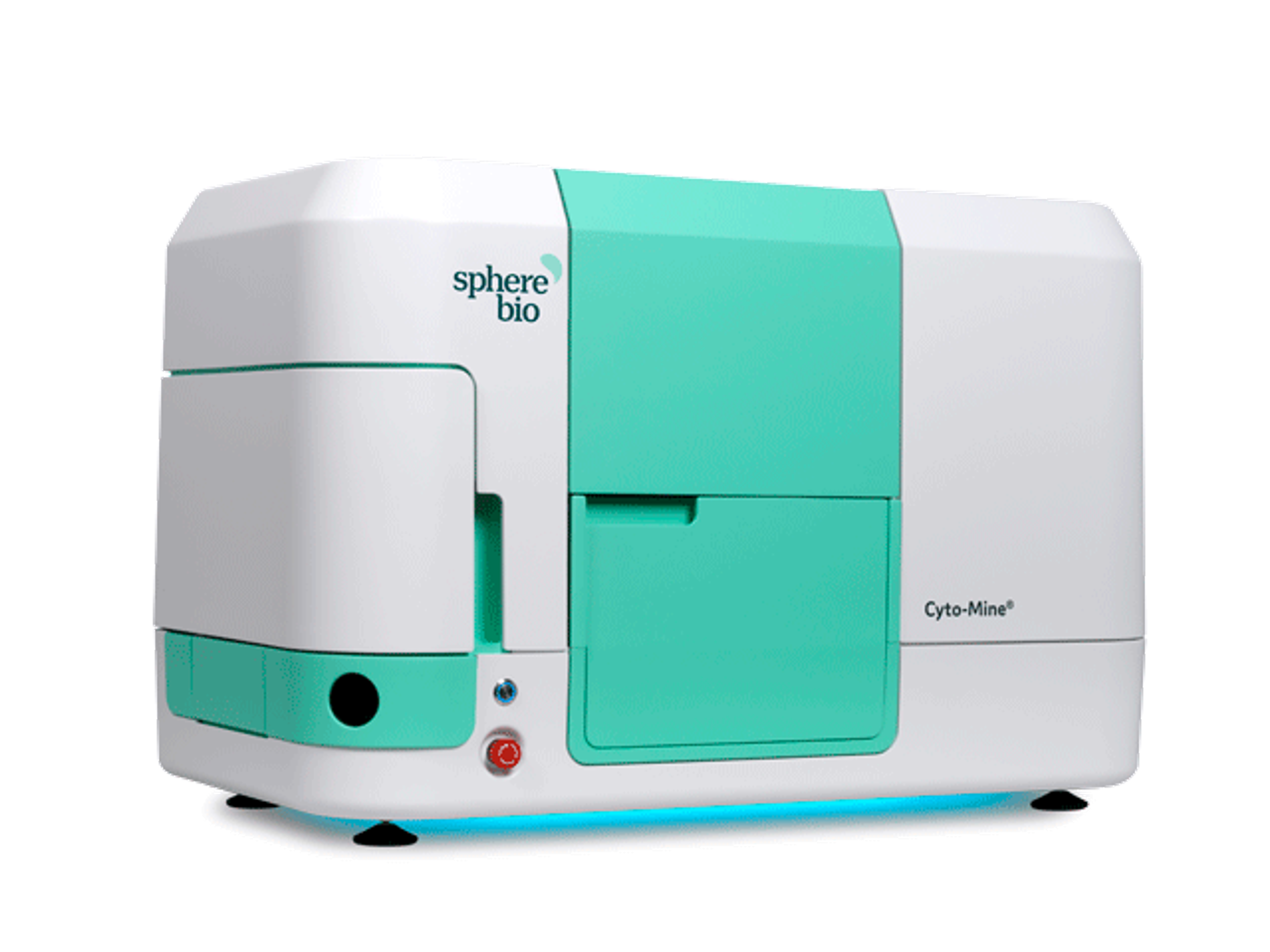
Cyto-Mine® - The Single Cell Analysis and Monoclonality Assurance System. Cyto-Mine®  is a fully automated platform which integrates high-throughput and selective single cell screening, sorting, isolation and monoclonality assurance using high quality imaging.

(2)

Links

Tags

AntibodiesAntibodies are used in techniques such as confocal and fluorescence microscopy, flow cytometry, ELISA, ELISPOT, immunohistochemistry, western blotting and immunopreciptation. Select specific antigen reactivity, high specific affinity, low non-specific binding, monoclonal or polyclonal, primary or secondary antibodies and associated conjugates such as an enzyme or dye for visualization.Cell / Tissue CultureCell culture or tissue culture is used to study the biology of cells or tissues and to isolate cellular products in an environment which can be manipulated and well defined. Accurately control your culture environment with bioreactors or culture incubators, bind your cells to a surface or together with an extracellular matrix. Distinguish cell types with differential media or proliferate cells with certain characteristics using selective media. Enrich your media with supplements such as growth factors, sera and vitamins. Find the best cell and tissue culture products, kits and equipment in our peer-reviewed product directory: compare products, check customer reviews and receive pricing direct from manufacturers.MicroplatesMicroplates are multi-well plates used to increase the throughput of biological investigations. The number of wells microplates contain can range from 6 to 3243 wells, with the 96-well format being the most commonly used. Microplates can come tailored for a range of applications including cell culture, PCR, filtration, storage, non-binding surface, protein crystallization, as well as pre-coated, deep well and normal Standard microplates. Additionally, options for microplate colors include clear , black, white or black with clear bottom and white with clear bottom for absorbance microplate reader applications. Find the best microplates for your lab in our peer-reviewed product directory: compare products, check customer reviews and receive pricing direct from manufacturers.Cell Lines Stem Cells and Primary CellsPrimary cell cultures, established cell lines and stem cells are vital for <i>in vitro</i> and <i>ex vivo</i> experimentation. High-quality cells, optimized for your applications, alongside optimized cell substrates, growth medium and supplements, are critical for experimental success. Explore a range of cells suitable for your applications, including isogenic cell lines, competent cells, induced pluripotent stem cell (iPSC)-derived cell lines, fungal/bacterial/mammalian cell lines, stem cells and cancer cell lines. Find the best cells for your research in our peer-reviewed product directory: compare products, check customer reviews and receive pricing direct from manufacturers.Microplate Readers / DetectorsMicroplate readers are used to automate the detection and analysis of labeled or label-free components in microplates during assays or live-cell monitoring. Microplate readers are generally distinguished by their mode of detection. Types include absorbance, luminescence, fluorescence intensity, fluorescence polarization, TRF / FRET and multimode microplate readers. Microplate readers deliver a high throughput of samples by reading multiple wells simultaneously, with the 96-well format the most commonly used. As a result, microplate readers are often used in the drug discovery, bioassays, research and pharmaceutical industries for screening applications. Microplate loading can also be automated, with robotic microplate stackers to increase throughput. Find the best microplate readers in our peer-reviewed product directory: compare products, check customer reviews and receive pricing direct from manufacturers.Plate ProcessingAutomated plate processing is used in microplate technologies for high-throughput, speed and efficiency. Plate processing systems include microplate handlers for moving plates, heat sealers, stackers and carousels for storage, retrieval and delivery, microplate washers and piercers. Useful features of plate processors include walk-away automation, compatibility and easy integration with microplate systems.Automated Liquid HandlingAutomated liquid handling equipment is used to mix, dilute and dispense allotted volumes of liquid into microplates and other vessels automatically. The robotic, liquid handling arms can dispense from single channel to 3456 multichannel as well as operate nanoliter dispensing, enabling high throughput of samples. Find the best automated liquid handlers in our peer-reviewed product directory: compare products, check customer reviews and receive pricing direct from manufacturers.In Vivo Imaging Systems<i>In vivo</i> imaging systems, including pre-clinical imaging systems and medical imaging systems are used to non-invasively visualize and capture images of live animals and plants. Monitor the natural processes or diseases of your subjects using small-animal pre-clinical imaging systems, including single photon positron emission tomography (SPECT), positron emission tomography (PET), computed tomography (micro-CT), magnetic resonance imaging (MRI), X-ray radiography, ultrasound, fluorescence and bioluminescence imagers. Multimodal systems and software solutions are also available for correlative analysis of organ, tissue, cell, or molecular-level processes. Find the best in vivo imaging products in our peer-reviewed product directory: compare products, check customer reviews and receive pricing direct from manufacturers.Cell ImagingCell imaging can be achieved using a number of techniques including confocal microscopy, transmission electron microscopy, atomic force microscopy, and light sheet microscopy.Single Cell AnalysisSingle-cell analysis involves studying individual cells to gain insights into their behavior, gene expression, and function. This approach is valuable in cancer research, stem cell biology, and immunology. Explore single-cell analysis products in our peer-reviewed product directory; compare products, check reviews, and get pricing directly from manufacturers.Cell SortingCell sorting isolates specific cell populations based on physical or molecular characteristics, essential in immunology, cancer research, and regenerative medicine. Techniques like flow cytometry improve accuracy and speed. Compare cell sorting instruments and solutions in our product directory.Antibodies