Spatial biology for cancer research: A powerful new tool

These resources share the latest progress and technological advances in spatial biology, which can be utilized to improve cancer research

17 Nov 2022

Jess Smith
Analyst / Analytical Chemist

Editorial article

Improvements in spatial biology for cancer research techniques can support a range of different research areas. Developments can enhance imaging, spatial phenotyping, cell analysis, and general understanding of the biology of tumors and other tissues within their existing structures.

We’ve selected a range of resources that present the latest insights into the field of spatial biology for cancer research.

Bringing spatial biology to the clinic

Dr Kulasinghe brings spatial biology to the clinic

In this article, spatial transcriptomics pioneer, Dr. Arutha Kulasinghe, shares his latest work utilizing spatial biology in cancer research to understand the underlying tumor biology, using an integrative multi-omics approach, and how it could inform therapy decisions.


Read article


Predicting cancer immunotherapy response by highly multiplexed tumor imaging
spatial biology and cancer research

The tumor microenvironment (TME) – the main site of tumor-immune cell interactions – crucially regulates antitumoral immunity and immunotherapy response. Watch this on-demand webinar to discover how highly multiplexed microscopy can be used to thoroughly characterize tumor microenvironment cell types, their spatial interactions, and the tumor architecture to predict patient response to immunotherapy in various cancers.


Watch on-demand


Spatial biology: Context matters

Context matters in spatial biology for cancer research

This video by Akoya Biosciences explains the importance and potential of spatial phenotyping in fields such as cancer, immunology and infectious disease research, and how imaging solutions can enable you to phenotype the full cellular diversity of a tissue sample, with spatial context, just like a single cell GPS.


Watch video


Taking a multi-omic multiplexing approach to spatial biology
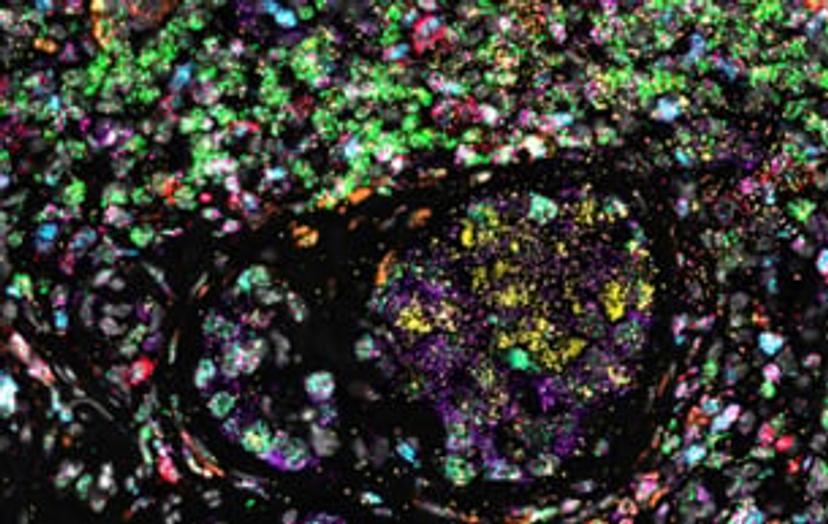
Multi omics, spatial biology and cancer research

In this free eBook, we present a series of case studies illustrating how a multi-omic multiplexing approach can be leveraged to gain a comprehensive view of spatial biology, including a multiplexed in situ transcriptomic method for the spatial mapping of target genes in highly complex and heterogenous FFPE tumor tissues, and much more.


Download eBook


Spatial phenotyping: Bringing the power of spatial biology to cancer research and therapy
spatial biology, cancer research and spatial phenotyping

In this whitepaper, Leinco Technologies explores how spatial-omics, especially spatial phenotyping, is revolutionizing translational medicine for the treatment of cancer, and the key role played by high-quality antibodies in the generation of data that is reliable and reproducible.


Read paper


The power of spatial biology: A microscopy guide

Spatial biology and cancer research, a microscopy guide

Location is key to understanding biological mechanisms, from the inner workings of subcellular components to how cells form and interact across normal and diseased tissues. Many application areas are seeing a growing trend toward spatial biology, which uses transcriptomics, imaging, and other approaches to put dissociated cellular information into spatial context. In this free eBook, explore key microscopy techniques across the spatial biology workflow. Plus, we look 'under the microscope' at how these can be applied to study a wide range of spatial biology questions and gain expert insight into the imaging solutions designed to meet a variety of different research needs and priorities.


Download eBook


The Orion Platform for Spatial Biology

In this product brochure, discover the Orion™ novel technology and services platform offering a fast path to whole slide, high-plex imaging. Combining speed and resolution, the Orion platform enables comprehensive phenotypic profiling and characterization of tissue architecture, tumor heterogeneity, and the immune response for whole sections in hours.


Download brochure


Links

Tags

Cell / Tissue CultureCell culture or tissue culture is used to study the biology of cells or tissues and to isolate cellular products in an environment which can be manipulated and well defined. Accurately control your culture environment with bioreactors or culture incubators, bind your cells to a surface or together with an extracellular matrix. Distinguish cell types with differential media or proliferate cells with certain characteristics using selective media. Enrich your media with supplements such as growth factors, sera and vitamins. Find the best cell and tissue culture products, kits and equipment in our peer-reviewed product directory: compare products, check customer reviews and receive pricing direct from manufacturers.ProteomicsProteomics is the systemic bioinformatics study of proteins and amino acids, including their structure, size, function and identification. Tools used in proteomics include chromatography, blotting and gels, protein arrays, mass spectrometry and ELISA and associated analysis software. Analyzers and proteomic systems should be sensitive, high resolution, fast and may be automated for high-throughput.Sample ManagementSample management systems include sample storage devices such as freezers and plate storers, sample environment enclosures and sample organization, retrieval and sorter systems. Useful system features include high-throughput, automation, robotic arms, automated liquid handling and associated database systems. Accessories in sample management include barcode scanners, heat sealers and tubes.BiomarkersBiomarkers are biological markers which can be measured and evaluated to indicate a biological state. The use of biomarkers in research and diagnosis can indicate a normal or disease state or drug response of cells / tissues. Biomarkers include genetic markers, cell surface markers such as antigens, antibodies or receptors and secreted molecules such as cytokines. An assay system is required for identification of biomarkers. :In Vivo Imaging Systems<i>In vivo</i> imaging systems, including pre-clinical imaging systems and medical imaging systems are used to non-invasively visualize and capture images of live animals and plants. Monitor the natural processes or diseases of your subjects using small-animal pre-clinical imaging systems, including single photon positron emission tomography (SPECT), positron emission tomography (PET), computed tomography (micro-CT), magnetic resonance imaging (MRI), X-ray radiography, ultrasound, fluorescence and bioluminescence imagers. Multimodal systems and software solutions are also available for correlative analysis of organ, tissue, cell, or molecular-level processes. Find the best in vivo imaging products in our peer-reviewed product directory: compare products, check customer reviews and receive pricing direct from manufacturers.Light MicroscopyLight microscopes or optical microscopes are used to visualize microscale objects under magnification, including cells, clinical specimens and materials. Lab equipment for light microscopy includes confocal microscopes, fluorescence microscopes, zoom and stereo microscopes. Microscope slides and imaging reagents are available for visualizing samples, as well as various microscope stages and incubators for large or temperature-sensitive samples. Find the best light microscopes in our peer-reviewed product directory: compare products, check customer reviews and receive pricing direct from manufacturers.Electron MicroscopyElectron microscopes (EM) are used to create high-resolution images of samples at the nanoscale by means of an accelerated beam of electrons as a source of illumination. Types of electron microscope include scanning electron microscopes (SEM), transmission electron microscopes (TEM), scanning transmission electron microscopes (STEM) and cryo-electron microscopes. Focused ion beam (FIB) microscopes are useful for modifying or milling a sample surface with nanometer precision, as well as imaging. Find the best electron microscopes in our peer-reviewed product directory: compare products, check customer reviews and receive pricing direct from manufacturers.Protein QuantificationThe detection and quantification of proteins in a sample is vital across life sciences, pharmaceutical research and clinical diagnostics, and a variety of equipment is available to scientists to simplify the workflow. Proteins of interest can be easily labeled and detected on light-based detection instruments. Immunoassay kits allow you to identify a specific protein of interest and protein detection beads or antibody microarrays allow you to identify multiple specific proteins at once. Protein interactions and enzyme activity can also be monitored with protein-protein interaction assays. Additionally, the biophysical characterization of proteins is made easy with biokinetic analyzers. Find the best protein detection and quantification products in our peer-reviewed product directory: compare products, check customer reviews and receive pricing direct from manufacturers.MetabolomicsMetabolomics is the study of small metabolites (the intermediates and products of metabolism). It involves the identification and quantification of cellular metabolites using analytical technologies such as GC, HPLC, NMR, and LC/MS.3D Imaging3D imaging technologies allow for the visualization and analysis of three-dimensional structures at high resolution. These systems are used in fields like molecular biology, material science, and medical diagnostics. 3D imaging can be applied to visualize cells, tissues, and organs, providing valuable insights into their structure and function. Browse our peer-reviewed product directory to find the best 3D imaging solutions, compare products, check reviews, and get pricing directly from manufacturers.Cancer ResearchCancer research aims to understand the mechanisms of cancer development and progression to improve prevention, diagnosis, and treatment. From molecular biology to clinical trials, research spans a wide range of disciplines, including immunotherapy, targeted therapies, and drug discovery. Explore the best cancer research products in our peer-reviewed product directory; compare products, check reviews, and get pricing directly from manufacturers.MicroscopyMicroscopy is a technique used to observe small objects in detail, from cells to materials, using light or electron microscopes. It enables researchers to examine structures with high resolution, aiding in fields such as biology, medicine, and materials science. With advanced microscopy techniques, scientists can gain insights into cellular processes, tissue structures, and material properties. Explore the best microscopy solutions in our peer-reviewed product directory, compare products, read customer reviews, and get pricing directly from manufacturers.TumorsTumor research focuses on understanding abnormal cell growth that leads to cancer. Identifying biomarkers, studying tumor microenvironments, and developing targeted therapies are critical for advancing cancer treatment. Early detection and personalized treatment options are key to improving outcomes for patients. Browse our peer-reviewed product directory to explore tools for tumor research, diagnostics, and cancer therapies; compare products, read customer reviews, and get pricing directly from manufacturers.MultiplexingMultiplexing refers to the ability to measure multiple targets or analytes simultaneously in a single experiment. This technique is valuable for high-throughput screening, diagnostics, and complex assays, as it increases efficiency and data quality. Browse our peer-reviewed product directory to find the best multiplexing products, compare tools, check reviews, and get pricing directly from manufacturers.
Spatial biology for cancer research: A powerful new tool