
Simplify volatiles analysis (Part 2): Applying routine lab techniques to direct MS
Join us on Tuesday, October 6, to learn how adopt direct mass spectrometry in your routine analysis workflow
20 Sept 2020
Expert insights
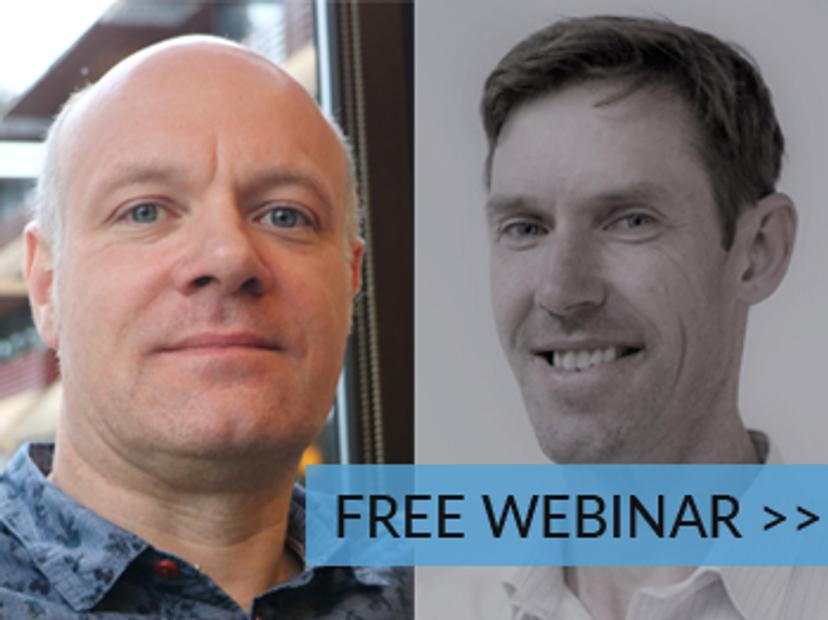
In this webinar (the second in a series of four), we answer the frequently asked question: “How can I adopt direct mass spectrometry in my routine analysis workflow?” By combining direct mass spec – in the form of selected ion flow tube mass spectrometry (SIFT-MS) – with conventional laboratory automation, most routine analysis techniques are readily applied. Examples include use of sequence tables, full calibration approaches (including QCCs), and use of standard additions.
Join the second of four webinars, on Tuesday, October 6, to hear from Dr. Mark Perkins, Senior Applications Chemist at Anatune Limited, and Dr. Vaughan Langford, Principle Scientist at Syft Technologies, as they discuss the adaptation of these routine techniques to automated SIFT-MS is illustrated with case studies applicable to environmental, consumer product, and biomedical laboratory testing. In particular, head-to-head comparison of GC/MS and SIFT-MS for headspace analysis of volatiles in blood plasma will be described.
Note: Method validation approaches are the focus of the third webinar in this series.
Register hereKey Learning Objectives:
- Very brief review of SIFT-MS and its automation
- How easy it is to adapt existing, proven laboratory procedures and techniques to SIFT-MS
- Examples of routine analysis techniques using SIFT-MS with relevant case studies covering sequence tables, calibration, QCCs, SSTs, standard additions, and internal standards
- A head-to-head comparison of GC/MS and SIFT-MS for headspace analysis of volatiles in blood plasma
Who should attend:
- Laboratory managers and analysts in routine industrial and contract testing and research laboratories, particularly those working with the analysis of volatiles
- Laboratory managers and analysts in pharmaceutical, biomedical, industrial, consumer product, and environmental laboratories
Certificate of attendance
All webinar participants can request a certificate of attendance and a learning outcomes summary document for continuing education purposes.
This webinar will run on Tuesday, October 6, at:
- 16:00 BST
- 17:00 CEST
- 08:00 PDT
- 11:00 EDT
Register for this webinar here>>
SelectScience runs more than 10 webinars a months across various scientific topics, discover more of our webinars here>>