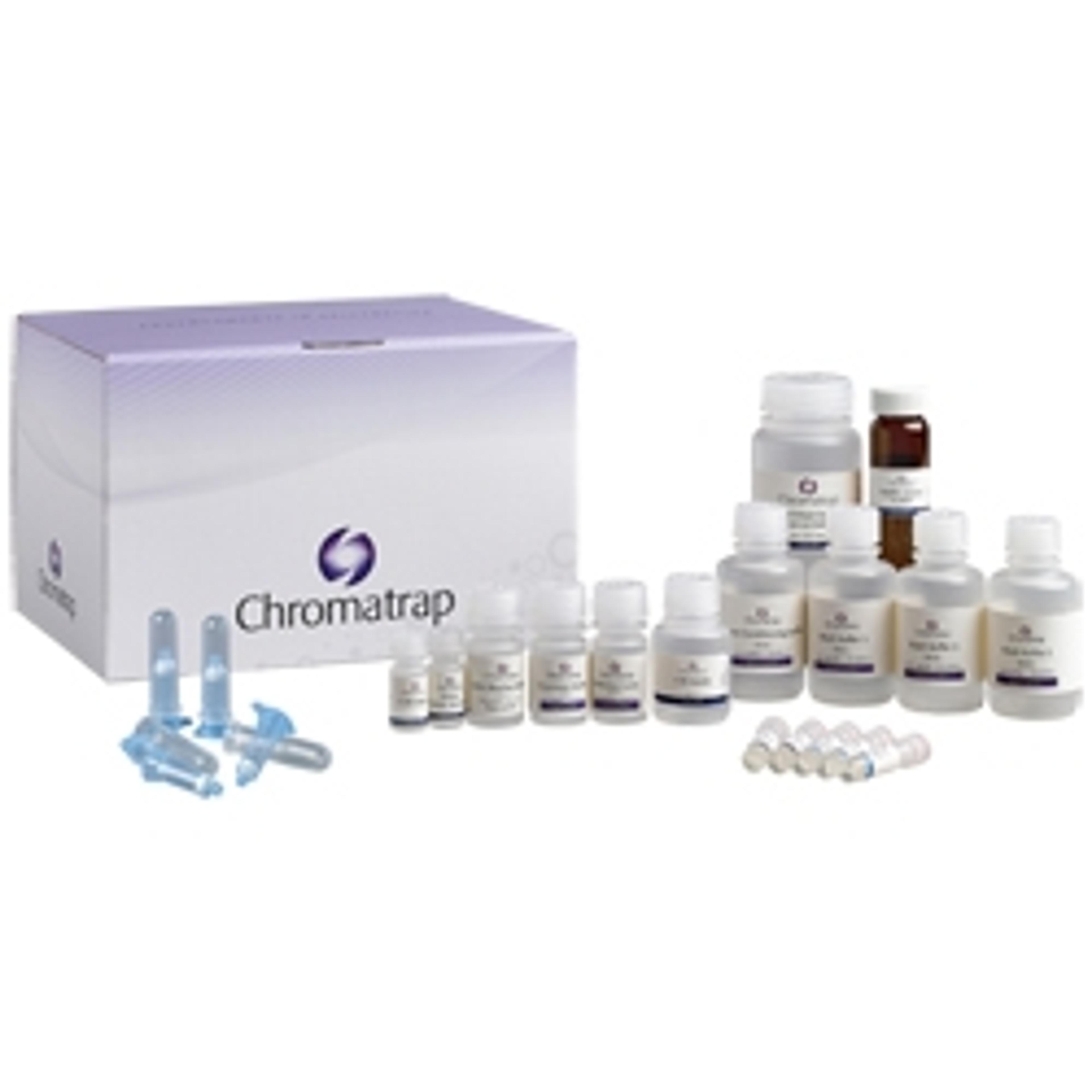
Simple & Efficient Protocol for Native Chromatin Immunoprecipitation

Simple & Efficient Protocol for Native Chromatin Immunoprecipitation

22 Jan 2016
Alex Waite
Editorial Assistant

Product news

Chromatrap, a business unit of Porvair Sciences, announces a new patented protocol that is able to simply, quickly and efficiently enrich transcription factors from Native Chromatin.

Native Chromatin Immunoprecipitation (N-ChIP) is an alternative to traditional cross-linked (X-ChIP), which removes the need for fixing cells with formaldehyde prior to extraction. As a consequence, the cells remain in a more natural 'native state'. The DNA/protein fragments are selectively immunoprecipitated using antibodies directed against the protein of interest and the resulting fractions treated to separate the DNA and protein components. Native ChIP is the technique of choice for the study of histone modifiers and certain abundant transcription factors that are likely to be bound to DNA.

Traditionally Native ChIP assays have involved five key time-consuming

steps: Preparation of chromatin to be analyzed from cells; Immunoprecipitation of chromatin using a high quality ChIP-validated antibody specific to the target protein; isolation of the precipitated chromatin fragments; DNA recovery from the precipitated product and finally DNA analysis.

The ChromatrapR N-ChIP kit provides a new quicker, easier and more efficient way of performing N-ChIP assays (Patent No. GB2482209). It uses discs of an inert, porous, polymer to which Protein A or Protein G has been covalently attached to maximize the capture efficiency of the target chromatin/antibody complex.

Unlike other approaches the ChromatrapR N-ChIP kit eliminates using agarose or magnetic beads resulting in more sample being retained during the extraction process. In addition, ChromatrapR N-ChIP technology increases the affinity of antibody binding to antigens on Native chromatin as peptides are more accessible. As a result, the ChromatrapR N-ChIP kit sets a new standard for enriching transcription factors from Native Chromatin.

For further information on ChromatrapR N-ChIP protocol please click here and to see the range of products from Porvair click here.

Chromatrap® FFPE ChIP Kit

Chromatrap

Epigenetic identification and targeting in clinical FFPE tissues is a crucial step for potential epigenetic therapeutics and personalized medicine therapies. FFPE is a standard method to archive and preserve medical tissue biopsy samples. These archives, kept in many hospitals world-wide, are a huge, rich and untapped sample resource for genetic research. Due to the cross-linking of proteins by formaldehyde, FFPE tissues present a particular challenge for ChIP analysis. In addition, the small size and delicate nature of the tissue, and the difficulty in extracting samples from paraffin, used to provide tissue support after preservation, can damage complex cellular complexes such as chromatin. ChIP assays from these samples have therefore proved time consuming and difficult.  Chromatrap® FFPE ChIP kit overcomes these issues and provides the following benefits: Provides greater flexibility and more IPs per sample Works across a range of FFPE samples, human and animal Available in 96-well plate or spin column format Works equally well with high and low abundant marks Provides sufficient DNA to perform library preps for ChIP-seq assays

(0)

Links

Tags

AntibodiesAntibodies are used in techniques such as confocal and fluorescence microscopy, flow cytometry, ELISA, ELISPOT, immunohistochemistry, western blotting and immunopreciptation. Select specific antigen reactivity, high specific affinity, low non-specific binding, monoclonal or polyclonal, primary or secondary antibodies and associated conjugates such as an enzyme or dye for visualization.Lab-on-a-ChipLab-on-a-chip (LOC) technology uses microfluidic chips, such as microarrays, to perform biochemical assays on a small scale. Benefits of lab-on-a-chip include the small volume of sample required as well as the speed of analysis. In selecting lab-on-a-chip devices consider the assay, cost, reliability, sensitivity and signal to noise ratio.ProteomicsProteomics is the systemic bioinformatics study of proteins and amino acids, including their structure, size, function and identification. Tools used in proteomics include chromatography, blotting and gels, protein arrays, mass spectrometry and ELISA and associated analysis software. Analyzers and proteomic systems should be sensitive, high resolution, fast and may be automated for high-throughput.Microarray AnalysisMicroarrays, also known as biochips, are used for the detection and analysis of multiple genes, proteins, antibodies, or biomarkers on a single microchip. This can reveal information on protein or gene expression, single nucleotide polymorphism (SNP), copy number variation (CNV), epigenetics and patient health in clinical diagnostic tests. Discover a range of microarray scanners and prefabricated antibody, protein, RNA and DNA microarrays for your analysis or consider creating your own custom microarrays with a microarray printer. Find the best microarray products in our peer-reviewed product directory: compare products, check customer reviews and receive pricing direct from manufacturers.ImmunologyImmunological techniques measure and characterize immune responses. Immunology kits and analysis systems often use techniques such as ELISA, radioimmunoassay (RIA) and immunodiffusion assays, Immunohistochemistry, and flow cytometry. Immunologists use equipment such as flow Cytometers, plate readers, plate washers and fluorescent microscopes.DNA / RNA Extraction and PurificationPurified DNA and RNA are required for numerous downstream molecular biology applications. Consequently, the importance of high-quality DNA/RNA extraction and purification equipment cannot be underestimated. Many purification kits are available and are typically optimized for nucleic acid type and source, including plasmid DNA, genomic DNA, mRNA, RNA and viral nucleic acid purification kits. Automated extraction and purification of nucleic acids can be implemented with magnetic bead separator instruments or high-throughput purification workstations. Find the best DNA/RNA extraction and purification equipment in our peer-reviewed product directory: compare products, check customer reviews and receive pricing direct from manufacturers.ImmunoassayImmunoassays are laboratory tests that utilize antibody-antigen interactions to detect specific substances. They are widely used in diagnostics for detecting diseases, drug testing, and environmental monitoring. These assays offer rapid, sensitive, and precise detection of biomarkers, making them invaluable in clinical and research labs. Browse our peer-reviewed product directory to compare immunoassay systems, read user reviews, and get pricing directly from manufacturers.ChIP-SequencingProtein BiologyThe analysis of protein expression, identity and function is vital for many areas of life science research and drug discovery. Some of the most commonly used techniques in protein analysis include Western blotting, electrophoresis and mass spectrometry.Histone ModificationAntibody ArraysImmunoprecipitationPeptidesPeptides are short chains of amino acids that play key roles in biological processes, including signaling, immune responses, and enzyme regulation. Peptide research is critical in drug discovery, diagnostics, and vaccine development. Browse our peer-reviewed product directory to find the best peptides and peptide-related products, compare options, check reviews, and get pricing directly from manufacturers.ChromatinTranscriptomics