
Shimadzu’s New Atomic Emission Spectrometers Reduce Analysis Cost While Providing Highest Industry Performance
7 Nov 2014
Product news
Shimadzu Scientific Instruments has introduced the ICPE-9800 Series Simultaneous ICP Atomic Emission Spectrometers, representing the ultimate spectrometry of its kind for chemical, environmental, pharmaceutical, food, metal and electronics analysis. The series includes the ICPE-9810 (Axial) and ICPE-9820 spectrometers (Dual View).
With a photometric system ideal for analyzing a large variety of samples, the ICPE-9800 series spectrometers are built to ensure maximum performance. The vertically oriented plasma torch minimizes adhesion of samples on the torch walls, reducing carryover. This allows for simultaneous analysis of trace and high-concentration samples without concern for contamination by simply switching between axial and radial views.
The ICPE-9800 Series features a leading-edge CCD (charge-coupled device) detector with one million pixels. Using this large one-inch sensor, data for all wavelengths is captured as an image on a two-dimensional plane in the same way that a camera captures a photograph. The wavelength can be changed after measurement is complete and all of the data is saved for future review, helping to eliminate measurement errors and reduce the work needed for repeated measurements.
Three key features on the ICPE-9800 systems help reduce argon gas consumption to about half of normal levels, leading to considerable cost savings:
• Eco Mode automatically reduces the plasma gas flow rate during standby mode.
• The mini-torch system consumes only about half as much argon gas as standard torches.
• The vacuum spectrometer does not need to be purged continuously with high-purity argon or nitrogen gas.
With the ICPE solution Smart Assist software, analysis can be started smoothly every time. By simply clicking icons on the assistant bar in order, users can select the ideal analytical method, ignite the plasma, calibrate the instrument, register the sample and start the measurement. The Assistant functions help users optimize methods by automatically acquiring wavelength data, selecting optimal wavelengths, diagnosing methods and providing inter-element correction for an all-around smooth analysis process.
In addition to the standard accessories, additional torches, chambers, nebulizers, drains and other parts are available for the ICPE-9800 series so users can customize their systems for their specific application needs.
Related products
Request Quote for All Products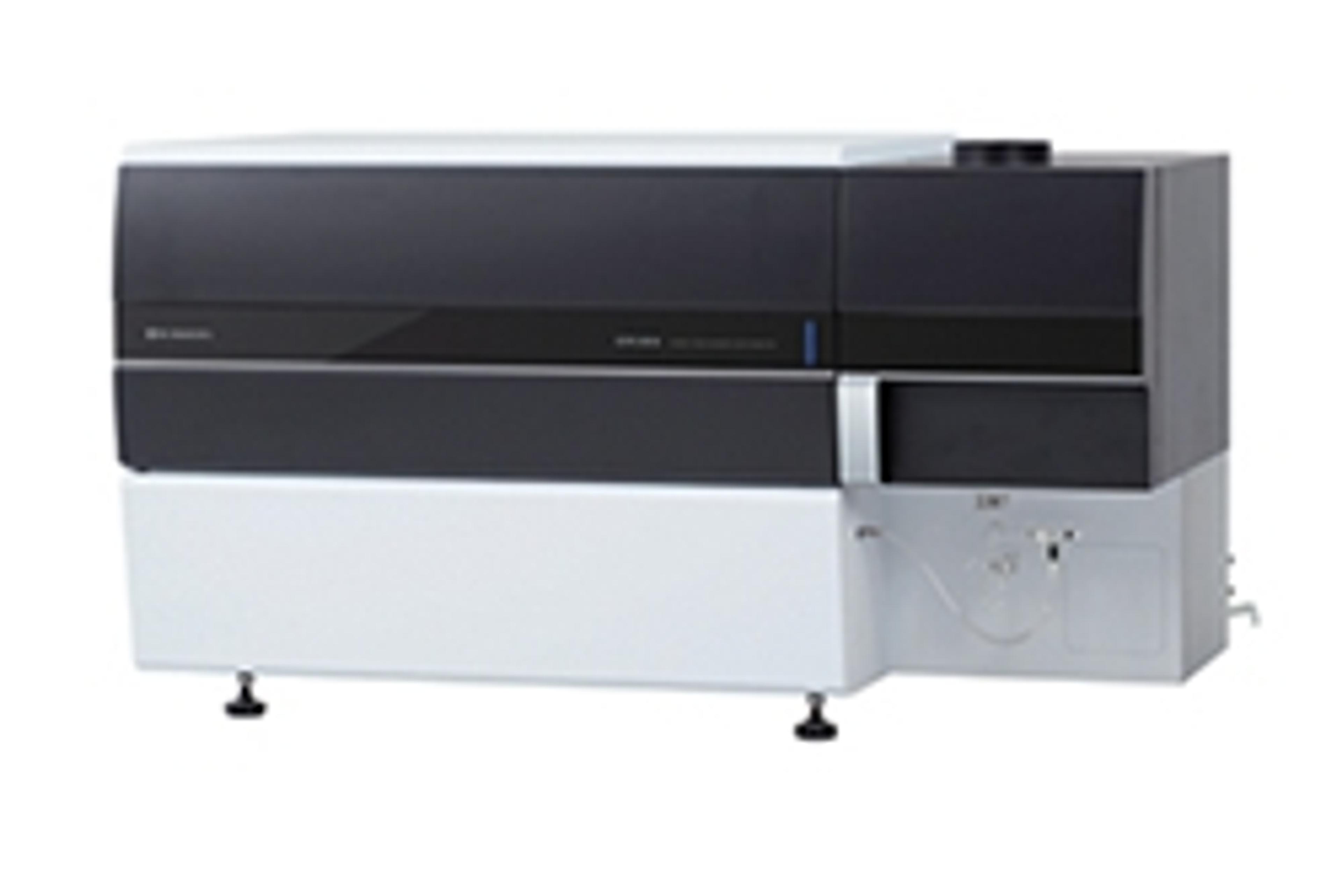
ICPE-9800 Series: Simultaneous ICP Emission Spectrometers
Shimadzu CorporationFeaturing user-friendly software and a proprietary design, the simultaneous ICPE-9800 series instruments enable sensitive, high-speed simultaneous analysis of multiple elements regardless of concentration levels while significantly reducing operating costs. Key features include a vertically oriented plasma torch with dual view (axial/radial) capabilities that achieves the ideal combination of sensitivity and dynamic range, and a leading-edge CCD (charge-coupled device) detector with one million pixels. Eco Mode and a mini-torch system significantly minimize argon gas consumption, resulting in substantial cost savings. Easy-to-use, 21 CFR compliant software helps users optimize methods and enables a smooth analysis process. The Assistant functions help users optimize methods by automatically acquiring wavelength data, selecting optimal wavelengths, diagnosing methods and providing inter-element correction for an all-around smooth analysis process. In addition to the standard accessories, additional torches, chambers, nebulizers, drains and other parts are available for the ICPE-9800 series so users can customize their systems for their specific application needs.