Shimadzu’s Announces New Inductively Coupled Plasma Mass Spectrometer (ICP-MS)

ICPMS-2030 offers outstanding reliability, exceptional ease of use, and the industry’s lowest operating costs

8 Mar 2016
Alex Waite
Editorial Assistant

Product news

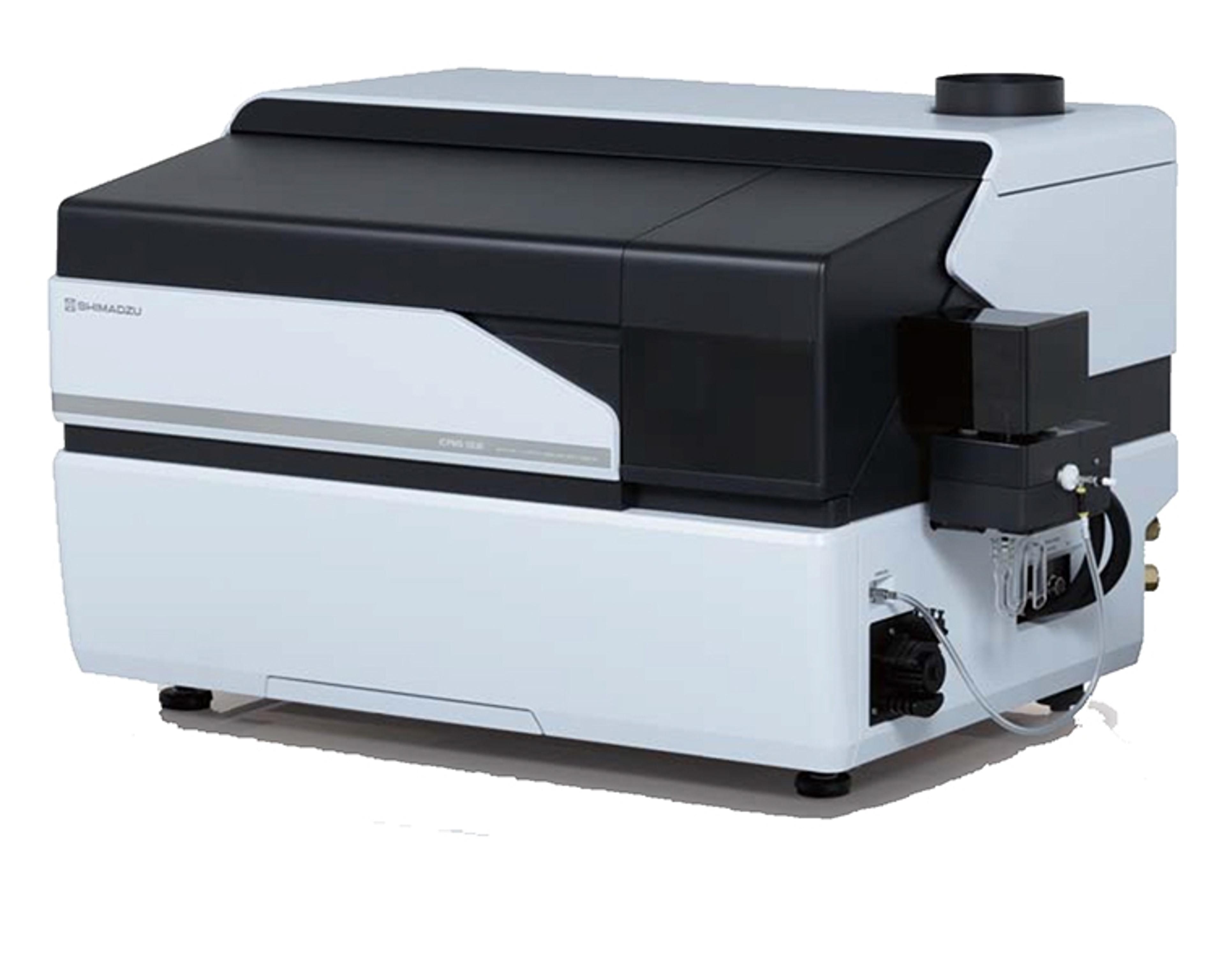
Shimadzu Scientific Instruments announces the release of its new ICPMS-2030 inductively coupled plasma mass spectrometer.

Featuring unique analysis assistant functions and incorporating proprietary cost-reducing capabilities, the ICPMS-2030 provides efficient, sensitive trace element analysis for environmental testing, food and agriculture studies, and pharmaceutical work.

The ICPMS-2030 is the first ICP-MS in the industry to include Assistant Functions that develop methods and perform post-run diagnostics. The system’s Development Assistant automatically selects the optimal mass and internal standard for the target elements, and suggests concentration ranges for calibration curves, allowing any user to develop reliable methods with ease. The Diagnosis Assistant identifies the presence or absence of mass interference based on qualitative analysis to quickly generate reliable results.

The ICPMS-2030 mass spectrometer significantly reduces operating costs utilizing Shimadzu’s proprietary technology. This includes a Mini-Torch system, which effectively reduces the amount of argon gas needed to generate plasma, and ECO mode, which minimizes the flow rate and power consumption during standby. The instrument can also operate on 99.95% purity argon gas, instead of the more expensive 99.999% argon gas generally used.

The ICPMS-2030 offers unrivaled sensitivity and easy maintenance, while suppressing molecular interference through optimization of the newly developed collision cell and internal ion path geometry.

Standard benefits and features of the ICPMS-2030 include:

  • Best-in-class sensitivity through effective molecular ion removal and efficient elemental ion transmission
  • Nine orders of magnitude dynamic range with a secondary electron multiplier, enabling analysis of major and trace-level components in the same sample
  • An off-axis lens configuration that eliminates photoelectric effects, optimizing the instrument’s compatibility with laser ablation systems
  • Easy-to-maintain interface that allows all parts to be removed and installed without the need for tools, resulting in greater uptime
  • Easy-to-maintain sample injection system and compact vacuum system

The ICPMS-2030 mass spectrometer is operated with Shimadzu’s LabSolutions ICPMS software, which supports laboratory networking. A server PC can be used to remotely manage the analytical results from a wide variety of lab instruments, while the software provides complete compliance with necessary electronic regulations such as FDA 21 CFR Part 11 and Japan’s Ministry of Health, Labor and Welfare.

Links

Tags

Sample PreparationSample preparation can improve the quality and speed of separation techniques. Products to assist sample preparation include filtration equipment, evaporators, membranes and sieves.Mass SpectrometryMass spectrometry (MS) is a powerful analytical technique used to identify and quantify molecules based on the mass-to-charge ratio of gas-phase ions. It provides detailed information about the structure, composition, and properties of compounds and is widely used across fields such as environmental monitoring, materials science, drug discovery and development, food and beverage testing, and wider chemical research. Key MS techniques include tandem mass spectrometry (MS/MS), liquid chromatography–mass spectrometry (LS-MS) and inductively coupled plasma (ICP-MS). Choosing from these wide range of techniques and technologies can be a daunting task, so keep up to date with scientific applications, performance expectations, and customer reviews here all in one place. Visit our product directory to receive quotes direct from the manufacturer. Data AnalysisData analysis hardware and software is available to make data processing straight-forward yet powerful. Data software can be used for math and stats, technical graphing and image analysis. In addition, software is available for specific data analysis of electrophoresis, densitometry, ELISA and DNA sequencing.LIMSLIMS (Laboratory Information Management System) is an informatics software system used to improve the quality assurance and quality control (QA / QC) of data management. LIMS can be a standard for common lab workflows, such as commercial off the shelf systems (COTS), or customized for more specialized lab use. Systems are available for mainframe computers or PC.Sample ManagementSample management systems include sample storage devices such as freezers and plate storers, sample environment enclosures and sample organization, retrieval and sorter systems. Useful system features include high-throughput, automation, robotic arms, automated liquid handling and associated database systems. Accessories in sample management include barcode scanners, heat sealers and tubes.Molecular Recognition SoftwareMolecular recognition software is widely used to analyze DNA, RNA, proteins and chemicals. The software can be useful for graphical viewing, comparative analyses, high-throughput screening, genomics, proteomics and phylogenetics. Molecular recognition software uses bioinformatics tools and analyses such as BLAST searches and generates structural predictions, 3D structures and sequencing information.Environmental Monitoring and TestingEnvironmental monitoring and testing uses handheld portable analyzers, kits, spectrometers or chromatography systems for air, water, soil, food and other sample testing. Useful features of analyzers such as BOD and COD include portability, easy calibration, automation and sensitivity.  Environmental test kits for pH, water, moisture, etc, should be accurate, sensitive, reliable, fast and easy to use.Robotic InstrumentsRobotic instruments can be used for high-throughput automation of many lab processes. Such processes use instruments for assays like cell based assays and ELISA, for sample preparation like shakers, centrifuges and incubators, and for analysis such as sequencing and western blot analyzers. Useful features of robotic instruments include speed, reproducibility, barcode readers, software and automation.Robotic WorkstationsRobotic workstations are automated platforms enabling the user to perform high-throughput, multi-application processes, from sample preparation tasks such as PCR set-up, DNA purification and NGS library preparation, to integrated sample prep and analysis workstations. Automation makes processes consistent, fast, precise and fully walk-away. Find the best robotic workstations in our peer-reviewed product directory: compare products, check customer reviews and receive pricing direct from manufacturers.Particle CharacterizationParticle characterization instruments are used to determine particle size distribution, shape, surface area, zeta potential, density and porosity of particles and materials. Multiple tecchniques are available for determining particle size, shape and count including dynamic light scattering (DLS), laser diffraction, electrozone (Coulter technique), imaging particle analysis and single particle optical sensing. Determine the density of your material with a gas pycnometer or examine its surface area and porosity with gas adsorption analyzers and mercury porosimeters. Find the best particle characterization instruments in our peer-reviewed product directory: compare products, check customer reviews and receive pricing direct from manufacturers.Software PlatformsSoftware platforms are useful for various stages of laboratory experiments from data collection to data storage and processing. For instance lab software is available for system control, data management, data analysis and qualification / validation.ICP-MSInductively Coupled Plasma Mass Spectrometry (ICP-MS) is a powerful analytical technique used to determine the concentrations of elements and their isotopes in a variety of samples, including water, soil, and biological tissues. It involves ionizing elements in the samples with extremely high-temperature Argon (Ar) plasma and then using a mass spectrometer to measure the number of ions based on their mass-to-charge ratio (m/z). Explore ICP-MS systems in our peer-reviewed product directory; compare products, check reviews, and get pricing directly from manufacturers.Elemental AnalysisElemental analysis involves determining the elemental composition of a sample, often used in environmental, pharmaceutical, and material sciences. Techniques like ICP-MS, X-ray fluorescence, and atomic absorption spectroscopy allow precise quantification of elements such as metals and nonmetals in complex matrices. Browse our peer-reviewed product directory to find the best elemental analysis tools, compare products, check reviews, and get pricing directly from manufacturers.Plasma
Shimadzu’s Announces New Inductively Coupled Plasma Mass Spectrometer (ICP-MS)