
Shimadzu provides alternative approach to carbon dioxide reduction
New Systems GC solution aims to support researchers in the catalytic reduction of carbon dioxide
22 Apr 2020
Product news
Shimadzu, one of the world leaders in analytical instrumentation, offers a wide range of application and customer-specific solutions based on its modular portfolio. Particularly in gas chromatography (GC), dedicated systems can be customized to the specific analysis goals through the selection of modules, detectors, components and accessories. They are used for routine and high-end applications, and give users the peace-of-mind that requirements for consumer and environmental protection as well as product safety will be fulfilled. For example, tailor-made application systems for specific substance classes are offered for food analysis.
In gas chromatography, Shimadzu offers over a dozen System GC solutions which are optimized for dedicated analytical tasks, e.g. regarding degree of automation or analysis times. The central unit is the Nexis GC-2030, a premium-class gas chromatograph with world-leading sensitivity and best reproducibility.
Alternative approach to carbon dioxide reduction
A new member in the System GC solution family covers gas measurement in catalytic CO2 reduction. It is an alternative approach for preventing carbon dioxide (CO2) from being released into the atmosphere. At present, other efforts are underway aimed at fossil fuel avoidance and carbon dioxide compression in storage facilities (CCS – carbon dioxide capture and storage).
The Shimadzu System GC solution is part of the chain to regenerate an energy-rich CO2 molecule out of a low-energy carbon dioxide molecule. However, since carbon dioxide is completely oxidized – and thus highly chemically stable – this process of CO2 reduction is quite energy-intensive. The goal is to expend as little energy as possible in order to generate a usable fuel.
The simplest chemical reaction in which carbon dioxide and hydrogen are converted into methane and water is the Sabatier process (named after Paul Sabatier) and can be described by the following chemical equation: CO2 + 4 H2 -> CH4 + 2 H2O
Since this is an energy-intensive process, various catalysts are used in order to keep the energy input as low as possible. In addition to chemical catalysts, such as nickel, platinum or ruthenium, there are also biological systems, which make use of particular microorganisms (archaea).
GC-2030 solves challenging measurement task
In order to monitor the efficiency of the Sabatier reaction, educts and products must be quantitatively determined. This is ultimately the only way to establish an energy balance. Aside from that, there are even more complex reaction paths, which require (in addition to carbon dioxide, hydrogen and methane) the quantification of carbon monoxide, nitrogen, higher hydrocarbons and sometimes even sulfur compounds.
The System GC solution based on GC-2030 is ideally suited to this challenging measurement task. It is equipped with three analytical separation columns, which, if necessary, can be supplied with the sample through valves (inner purged). The valves are seated in the newly developed, very well heat-insulated valve box on top of the instrument, thus saving valuable space in the laboratory. This configuration keeps the split and splitless injectors free for liquid injections. The detector of choice is the unique BID-2030 helium plasma detector, with a limit in the ppb range. The new System GC solution for supports researchers in finding the optimal conditions and minimal energy input for the catalytic reduction of carbon dioxide in order to regenerate an energy-rich molecule from the low-energy molecule CO2.
New System GC solution also adaptable to other gases
A related subject is the catalytic reduction of nitrogen into ammonia. Ammonia is needed as the base chemical for many products, such as fertilizers, fine chemicals and medications. Unlike CO2 reduction, somewhat different gases are of interest in order to balance the process. In addition to nitrogen and ammonia, these primarily include nitrogen monoxide and nitrogen dioxide (NO and NO2). The new System GC solution can also be used for these purposes – with minimal adaptations.
Do you use Shimadzu products in your lab? Write a review today for your chance to win $400 Amazon gift card>>
Related products
Request Quote for All Products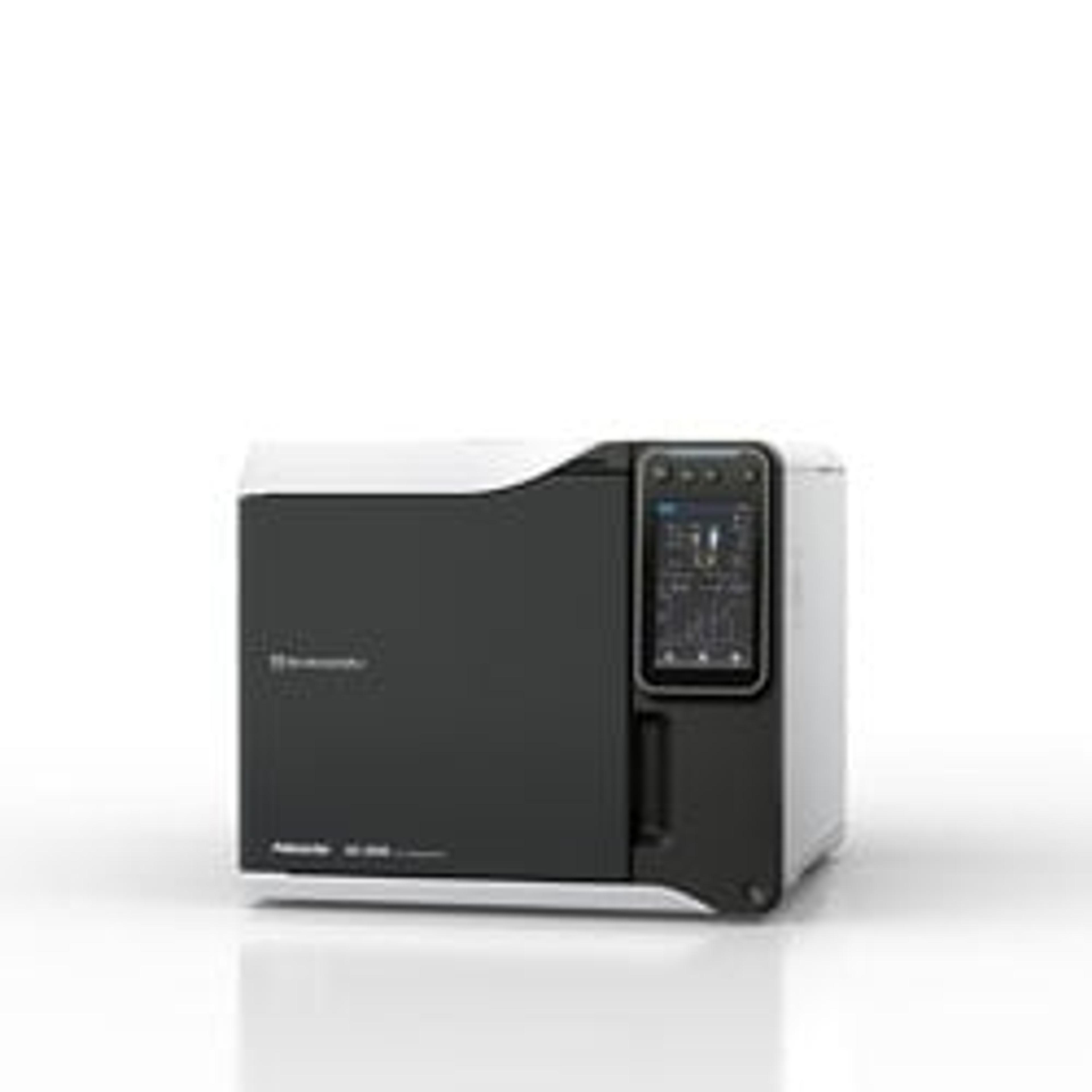
Nexis GC-2030 Gas Chromatograph
Shimadzu CorporationNexis GC-2030 Offers a Modern Approach to a Classic Chromatographic Technique