Sherlock Biosciences announces discovery of novel CRISPR-Cas enzymes, enabling simple multiplex diagnostic solutions

Developed in partnership with Rosetta Biosciences, discovery enables simultaneous detection of multiple targets, furthering next generation of diagnostics

22 Jan 2021

Diane Li
Assistant Editor

Industry news

Sherlock Biosciences, an Engineering Biology company dedicated to making diagnostic testing better, faster, and more affordable, has announced the discovery of novel thermostable CRISPR-associated (Cas) enzymes in partnership with researchers at Rosetta Biosciences. Thermostable Cas proteins enable real-time detection of RNA and/or DNA targets and, when used in tandem with Sherlock’s licensed Cas12 and Cas13 enzymes, advance the simultaneous detection of multiple RNA and/or DNA targets in a single test—a process known as multiplexing.

“Our additions to Sherlock’s CRISPR platform advance the ability to rapidly program and develop diagnostics that are capable of detecting many targets in a single test,” said William J. Blake, Ph.D., chief technology officer at Sherlock Biosciences. “With the discovery of these novel Cas enzymes, we have upgraded our CRISPR toolkit with thermostable options that will have broad utility for the development of our SHERLOCK™ platform, including in point-of-care settings.”

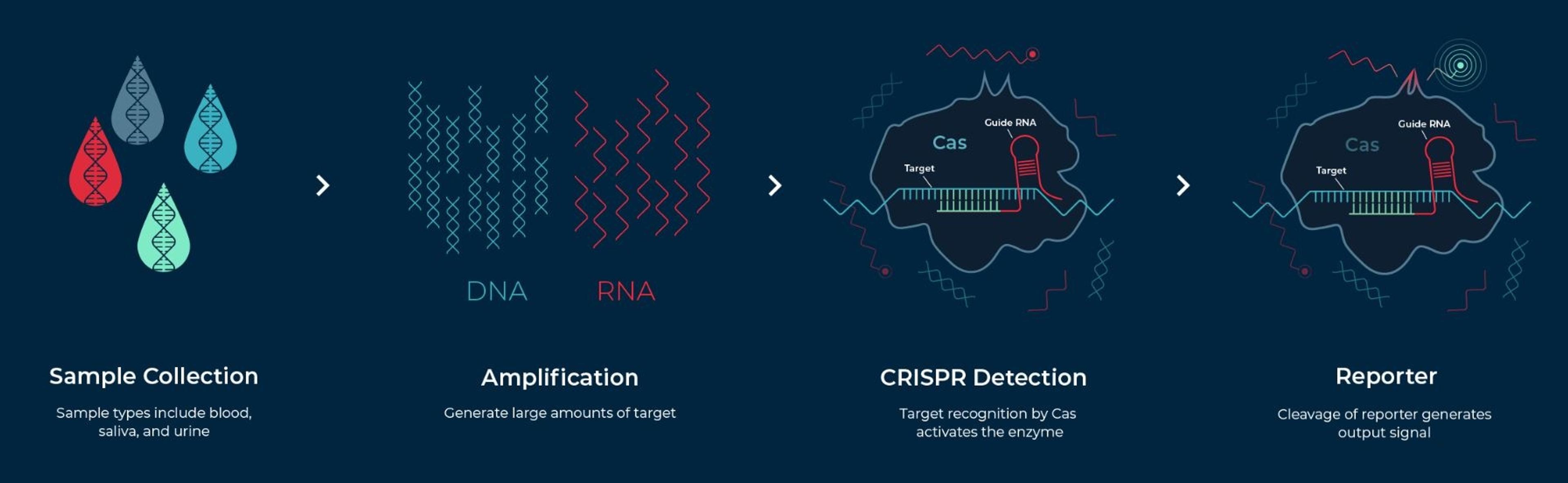
Developed by company co-founders and licensed exclusively from the Broad Institute, SHERLOCK (Specific High-sensitivity Enzymatic Reporter unLOCKing) is a method for smart amplicon detection. When specific sequences of DNA and/or RNA are present, the CRISPR enzymes are activated and, much like a pair of scissors, start cutting nearby genetic material, releasing a fluorescent signal that indicates a positive result. The first application of SHERLOCK technology is the Sherlock™ CRISPR SARS-CoV-2 test kit, marking the first FDA-authorized use of CRISPR technology.

“We were incredibly excited to work with the team at Sherlock Biosciences to apply our AI engine and protein design platform to develop a strong pipeline of novel Cas enzymes,” said Chengwei Luo, PhD, CEO at Rosetta Biosciences. “Maintaining performance by allowing amplification and detection in a single reaction, these novel CRISPR-Cas enzymes enable real-time detection with high sensitivity and specificity—key features for broad application across a wide range of diagnostic needs.”

“Not only is the discovery of these new Cas enzymes important as we continue to improve performance of our SHERLOCK technology; it is also a remarkable testament to the ingenuity of the Sherlock team and our in-house capabilities to identify and validate novel CRISPR-Cas systems that could lead to a new generation of diagnostics,” said Rahul Dhanda, co-founder, president and CEO of Sherlock Biosciences. “We are grateful for Rosetta Biosciences’ partnership and look forward to sharing more information about our discovery as we advance more products to improve diagnostic testing.”

Do you use Sherlock Biosciences products in your lab? Write a review today for your chance to win a $400 Amazon gift card>>

SHERLOCK™

Sherlock Biosciences

SHERLOCK is an evolution of CRISPR technology, which others use to make precise edits in genetic code. SHERLOCK can detect the unique genetic fingerprints of virtually any DNA or RNA sequence in any organism or pathogen. Developed by our founders and licensed exclusively from the Broad Institute, SHERLOCK is a method for single molecule detection of nucleic acid targets and stands for Specific High Sensitivity Enzymatic Reporter unLOCKing. It works by amplifying genetic sequences and programming a CRISPR molecule to detect the presence of a specific genetic signature in a sample, which can also be quantified. When it finds those signatures, the CRISPR enzyme is activated and releases a robust signal. This signal can be adapted to work on a simple paper strip test, in laboratory equipment, or to provide an electrochemical readout that can be read with a mobile phone. Highly sensitive (can detect a single molecule in a sample) Highly specific (accurately detects the target) Integrates well with other tests and lab setups Quantitative (measures amount of target present) Rapid design and delivery to partners

(1)

Links

Tags

Genome AnalysisGenomics, the study of genomes, includes functional genomics, evolutionary genomics and comparative genomics. There are many genomic technologies such as DNA sequencing of whole genomes, computational biology and bioinformatics. DNA and nucleic acids must be isolated and concentrated from cells for analysis with kits, automated analyzers and software. Other useful technologies for studying genomics include PCR, microarrays and electrophoresis.Cellular PathologyCellular Pathology deals with the microscopic analysis of tissue samples and cells. Sample preparation and processing includes fixation, staining, sectioning and slide mounting, using equipment such microtomes and cryostats. In choosing immunohistochemistry and immunocytochemistry kits, consider chromogens, staining method, antibodies, microscopes and imaging.Gene Expression and Molecular CloningMolecular cloning is a set of techniques that utilizes vectors to transfer recombinant DNA into host cells and is an essential tool for investigating the expression of genes and proteins in bacterial or mammalian cells. A variety of vectors optimized for gene cloning and expression in a range of host organisms are available, alongside competent cells for genetic replication. Here, you can explore a range of molecular tools, high-quality genomic and cDNA libraries, premade clones, transformation and transfection reagents and mutagenesis or gene expression detection assays and expression arrays. Find the best gene expression and molecular cloning products in our peer-reviewed product directory: compare products, check customer reviews and receive pricing direct from manufacturers.Biopharmaceutical AdvancesBiopharmaceutical advances follow the development of pharmaceuticals derived from biotechnology, also known as biotechnology medicines. Biopharmaceuticals may be produced from cell lines, plants, or microbial cells. Important considerations of biopharmaceutical use include application, cost, production process and purification.Clinical GeneticsMolecular Genetics covers the analysis of hereditary genetic disease and chromosomal abnormalities. Genetics can be analysed using DNA, RNA, and protein microarrays, PCR, RT PCR and DNA sequencing. Genetic equipment includes genetic workstations, thermal cyclers, cooling blocks and electrophoresis products. Diagnostic kits are used for DNA / RNA extraction and purification.Clinical MicrobiologyMicrobiology is the study of microorganisms including protists, prokaryotes, fungi, and, often, viruses. Microorganisms are a useful research tool as genetic vectors and, in immunology, for antibiotic susceptibility testing, cellular biology and genetics. Microorganisms commonly grow readily in incubators with microbial culture media; this can contain chromogenic supplements to differentiate between cell lines. Estimate your culture’s density of microorganisms with colony counters, or screen and select colonies for desirable clones with automated colony pickers. Additionally, equipment is available to monitor environments for the presence of microbes and identify with microbial identification instruments. Find the best microbiology products in our peer-reviewed product directory: compare products, check customer reviews and receive pricing direct from manufacturers.EnzymesEnzymes are macromolecular biological catalysts used across life science, pharmaceutical and clinical research. Various enzymes can be purchased for research applications including ligases, high fidelity polymerases, nuclease, protease, restriction enzymes, tissue dissociation enzymes and enzyme inhibitors. Find the best enzymes in our peer-reviewed product directory: compare products, check customer reviews and receive pricing direct from manufacturers.DNADeoxyribonucleic Acid (DNA) is the main component of chromosomes and the carrier of genetic information of living organisms. Find out here about PCR, NGS, ChIP-Seq, gel imaging, and many other techniques which can be used for the analysis of DNA.RNARNA is a nucleic acid that plays a key role in gene expression and protein synthesis. It serves as a messenger between DNA and ribosomes, carrying genetic instructions to produce proteins. Advances in RNA-based therapies, such as mRNA vaccines and gene editing, have revolutionized treatment strategies for genetic disorders and infectious diseases. Explore RNA research tools and therapies in our peer-reviewed product directory; compare products, check customer reviews, and get pricing directly from manufacturers.Gene EditingGene editing is the precise alteration to an organism's DNA, with CRISPR being the most well-known technique. It is used in a wide range of applications, including the development of disease models and gene therapy, and crop improvement. Browse our peer-reviewed product directory to find the best gene editing solutions, compare products, check reviews, and get pricing directly from manufacturers.CollaborationMolecular DiagnosticsMolecular diagnostics use an individual’s genetic code and gene expression to diagnose and monitor diseases. The technique is used increasingly in the field of infectious diseases and oncology, as well as areas such as coagulation, HLA typing and pharmacogenomics. Molecular diagnostics plays a pivotal role in personalized medicine.CRISPRCRISPR technology enables precise editing of genes, allowing scientists to modify DNA at specific locations. This revolutionary tool is used in genetic research, drug development, and gene therapy. CRISPR has applications in agriculture, disease treatment, and creating genetically modified organisms (GMOs). Explore CRISPR solutions in our peer-reviewed product directory; compare products, check reviews, and get pricing directly from manufacturers.MultiplexingMultiplexing refers to the ability to measure multiple targets or analytes simultaneously in a single experiment. This technique is valuable for high-throughput screening, diagnostics, and complex assays, as it increases efficiency and data quality. Browse our peer-reviewed product directory to find the best multiplexing products, compare tools, check reviews, and get pricing directly from manufacturers.
Sherlock Biosciences announces discovery of novel CRISPR-Cas enzymes, enabling simple multiplex diagnostic solutions