
Separation, Purification and Characterization of Biologically Important Molecules
The ISPPP 2017, 37th Symposium and Exhibit will be held on July 19-21, 2017, learn more about the event in this guest editorial article by Dr. Barry Boyes & Dr. Ron Orlando.
14 Mar 2017
Editorial article
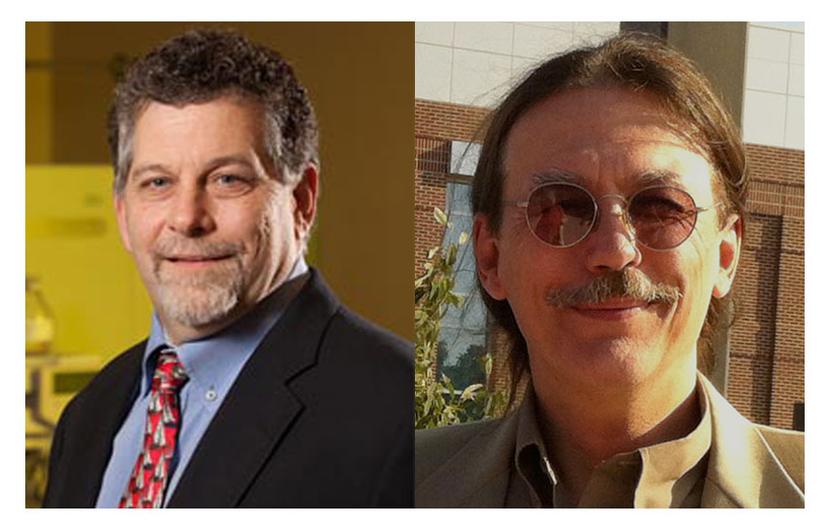
Chairpersons for ISPP 2017: Dr. Ron Orlando (R) & Dr. Barry Boyes (L)
It’s an exciting time for Separation Science for Biochemists, or for Biochemists and Process Engineers using Separation Science. The field continues to grow and adapt, enjoy better materials, instruments and methods, and a seeming never-ending list of interesting molecules to work on. We continue to confront analytical, productivity and financial challenges, with ever more asked. For the past 37 years, the International Symposium on Separations of Proteins, Peptides and Polynucleotides (ISPPP), founded in 1980 by Professors Fred Regnier and Milton Hearn, has been uniquely focused on bringing together experts on the materials and methods of biomolecule separations, with experts on developing applications of separations for discovery, analysis and structural characterization of biomolecules. The upcoming symposium will feature a program well balanced between basic science on biomolecule separations and applications development for discovery and analysis of biotherapeutic proteins, modifications thereof, nucleic acids, metabolic transformations, and complex carbohydrates.
The ISPPP is a truly international symposium, with alternate meetings organized in Europe and North America. The 36th ISPPP was most recently in Salzburg, Austria, and the upcoming 37th International Symposium for the Separation of Proteins, Peptides and Polynucleotides will take place in Philadelphia, PA, USA, from July 19-21, 2017, in the intimate setting of the Lowes Hotel on Market Street, in downtown Philadelphia. Over the course of the conference, there is ample opportunity to engage presenters, attendees and exhibitors during and after the various presentation formats at the Symposium. In addition to scheduled Lectures there are Posters Sessions, an Exhibition area, expert Tutorials, and catered refreshment breaks. As with past ISPPPs, the meeting is organized to encourage an atmosphere of collegial interactions and to encourage formation of collaborative efforts. As with past events, there will be various social events, including an opening reception and symposium banquet.
This year’s ISPPP will be co-chaired by Dr. Barry E. Boyes (Advanced Materials Technologies, Inc.) and Prof. Ron Orlando (Complex Carbohydrate Research Center, University of Georgia), two long-standing supporters of the conference. In addition, a Program Committee and International Conference Committee are working with the chairpersons to assure an exciting and relevant program.
Highlighted presentation themes at ISPPP 2017 include:
- Proteomics, Glycoproteomics and Phosphoproteomics
- Therapeutic Biomolecules and Biosimilars
- Monoclonal Antibody Analytics
- Novel Protein Structure Analysis
- Novel Separations Materials and Methods
- Interactions, Aggregation and Conformational Effects
- Nucleic Acids
- Metabolomics and Enzyme Analyses
- Glycans and Complex Carbohydrates
- Higher Order Structure Determination
As with recent ISPPP Symposia, this years’ program will be enriched in examples of high resolution analytical applications, particularly on the use of LC and LC/MS methods for complex molecule analyses and applications of high resolution methods during target discovery, validation, and product development. This is particularly relevant at a time when therapeutic and diagnostic humanized monoclonal antibodies are undergoing an explosive growth in clinical and research applications. The scientific program features many examples of novel applications of separations and MS technologies by expert scientists from biopharmaceutical, industrial and academic organizations.
Starting with the 33rd ISPPP Symposium we have enjoyed a joint assembly with the Prep Symposium, and will again in Philadelphia with Prep 2017 (July 16-19), chaired by Prof. Giorgio Carta (University of Virginia). This joining of the symposia series offers a great opportunity for synergy on a joint day (Wednesday, July 19th) and throughout the week. Please visit the website for Prep2017 at http://www.prepsymposium.org/. Both symposia will feature exhibitor areas, allowing attendees to share and receive valuable information on recent and upcoming commercial products and services.
Brief Biographical Statements of the Chairpersons for ISPPP
Dr. Barry Boyes is the Director of Bioscience R&D at Advanced Materials Technologies (AMT), Inc., in Wilmington, DE, USA. Barry completed a B.Sc. in Biochemistry at the University of Alberta, then Ph.D. in Neuroscience at UBC (Vancouver, B.C.), under the supervision of Prof. Edith G. McGeer. Barry began his work in industry at the DuPont Company in Wilmington, DE, followed by Rockland Technologies Inc., developing a variety of products and technologies for biomolecule separations. HP acquired Rockland in 1997, which later became Agilent Technologies. At HP and Agilent Barry served a variety of roles in R&D and Product Development, becoming the Sr. R&D Manager for Separations Consumables and Services, then the Bioreagents business. In 2006, he became the VP of R&D at the Edgewood, MD site of Smiths Detection, commercializing field-ready biothreat detectors. In 2009, Barry returned to full-time pursuit of technologies for high resolution biomolecule analysis at AMT using the superficially porous particles (SPP) pioneered at that company. Recent efforts have been on refining SPP materials for peptide, protein and glycoprotein analysis by LC and LC/MS analysis. Barry is an Adjunct Professor of Chemistry at UGA (Athens, GA), continuing collaborations on protein modification analysis, CNS disease investigations, and contributing to teaching Proteomics and Separation Science.
Dr. Ron Orlando received his B.S. in natural science in 1983 from St. Mary's College of Maryland, his Ph.D. in Chemistry in 1988 from the University of Delaware, and served as a post-doctoral fellow at the University of Maryland Baltimore County from 1988 until 1990. After serving for two years as a senior scientist at the Suntory Institute of BioOrganic Research (Osaka, Japan), he joined the faculty of the Complex Carbohydrate Research Center at the University of Georgia in January 1993, where he is currently a Professor of Biochemistry & Molecular Biology and Chemistry. Ron Orlando has over 30 years of experience with mass spectrometry, 26 of these years focused on the identification, characterization, and quantitation of proteins and their post-translational modifications. He has co-authored over 120 publications in peer reviewed journals and has given over 100 invited lectures at various conferences. Dr. Orlando is the current Editor-in-Chief for the Journal of Biomolecular Techniques (JBT), and serves on a number of editorial boards. He has organized and taught short-courses on the Analysis of Glycoproteins by Mass Spectrometry at meetings of the American Society for Mass Spectrometry (ASMS), the Association of Biomolecular Resource Facilities (ABRF) and the International Symposium and Exhibit on the Separation of Proteins, Peptides & Polynucleotides (ISPPP), and is the founder and past-chair of the ABRF Glycoprotein Research Group.