
See the Surface: Accessible TIRF Microscopy Solutions from Olympus
5 Jul 2015
Product news
Representing the latest in total internal reflection fluorescence (TIRF) microscopy technology, the expanded Olympus cellTIRF family of illuminators and accessories presents a solution for every application.
Create the ideal TIRFM system
Allowing users to optimize their setup, the new economic one-line illuminator (cellTIRF-1L) complements the high-end, 4- and 2-line (cellTIRF MITICO 4L/2L) illuminators. The new illuminator can also be used with 3rd party lasers and enables multi-fluorescence samples to be sequentially imaged at the same penetration depth. The range supports both precise imaging and easy operation – with features including advanced optics, integrated laser safety systems and high-speed control of penetration depth and laser lines via the Olympus Real-Time Controller. The high-end systems provide ultra-sensitive truly simultaneous multi-color TIRF microscopy, with up to 4 laser lines and independent beam paths. In addition, the functions of the TIRF illuminator are seamlessly integrated into Olympus cellSens software allowing fast and flexible visualization of intracellular molecular events with exceptional speed, sensitivity and resolution.
Outstanding optics
The cellTIRF illuminators are complemented by a large portfolio of specially designed TIRF objectives, including the world’s highest numerical aperture (NA – 1.7) APO 100X OHR, allowing extreme TIRF angles, and the UAPON 150xO TIRF, which combines extreme magnification and high numerical aperture (1.45) with a correction collar and DIC compatibility. Through outstanding optics matched with high-end motorized TIRF devices, Olympus offers a system enabling easy access to super-resolution.
One frame, infinite possibilities
The range is fully compatible with the innovative modular IX3 series of inverted microscope frames. These versatile ‘open source’ frames provide the chance to build bespoke systems with interchangeable optical modules and accessories, thanks to an accessible infinite light path. Modules include the Z-drift compensation system, enabling constant focusing even at high magnifications with dedicated TIRF objectives. Perfect for time-lapse experiments, this also complements the workflow-oriented cellVivo incubation system.
Features
- cellTIRF-1L module with motorized TIRF angle control offers cost-effective flexibility
- cellTIRF MITICO 4L/2L high-end, 4- and 2-line illuminators
- Expansive portfolio of specially designed Olympus TIRF objectives
- Precise and intuitive control via Olympus cellSens software
- Compatible with IX3 inverted microscope frames for ultimate flexibility
Applications
- Live cell imaging
- Total Internal Reflection Fluorescence (TIRF) Microscopy
- Cell surface studies
- Super-resolution microscopy
Related products
Request Quote for All Products
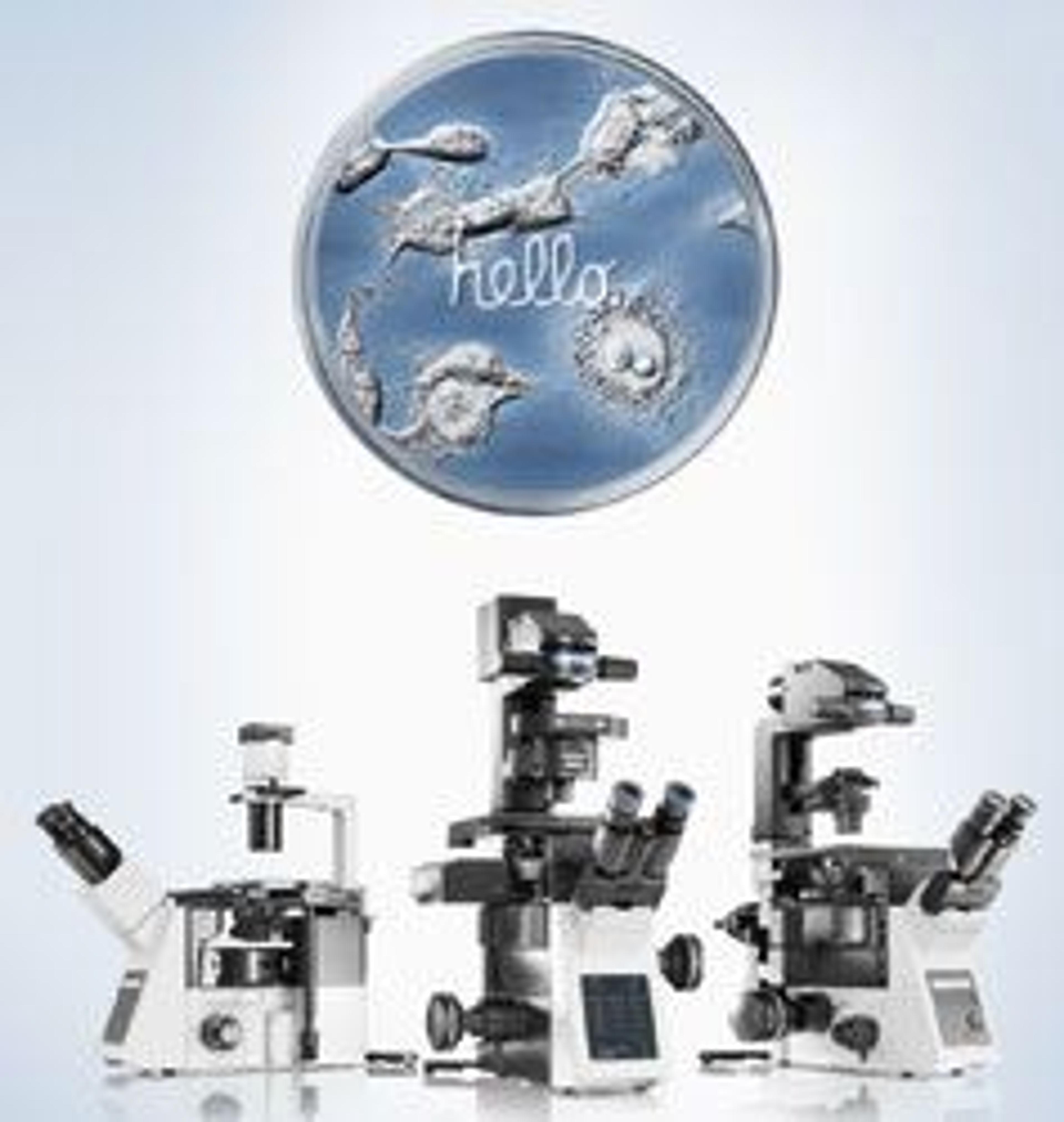
IX3 Series - Intuitive & open source Microscope Systems
EVIDENTThe series of flexible inverted microscope frames for live cell imaging