Screening for SARS-CoV-2 spike inhibitors

In this guest article by RayBiotech Life, learn how ELISA and pseudoviruses enable COVID-19 drug development

30 Aug 2021

Ellen Simms
Product and Reviews Editor

Editorial article

COVID-19 is caused by the severe acute respiratory syndrome coronavirus 2 (SARS-CoV-2). One of the first and critical steps in infection is the entry of SARS-CoV-2 into host cells, which is mediated by the SARS-CoV-2 Spike (S) protein’s interaction with endogenous receptors (e.g., ACE2, NRP1, AXL). Thus, inhibiting the S protein is a major focus of COVID-19 drug development efforts. S protein inhibitors are screened using enzyme-linked immunosorbent assays (ELISAs) and SARS-CoV-2 pseudoviruses.

ELISA is an in vitro, and plate-based method used to detect the Spike-receptor complex (Figure 1). Briefly, the sample and receptor competitively bind to the S protein, which is coated on the plate. The amount of S-receptor complex can then be measured using an anti-receptor antibody and a detection antibody. Get results within 5 hours with these simple-to-use kits!
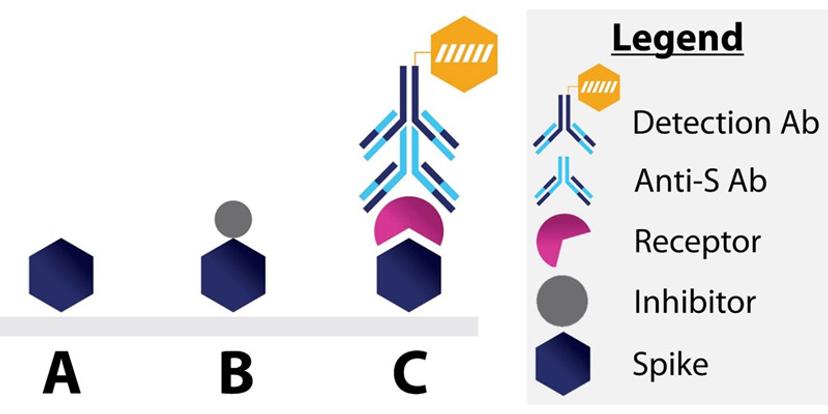
Figure 1. ELISA is an in vitro, plate-based method for screening S inhibitors. (A) The plate is coated with the S protein. (B) An inhibitor blocks the S-receptor interaction. (C) The S-receptor complex is detected using an anti-receptor antibody and a detection antibody. Ab = antibody

A SARS-CoV-2 pseudovirus is a viral particle that can mimic viral entry, but is not considered a live virus. As such, SARS-CoV-2 pseudoviruses are employed to screen for S inhibitors. In the example demonstrated in Figure 2, a SARS-CoV-2 pseudovirus expresses the S protein on the surface while containing a gene encoding for luciferase. Once the pseudovirus enters the host cell, the luciferase is expressed. In the presence of a luciferase substrate, cells that have been successfully infected with the pseudovirus will luminescence. In the presence of S inhibitors, the level of luminescence will decrease. Obtain data within 2 weeks with RayBiotech’s full testing service.
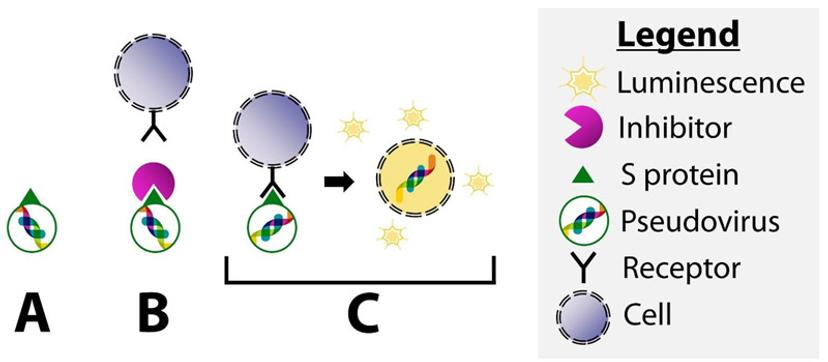
Figure 2. A SARS-CoV-2 pseudovirus enables S inhibitor screening in cell culture. (A) A pseudovirus expressed SARS-CoV-2 S protein on the surface and containing a gene encoding for luciferase. (B) An inhibitor blocks the S-receptor interaction. (C) When the S-receptor complex forms, the pseudovirus enters the cells where luciferase is expressed. Luminescence occurs when a luciferase substrate is added.

Learn more about RayBiotech’s ELISA kits and COVID-19 pseudovirus service for screening inhibitors of wild-type and variant S proteins with ACE2, NRP1, and AXL here>>

Links

Tags

ELISAEnzyme-linked immunosorbent assays (ELISA), also known as enzyme immunoassays (EIA), are used for the detection and quantification of proteins, peptides and antibodies in a sample. ELISA often comes in kit format, with pre-selected antibody pairs to detect specific proteins or biomarkers of diseases such as diabetes and obesity, or cardiovascular and neurological disorders. Detection is made possible with chemiluminescent, fluorescent or colorimetric substrates and detection instruments such as microplate / ELISA readers. Other kits available include: Enzyme-linked immunospot (ELISPOT) assays for the quantification of protein-producing cells and chemiluminescent immunoassays (CLIA) kits. Find the best ELISA kits and products in our peer-reviewed product directory: compare products, check customer reviews and receive pricing direct from manufacturers.Biopharmaceutical AdvancesBiopharmaceutical advances follow the development of pharmaceuticals derived from biotechnology, also known as biotechnology medicines. Biopharmaceuticals may be produced from cell lines, plants, or microbial cells. Important considerations of biopharmaceutical use include application, cost, production process and purification.InhibitorsDrug DevelopmentDrug development refers to the process of bringing a new drug to market.Covid-19COVID-19, caused by the SARS-CoV-2 virus, has led to a global health crisis with profound impacts on societies and economies. Research into diagnostics, vaccines, treatments, and understanding viral mechanisms continues to evolve. The pandemic has accelerated innovations in healthcare and biopharmaceuticals, including novel vaccine platforms and rapid testing technologies. Browse our peer-reviewed product directory to find top COVID-19 testing kits, research tools, vaccines, and treatments, compare products, read reviews, and receive direct pricing from manufacturers.
Screening for SARS-CoV-2 spike inhibitors