
Scaling up RT-PCR assays for mass population screening in the fight against COVID-19
We speak to a scientist at the forefront of innovative efforts to scale up coronavirus testing for use at the population level
17 Aug 2020
Editorial article
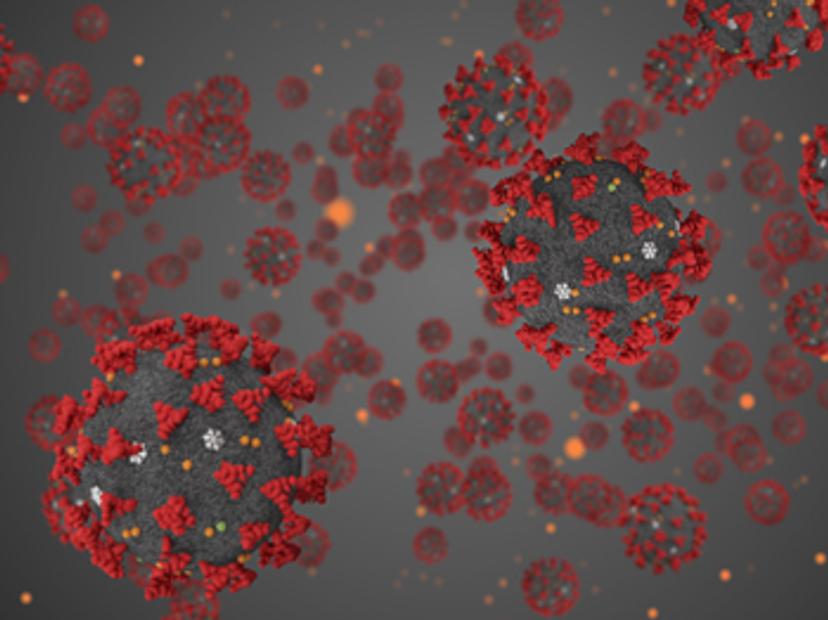
The new coronavirus SARS-CoV-2 has wrought pandemic havoc across the globe. In the absence of an effective vaccine, testing is key to establishing a degree of control over the spread of the virus – identifying people who have the infection and then isolating them accordingly. But large-scale testing is an enormous challenge currently limited by supply chain issues, and so a multidisciplinary lab in the state of Georgia, USA has been looking at new strategies for rapid, mass population testing. Working Medical College of Georgia at Augusta University, Dr. Ravindra Kolhe is a trained pathologist who, until now, has spent the past 12 years focused on oncology and immuno-oncology. His lab is now focused almost entirely on SARS-CoV-2 testing and COVID-19, and has effectively become a hybrid clinical, diagnostic and translational lab dedicated to scaling up RT-PCR assays for coronavirus testing. With cases rocketing in the US and elsewhere, the stakes could hardly be higher.
Alleviating the bottlenecks in SARS-CoV-2 testing
The current aim of Kolhe’s lab is simple enough, as he highlights the key questions being addressed: “How can we increase our testing capacity and our turnaround time, thereby testing as many people as we can?”
That is of course easier said than done, and Kolhe is only too aware of the supply chain issues that are creating bottlenecks in the testing process. “We don’t have that many PCR kits, we don’t have that much plasticware, and we don’t have an infrastructure with technicians to test enough individuals on a regular basis, especially in the US,” he says.
To emphasize the point, Kolhe describes how something as simple as the humble pipette tip is holding him back on a daily basis and adds: “Let’s say my lab reports 1,500 samples and you need three or four pipette tips per sample – that’s 5,000 to 6,000 tips a day for a lab like mine. We just don’t have that many manufacturers to keep up with the testing demand.”
And there is a particular urgency to his work which will affect both himself and his colleagues locally at Augusta. With schools and universities due to open up shortly, the need to potentially test anywhere between 10,000 and 60,000 students coming in through any university’s doors is pressing.
Kolhe and his team, therefore, proposed a mass population screening approach, based on a sample pooling strategy which has now been validated in a community setting and published online in the scientific literature (Journal of Molecular Diagnostics) has shown that, depending upon community incidence of the virus, samples can be pooled in ratios of 10 to 1 or 5 to 1 and that this creates a substantial saving for lab supplies, extraction materials and PCR kits. “In this way, not only can you test many individuals, but you can do it on a regular basis,” he enthuses.
Overcoming these bottlenecks requires expertise in technology and workflows, and that has been provided by PerkinElmer.
Choosing the right technology provider
Kolhe returns to the issue of supply chains as he describes how his close collaboration with PerkinElmer came about. “At the beginning of this pandemic when we were evaluating multiple platforms for the lab, one of the biggest things we were looking for was consistency in supply chain. We looked through each and every manufacturer who had an FDA- or EUA-authorized kit and pretty much every provider had an issue with supply chain – they would not commit to more than 500 or 1,000 samples,” he says. “The whole process was as though we were chasing the impossible. All major manufacturers were backed up for four or more months for supplies.”
Facing such a ‘roadblock’, as he calls it, Kolhe discovered that PerkinElmer was the only technology provider with a suitably intact supply chain borne out of its manufacturing decisions. They provided not only instruments but also the reagents and pipette tips, and other smaller aspects of testing for a longer period – something “that has been one of the biggest advantages of going with PerkinElmer as a partner in this testing situation,” he adds.
As for his working relationship with PerkinElmer, Kolhe is effusive in his praise: “I think PerkinElmer and the group of people, especially in R&D, have been phenomenal. They have been very, very supportive and, most importantly, they take our feedback seriously and have made substantial changes in their workflow to increase our output,” he tells SelectScience.
Looking forward to a faster future
Kolhe concludes by explaining the two key priorities of his lab for the future. The first is further development of its sample pooling strategy aimed at getting as many individuals as possible tested to help contain the spread of the virus and support effective quarantine measures. The second is decreasing the turnaround time, with PerkinElmer’s help: “We’re working with PerkinElmer and other collaborators on different methodologies that could give results within 30 or 40 minutes – through antigen-based assays. We’re also designing and developing more robust serology-based assays to look at the community pool of IgG antibodies to understand what immunity looks like,” Kolhe adds.
Find out more about how PerkinElmer’s RT-PCR assays could help you.
Image: Donato Fiorentino/123RF