Sartocon® Slice 50: Sartorius Stedim Biotech Presents a New Small-Scale Crossflow Device

17 Feb 2016
Alex Waite
Editorial Assistant

Product news

Sartorius Stedim Biotech (SSB), a leading international supplier for the biopharmaceutical industry, has launched the single- use ultrafilter Sartocon® Slice 50.

The new crossflow filter device is designed for use in biotechnological applications, especially for membrane screening and small-volume process development.

Sartocon® Slice 50 is offered as an encapsulated and ready-to-use crossflow module with a filter area of 50 cm2 and a wide variety of molecular weight cutoffs. The cGMP validated self-contained unit eliminates the need for a compression holder and is available in a choice of two polymers: The Hydrosart® membrane is a stable polymer suitable for a broad pH range and can be depyrogenated using NaOH at elevated temperatures. It is extremely hydrophilic, making it non-protein-binding and virtually non-fouling, and delivers an exceptional high flux. The polyethersulfone membrane (PESU), which is well established in the biotechnological and pharmaceutical industries, is a stable polymer that is ideal for a broad pH and temperature range.

A major benefit of the new crossflow filter device is its linear scalability, along with identical materials of construction. This eases transfer of process development results to the next scale up level.

Sartocon® Slice 50 can easily be interfaced with SSB’s recently launched SARTOFLOW® Smart benchtop crossflow system, as well as with many other laboratory-scale filtration systems.

SARTOFLOW® Advanced crossflow filtration systems

Sartorius Group

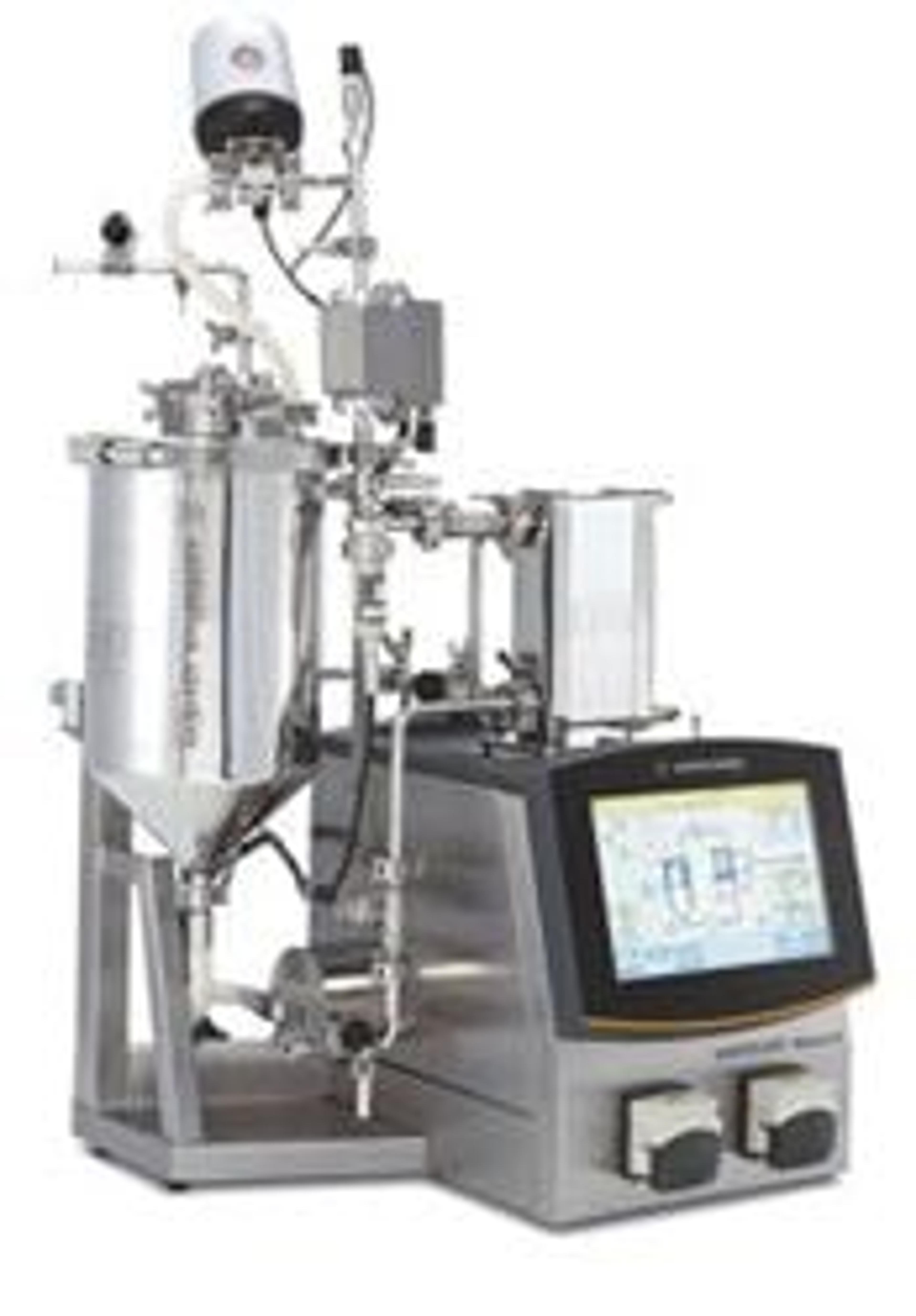
Full flexibility and outstanding crossflow filtration performance combined The SARTOFLOW® Advanced is a modular benchtop crossflow system optimized for ultrafiltration, microfiltration and diafiltration applications used in many downstream processes, such as purification of vaccines, monoclonal antibodies and recombinant proteins. The system is suitable for flexible use in laboratory environments for process development and clinical trials as well as for small-scale production batches. Several standardized options are available to enable you to obtain just the right system exactly tailored to meet your individual requirements. The system can also be upgraded with additional options if your requirements change during process development or production. This Crossflow system is equipped with our proven DCU-4 control unit that readily communicates with Sartorius’ BioPAT® SCADA, MFCS software. The SARTOFLOW® Advanced can be configured to accept either Sartocon® Slice or full-sized Sartocon® cassettes. As a result, this gives you an exceptionally wide range of membrane surface areas. Since all Sartocon® crossflow cassettes have the same hydrodynamic flow path length, the SARTOFLOW® Advanced can be linearly scaled up from 0.1 to 2.1 m2 of membrane area. Its unique compact design has an ultra-low loop volume of ~200 ml, making it possible to concentrate even small process batches. The SARTOFLOW® Advanced can be run in demanding production environments. Moreover, the unit and its touch screen is built to withstand continuous use in both under laboratory and production conditions.

(0)

Links

Tags

FiltrationFiltration and microfiltration are used to separate solids, particulates or large molecules from fluids (liquid or gases) in order to purify the filtrate. Explore a range of filter formats, including filter paper, plates and membranes for your separation needs. While larger particulates may be separated by gravity filtration, smaller particulates may require additional force for timely separation. Microfiltration equipment includes vacuum filters, as well as positive pressure, crossflow and centrifugal filtration devices. Find the best filtration products in our peer-reviewed product directory: compare products, check customer reviews and receive pricing direct from manufacturers.Robotic InstrumentsRobotic instruments can be used for high-throughput automation of many lab processes. Such processes use instruments for assays like cell based assays and ELISA, for sample preparation like shakers, centrifuges and incubators, and for analysis such as sequencing and western blot analyzers. Useful features of robotic instruments include speed, reproducibility, barcode readers, software and automation.Particle CharacterizationParticle characterization instruments are used to determine particle size distribution, shape, surface area, zeta potential, density and porosity of particles and materials. Multiple tecchniques are available for determining particle size, shape and count including dynamic light scattering (DLS), laser diffraction, electrozone (Coulter technique), imaging particle analysis and single particle optical sensing. Determine the density of your material with a gas pycnometer or examine its surface area and porosity with gas adsorption analyzers and mercury porosimeters. Find the best particle characterization instruments in our peer-reviewed product directory: compare products, check customer reviews and receive pricing direct from manufacturers.Fumehoods and Biological Safety CabinetsFume hoods and biological safety cabinets are used to provide personnel, sample and environmental protection by limiting exposure to hazardous materials either by venting or enclosing hazardous sample space. Fume hoods include filtered and ductless fume hoods, general ducted fume hoods, laminar flow cabinets and cabinets for powder weighing. There are three classes of biological safety cabinet, dependent on the level of protection provided. Class I provide personnel and environmental protection, class II provide product, personnel and environmental protection. Class III provide the highest level of protection and are designed for use with high-risk biological agents. Other ventilated workspaces for the laboratory include glove boxes, glove bags, anaerobic and hypoxic workstations. Find the best fume hoods and biological safety cabinets in our peer-reviewed product directory: compare products, check customer reviews and receive pricing direct from manufacturers.Multi-Sample FiltrationBiopharmaceuticalsBiopharmaceuticals are proteins and other compounds (such as nucleic acids) produced by living organisms that have uses as therapeutics or for in vivo diagnostics. The most well known example of a biopharmaceutical product, and the first to be approved for therapeutic use, was recombinant human insulin.PolymersPolymers are large molecules made up of many repeat units. Natural polymers such as DNA and proteins are essential to life, whereas synthetic polymers such as polystyrene and polyethylene are used widely due to their functionality. Typical techniques for analysis include GPC, SEC, DSC, FT-IR and NMR.