
SARS-CoV-2 variants: Are Ct values an unused piece of the profiling puzzle?
Infectious disease scientist Dr. Padmapriya Banada explores the potential of cycle threshold values and reveals her melt-based assay alternative
13 Jun 2021
Editorial article
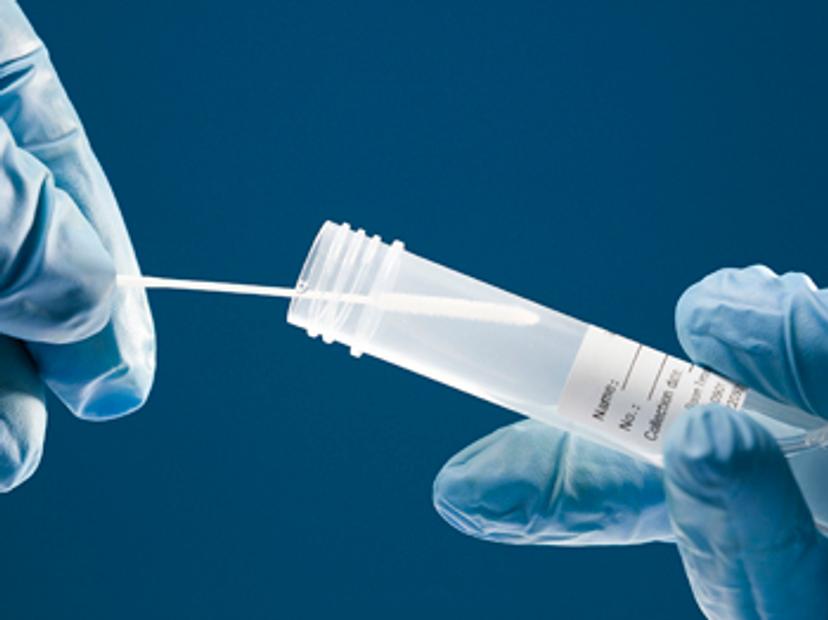
In recent months, the emergence and spread of SARS-CoV-2 variants has led to questions over the long-term effectiveness of vaccines. This has led scientists to seek out new ways, aside from sequencing, of monitoring the situation as part of routine patient testing.
Dr. Padmapriya Banada is an Assistant Professor at Rutgers New Jersey Medical School whose focus over the past 20 years has been on the development and implementation of molecular diagnostic assays for the detection of infectious pathogens.
Given her expertise, Banada and the CAP (College of American Pathologists) and CLIA (Clinical Laboratory Improvement Amendments) certified lab which she manages under the direction of Dr. David Alland were quick to leap into action following the initial SARS-CoV-2 outbreak, leveraging its research experience to work on diagnosing patient samples. “It was very interesting and exciting to be at the forefront of COVID-19 testing, and of course we were happy to be able to contribute firsthand,” said Banada.
What can cycle threshold values tell us?
In PCR, cycle threshold values, or ‘Ct’ values, reference the thermal cycle number at which the fluorescent probe signal exceeds the background signal, consequently passing the threshold for a positive result. In essence, the lower the Ct value, the higher the quantity of viral genetic material there is in the sample – giving a semi-quantitative representation of viral load. At this time, these values are not routinely provided to clinicians as part of COVID-19 test results, but scientists have begun to debate whether they should be provided. Banada explains: “I do not believe Ct values alone could be used to detect and profile novel variants of concern (VOC). However, a study in France1 did show that the VOC confirmed samples showed lower Ct values compared to the wild type by 0.8 to 1.1 Ct value - more studies and conclusive data are required to establish these findings.”
With this current level of understanding, the Ct values could form part of patient testing to indicate whether a sample should be sent for additional processing. Sequencing could then be used to determine if and what variant is present, and where the mutation is in the whole genome. However, as Banada explains: “As a screening method, sequencing is not very feasible; in the US we have screened less than 1% of samples2. We need an alternate method, an intermediate between real time and sequencing. That’s why we have developed a unique post-PCR melt-based assay to detect and differentiate these variants from patient samples that can fill that gap.”
Contributing to the early COVID-19 response
At the start of the pandemic, Dr. Banada was part of a team that ran analytical and clinical evaluation studies for Cepheid’s Xpert® Xpress SARS-CoV-2 point-of-care diagnostic system, one of few to receive FDA EUA approval.
Impressed by its performance, it quickly became the lab’s choice of testing system for its regular patient reporting. Naturally, as a scientist and a researcher, Banada ran some additional clinical studies exploring results from various specimens such as saliva, oral, nasal, and nasopharyngeal, the results of which are now published as a preprint in MedRxiv3.
A step up from current RT-PCR testing
Banada and her lab have developed a simple and rapid reverse-transcriptase PCR (RT-PCR) melting temperature assay that can be used to screen for the key SARS-CoV-2 mutation, N501Y, which is present in all the 3 CDC-classified VOCs, first identified in the UK, South Africa and Brazil, and E484K which is present in both South Africa and Brazilian originated VOCs. They are currently working on adding further emerging mutations to this panel.
Banada comments on the work, currently under pre-print in medRxiv4: “We use post-PCR amplicons to generate something called melting temperature curves, in which the temperature is gradually increased. The temperature at which 50% of the target is bound to the probe is called the ‘melting temperature or Tm’. In this study, we use special probes called ‘sloppy molecular beacons’. After the PCR is done, the amplicons are melted off from the probes, and we record the Tm. The specialty of the molecular beacons is that they can very efficiently detect a SNP (single nucleotide polymorphism) difference and the probes melt off much quicker if there is a non-target compared to a target. We were able to achieve roughly a -3 to -4 degree difference between the wild type and the mutant.”
The method can also be used to indicate new mutations and thus new variants: “We use a combination of two probes targeting both the wild type and the mutant, which means that if there is a shift in the melt and it is not what we have defined, it is likely there is another mutation that could be arising, which could be confirmed by sequencing. We feel that this technology would be really useful in the real world.”
Right now, Banada and her lab are working with the local hospital labs and the state labs in New Jersey to leverage this technology and implement patient sample screening.
Technology fueling the front line
To perform this vital viral research and development, Banada employs a variety of instruments. She notes that she used what was already available in her lab, such as the Roche LightCycler® 480, and went with the equipment she felt most comfortable using, but states: “In theory, any instrument that has post-PCR melt curve analysis tools could be used.”
However, Banada stresses that the use of high-quality probes and primers is essential: “Amongst the technologies we use in our lab are probes from LGC, Biosearch Technologies. We use them for all our probes and are happy with the quality and services they provide. We use a variety of other manufacturers for our primers and other reagents.”
Banada shares her top tip when looking to purchase lab equipment or use a service to conduct similar research: “My advice to other scientists planning to use an RT-PCR or melting temperature-based technology is to research, reach out, ask questions and make sure they understand the technology.”
A multi-fronted approach to profiling and care
Understandably, the potential correlations between Ct values and COVID disease have sparked interest amongst the scientific community. An increasing umber of studies trying to correlate Ct values with disease severity to inform patient management are being performed, but it remains a much-debated topic. Banada sheds some light on the issue: “There is a lack of consensus on what Ct threshold to establish. The practical limitations of current practices in diagnostics, including variation in sample collection with the different diagnostic platforms, vary the Ct values thus making the data possibly unreliable5-6. All currently available nucleic acid tests for SARS-CoV-2 are FDA-authorized as qualitative tests, and Ct values from qualitative tests should never be used to direct or inform patient management decisions. Therefore, it would be a regulatory violation7 for laboratories to include Ct values on patient reports.”
Banada continues: “However, it is very important to note that there has been an increased number of publications8 that show the importance of Ct values in patient management. Several9-12 have shown that SARS-CoV-2 viral load has an association with increased mortality. All we need to take care of is coming up with a streamlined regulatory process to be able to report the Ct values.”
Despite this lack of standardization between tests to inform variant monitoring, Banada still remains an advocate of reporting Ct values as a tool to aid clinicians and clinical researchers. Regardless, the advancement of scientific understanding from these studies and the development of more targeted methods, such as Banada’s melting temperature assay, provide a hopeful outlook on personalized patient care and the management of current and future variants of concern.
See how LGC, Biosearch Technologies supports variant detection workflows >>
References
Roquebert B, Haim-Boukobza S, Trombert-Paolantoni S, et al. SARS-CoV-2 variants of concern are associated with lower RT-PCR amplification cycles between January and March 2021 in France. medRxiv. 2021. medRxiv
Shu Y, McCauley J. (2017) GISAID: Global initiative on sharing all influenza data – from vision to reality. EuroSurveillance. 22(13). COVID-19 CoV Genetics
Banada P, Elson D, Daivaa N, et al. Evaluation of sample collection and transport strategies to enhance yield, accessibility, and biosafety of COVID-19 RT-PCR testing. medRxiv. 2021. medRxiv
Banada P, Green R, Banik S, et al. A Simple RT-PCR Melting temperature Assay to Rapidly Screen for Widely Circulating SARS-CoV-2 Variants. medRxiv. 2021. medRxiv
Mathers AJ. The practical challenges of making clinical use of the quantitative value for SARS-CoV-2 viral load across several dynamics. Clinical Infectious Diseases. 2020. PubMed
Engelmann I, Alidjinou EK, Qgiez J, et al. Preanalytical Issues and Cycle Threshold Values in SARS-CoV-2 Real-Time RT-PCR Testing: Should Test Results Include These? ACS Omega; 6(10): 6528-6536 (2021). ACS Omega
APHL. Ct Values: What They Are and How They Can be Used. V1. APHL
Rao SN, Manissero D, Steele VR, et al. A Systematic Review of the Clinical Utility of Cycle Threshold Values in the Context of COVID-19. Infectious diseases and therapy; 9(3):573-586 (2020). PubMed
Miller EH, Zucker J, Castor D, et al. Pretest Symptom Duration and Cycle Threshold Values for Severe Acute Respiratory Syndrome Coronavirus 2 Reverse-Transcription Polymerase Chain Reaction Predict Coronavirus Disease 2019 Mortality. Open Forum Infectious Diseases; 8(2): (2021). Oxford Academic
Magleby R, Westblade LF, Trzebucki A, et al. Impact of Severe Acute Respiratory Syndrome Coronavirus 2 Viral Load on Risk of Intubation and Mortality Among Hospitalized Patients With Coronavirus Disease 2019. Clinical Infectious Diseases. 2020. Oxford Academic
Pujadas E, Chaudhry F, McBride R, et al. SARS-CoV-2 viral load predicts COVID-19 mortality. The Lancet. 2020. The Lancet
Fajnzylber J, Regan J, Coxen K, et al. SARS-CoV-2 viral load is associated with increased disease severity and mortality. Nature Communications; 5493 (2020). Nature
Related products
Request Quote for All Products
SARS-CoV-2 variant detection and identification
LGC Diagnostics and Genomics - Rapid Genomics Genotyping SolutionsEffective genomic surveillance of SARS-CoV-2 variants begins with the right tools
RapiDxFire™ 1-step RT-qPCR System
LGC Diagnostics and Genomics - Biosearch Technologies Oligo-SynthesisAppropriate for COVID-19 detection.
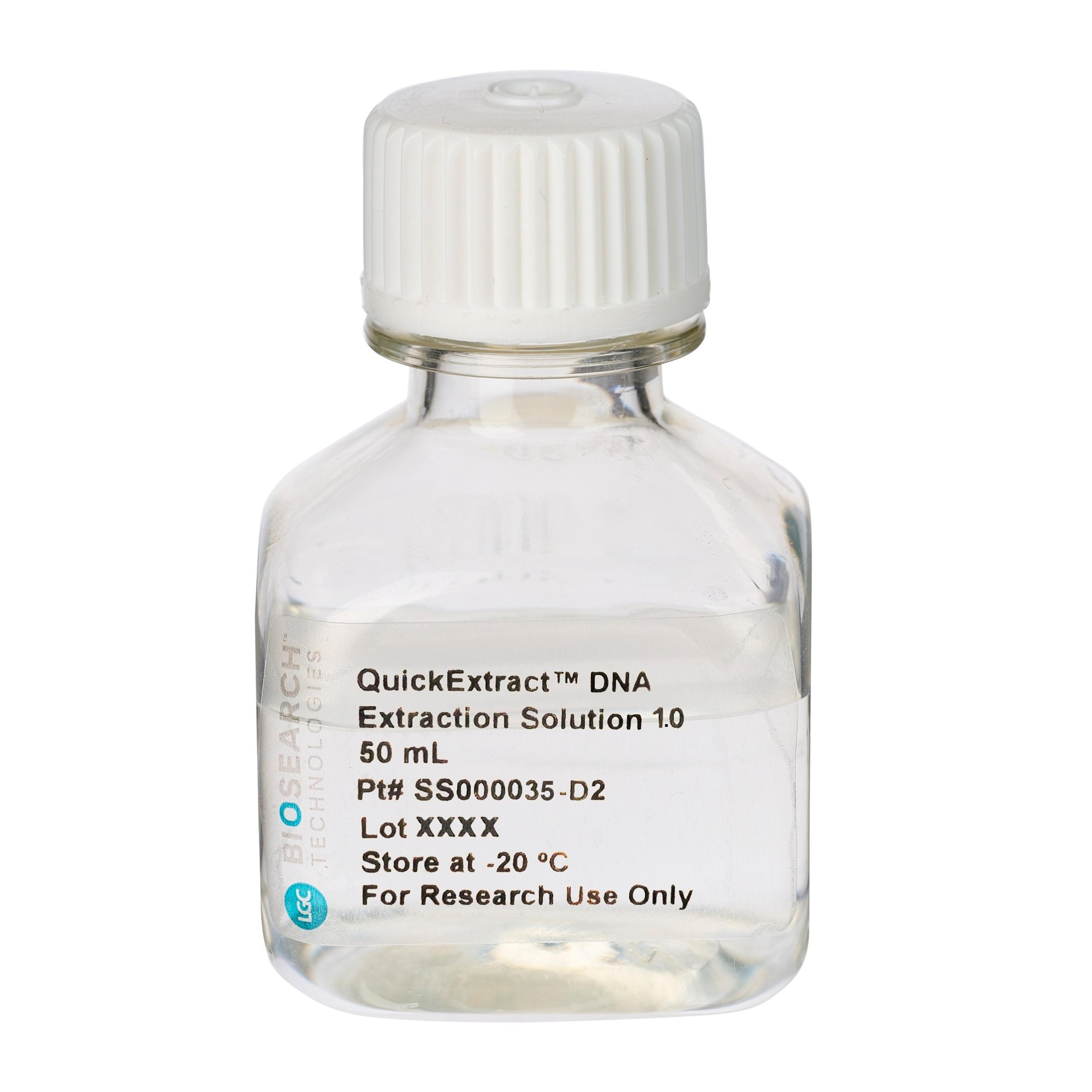
QuickExtract™ DNA Extraction Solution
LGC Diagnostics and Genomics - Rapid Genomics Genotyping SolutionsThe QuickExtract™ DNA Extraction Solution can be used to rapidly and efficiently extract PCR-ready genomic DNA from almost any sample type using a simple, one-tube protocol that takes only 3-8 minutes, depending on the sample. The extracted DNA is suitable for PCR analyses, such as genomic, transgenic, or viral DNA screening in animals, or for genetic or environmental research and screening in humans and other organisms.