
Robust Gas Chromatography Optimizes Blood Alcohol and THC Analyses at St. Olavs Hospital, Norway
Find out how chemists from the Department of Clinical Pharmacology are using gas chromatography to enhance their DUID investigations
12 Jan 2017
Editorial article

From left to right: Rune Bang Leistad, Trine Naalsund Andreassen and Jiayin Liu, Department of Clinical Pharmacology, St. Olavs Hospital, Trondheim University Hospital, Norway.
Alcoholic beverages are widely enjoyed throughout the world. Many countries establish regulations that prohibit impaired driving and set maximum allowable blood alcohol concentration levels (BAC) as a tool for enforcement and prevention. Gas chromatography based analysis is widely used to determine alcohol (ethanol) levels in the body. This is necessary to find out if a person is legally intoxicated, or driving under the influence of a variety drugs (DUID). European hospitals and medical forensic institutes can play a much greater role in forensic toxicology testing than in countries such as the US.
The Department of Clinical Pharmacology at St. Olavs University Hospital, Trondheim, Norway, offers state-of-the-art BAC testing. Sonia Nicholas, Associate Editor of SelectScience, spoke to the Chemists at St. Olavs to learn more.
SN: Trine, please could you and your team confirm your place of work and job titles for us?
TNA/RBL/JL: Our names are Rune Bang Leistad, Jiayin Liu and Trine Naalsund Andreassen. We all work as chemists in the section for research and development at the Department of Clinical Pharmacology, St. Olavs Hospital (Trondheim, Norway).
SN: Could you provide us with a brief overview of your job role?
TNA/RBL/JL: Our job roles are to develop and validate quantitative and qualitative analytical methods for therapeutic drug monitoring (TDM) research and drugs of abuse (DOA) measurements. We usually carry out these analyses on serum, whole blood and urine. Most of our tests are carried out on urine samples.
The importance of blood alcohol testing
SN: Who are your customers and how many samples do you process annually?
TNA/RBL/JL: Our customers are both primary and special healthcare centers, hospitals, rehabilitation institutions, and the police working on forensic investigations
In 2015 we analyzed about 60,000 urine, 23,000 serum, 2,900 blood and 200 vitreous humor samples. We may also analyze samples confiscated by the police e.g. liquids and powders that look suspicious. It looks like the number of samples will be the same for 2016.
SN: Why do you measure blood alcohol levels and how important is it to measure alcohol levels accurately?
TNA/RBL/JL: Blood alcohol levels are measured to determine cause of death in forensic cases. If there has been a car accident, they are also used to determine whether the driver has been driving under influence. It is very important to measure the ethanol concentration accurately. The limit for driving under influence is 0.02% (4.4 mM) in Norway. Determination of drugs of abuse testing or intoxications may also be requested.
Robust technology
SN: Could you tell us what mass spectrometry (MS) analyzers you are using in your laboratory?
TNA/RBL/JL: We have a variety of different MS analyzers in our laboratory. We use UHPLC-MSMS for the majority of our work. In addition to this we have three Thermo Scientific™ gas chromatography – mass spectrometry (GC-MS) (Thermo Scientific™ TRACE™ 1310 Gas Chromatograph, Thermo Scientific™ ISQ Single Quadrupole GC-MS system), and two high resolution platforms.
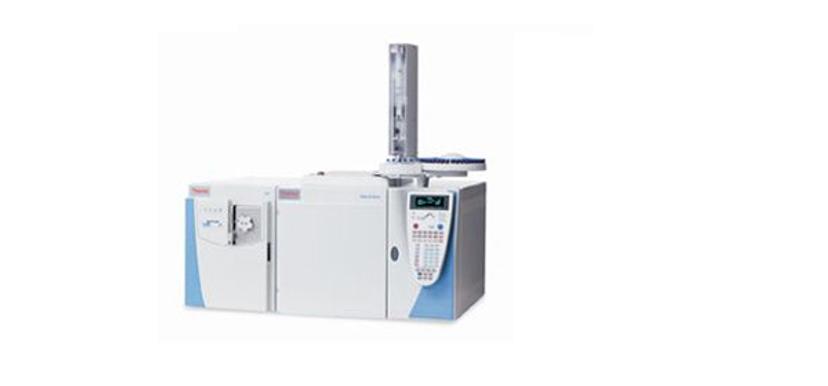
The Thermo Scientific™ ISQ Single Quadrupole GC-MS system
SN: What work are you carrying out on your GC-MS analyzers?
TNA/RBL/JL: We analyze alcohols (methanol, ethanol, isopropanol) and acetone in serum and blood, together with vitreous humor and urine from forensic samples, with headspace GC-FID (Thermo Scientific GC Trace 1310 with TriPlus RSH™ Autosampler). Our GC-MS is primarily used for analysis of ethylene glycol in serum, blood, and sometimes urine. Tetrahydrocannabinol (THC) analysis in both serum and blood is currently undergoing method validation on GC-MS. We also have a GC-MS method for formaldehyde. Previously, we also used the GC-MS for fatty acid analysis.
SN: Why did you choose these platforms for these applications? Do they have specific advantages over your previous systems?
TNA/RBL/JL: It is important to us that we use smaller sample volumes, no hazardous organic solvents (or only very small amounts) and spend minimum time on sample preparation. Short analytical runtime is also a very important factor for us when we consider new analytical methods. LC-MS/MS enables us to achieve these goals, especially when it comes to runtime and sample preparation.
Methanol, ethanol, isopropanol and acetone are volatile compounds that need no sample preparation other than dilution with water and heating before our headspace GC-FID analysis. Our alcohol analysis includes a quantitative and a confirmatory method. We use two separate columns, an analytical column and a confirmation column, both of which have been specifically designed for alcohol analysis. The analytical runtime is 3 minutes, and because the oven-temperature is held isothermal, no equilibration time is needed between injections.
For THC and other analytes that require liquid-liquid extraction and SPE as sample preparation techniques, there is a certain advantage using GC-MS over LC-MS. It is also more common to pre-concentrate the samples before analysis using GC-MS. However, derivatization is usually needed, and analysis run time can be up to 20 minutes.

Thermo Scientific™ TriPlus™ 300 Headspace Autosampler
SN: Why do you use GC-FID for alcohol analysis and why did you change from your previous method?
TNA/RBL/JL: Previously, headspace GC-MS was used for alcohol analysis. The cost of the instrumentation and maintenance were considerations we took into account when we bought the GC-FIDs (mostly costs). When we switched from GC-MS to GC-FID, we were able to lower the quantification report limit from 5 mM to 1 mM for methanol and ethanol, and the sample volume was reduced from 200 µl to 100 µl.
Support and advice
SN: Can you provide any advice to other lab managers who are evaluating a GC workflow?
TNA/RBL/JL: Our advice when you are looking for a new system is to consider a flexible system with easy maintenance, without compromising performance. Make sure you know what functionalities you really need. Many companies sell equipment with a lot of “fancy” functions/options. The more “fancy” it gets, the less robust it is! The ruggedness of the system must be taken into account. Buy a system that is robust and easy to use. Another important factor to consider is that the system has to have good technical support, that the software is easy to use and robust.
SN: What does a ‘robust system’ mean to you and how do you test for robustness?
TNA/RBL/JL: For us, robustness means that the system is a workhorse that can work 24 hours a day, 7 days a week. In addition, it also means that when maintenance has to be done, it should be easy to accomplish for anyone without any need for “special” skills. It should be easy to have the instrument up and running again (plug and play). For day to day use there should be no need for fine-adjustments. Robustness is of course difficult to test before you buy any equipment. It is therefore very important to contact other users and different distributors before buying. Carefully consider your needs and make sure to specify them in your tender.
SN: Technical support is a high priority in most labs, can you comment on your experience?
TNA/RBL/JL: Thermo Fisher Scientific has an online service center which gives good support within a reasonable timeframe. It is also easy to call them if we need some help right away which is very much appreciated! They are very service minded when it comes to finding custom made training or relevant courses. This type of collaboration, with timely service and support, is very important for us as hospital users.
Related application downloads:
- Rapid, Automated, and Accurate Determination of Volatiles in Human Blood by Headspace Gas Chromatography
- Sensitive Determination of THCCOOH in Hair to Regulatory Requirements Using Triple Quadrupole GC-MS/MS
- High Confidence, Non-Targeted Screening for Drugs of Abuse in Urine
- Increased speed and sample throughput of opioid analysis from human urine using micro-elution solid phase extraction
Related products
Request Quote for All Products
Thermo Scientific™ Q Exactive™ GC Orbitrap™ GC-MS/MS System
Thermo Fisher ScientificThe Thermo Scientific™ Q Exactive™ GC system is the first-ever combination of high resolution gas chromatography with high-resolution/accurate-mass (HR/AM) Orbitrap detection for the most comprehensive sample characterization. This easy-to-use system provides the most comprehensive characterization of samples in a single analysis for the highest confidence in compound discovery, identification, and quantitation. Building upon the flexible modularity of the Thermo Scientific™ TRACE™ 1300 Series GC, including user-exchangeable injectors and detectors, the Q Exactive GC system has the quantitative power of a GC triple quadrupole MS combined with the high precision, full scan high-resolution/accurate-mass capability that only Orbitrap technology can offer. Key Features: Advanced quadrupole technology (AQT) for high transmission of selected masses Resolving power up to 120,000 at m/z 200 Part-per-trillion-level sensitivity Thermo Scientific™ Extractabrite™ ion source for robust, rugged electron impact (EI) and chemical ionization (CI) performance Curved linear C-trap for precise ion injection HCD collision cell for higher energy collisional dissociation provides MS/MS ion characterization Intelligent identification software elucidates the nature of each injected sample. Applications: Untargeted and targeted metabolomics Food and beverage Industrial analyses Environmental Pharmaceutical Clinical and toxicology