Robot compatible microplate sample concentration

26 Jun 2007

Product news

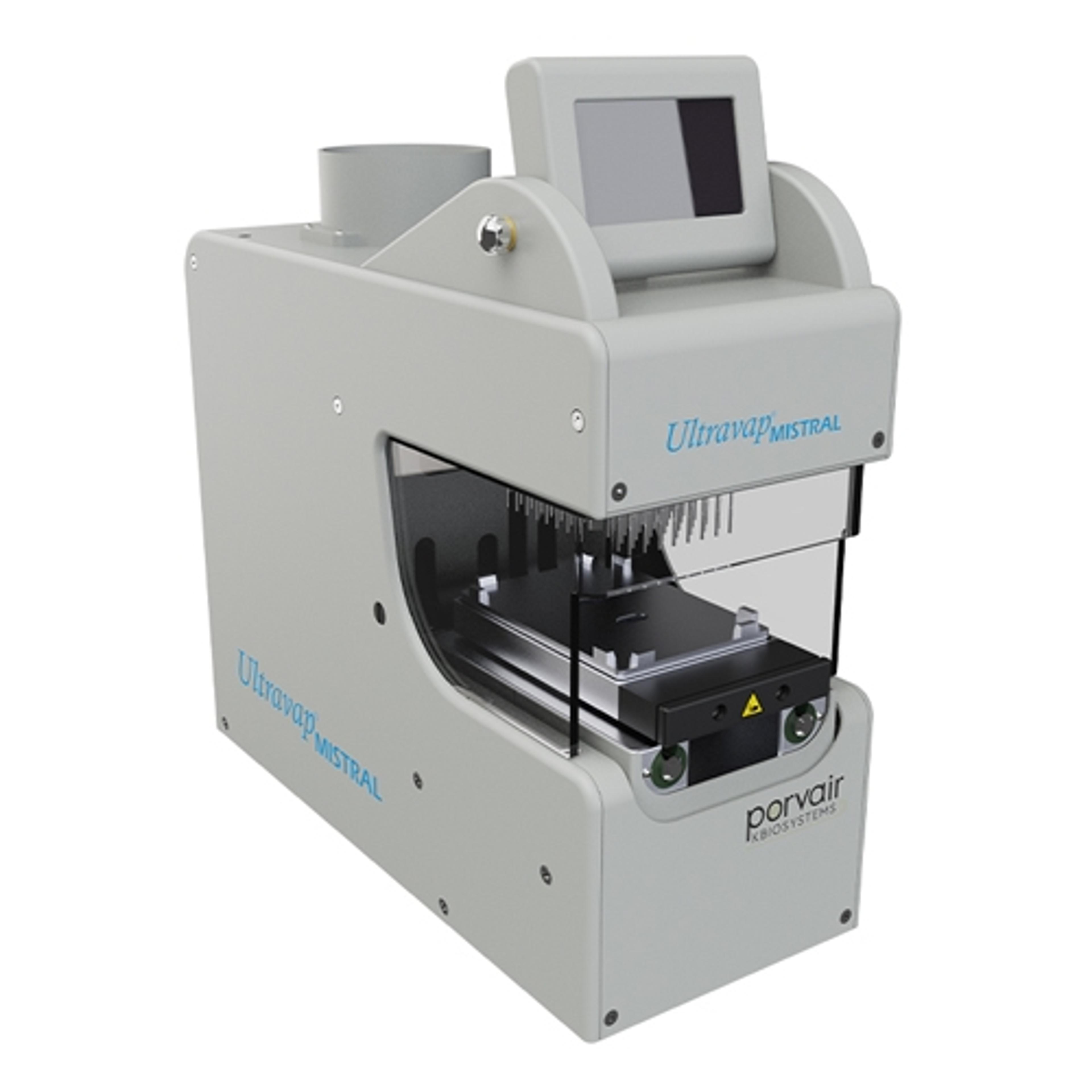
The Ultravap™ from Porvair Sciences is a robot compatible high-speed system for concentrating samples in 96 or 384-well microplates.

Targeted to remove the traditional laboratory 'bottleneck' of solvent evaporation from microplates prior to analysis or re-suspension in buffer the Ultravap™ provides the edge to laboratories looking to optimise microplate sample preparation productivity. Significant increases in sample throughput are achieved through advanced evaporator head technology and an innovative manifold design, which directly injects heated nitrogen into each individual well of the microplate simultaneously. The system is proven to remove even the most stubborn solvents in just minutes. For heat sensitive and thermally labile samples the Ultravap™ may be operated in a unique two-stage mode combining rapid initial dry-down with carefully controlled final solvent evaporation.

Different drying programme can be retained in the memory eliminating the need to set-up the system when changing from one method to another. An RS232 interface allows remote control from a PC or Liquid Handling robot using the provided command set. The ability to upload and download methods allows the Ultravap™ to be fully integrated into robotic automation systems. Using this facility a robotic arm can be used to move plates in and out of the Ultravap™ decreasing the need for operator intervention and producing further gains in productivity. Systems have already been successfully integrated with most popular Liquid Handling robots.

The Ultravap™ has been designed to be simple to install, operate and maintain. Installation requires only connection to a gas supply / cylinder and standard mains socket ; safety of operation is ensured as the CE marked compact unit fits into all fume cupboards.

Typical areas that can benefit from the Ultravap™ include drug metabolism, toxicology, pharmacokinetics and bioanalysis laboratories, where solid phase extraction is used to help isolate and analyse compounds from biological matrices. Additionally systems in lead discovery, medicinal chemistry and combinatorial chemistry departments where target compound samples often have to be concentrated prior to reconstitution in a more suitable solvent can also makes significant productivity gains.
Links

Tags

Sample PreparationSample preparation can improve the quality and speed of separation techniques. Products to assist sample preparation include filtration equipment, evaporators, membranes and sieves.Combinatorial ChemistryCombinatorial chemistry, also known as combichem, is a technique used in drug discovery to create libraries of structurally related compounds. A library is generated by synthesis with a chemical reactor system or by computer-based modeling of compound combinations. When undertaking combinatorial chemistry consider reagents, buffers, resins and standards.MicroplatesMicroplates are multi-well plates used to increase the throughput of biological investigations. The number of wells microplates contain can range from 6 to 3243 wells, with the 96-well format being the most commonly used. Microplates can come tailored for a range of applications including cell culture, PCR, filtration, storage, non-binding surface, protein crystallization, as well as pre-coated, deep well and normal Standard microplates. Additionally, options for microplate colors include clear , black, white or black with clear bottom and white with clear bottom for absorbance microplate reader applications. Find the best microplates for your lab in our peer-reviewed product directory: compare products, check customer reviews and receive pricing direct from manufacturers.Microplate Readers / DetectorsMicroplate readers are used to automate the detection and analysis of labeled or label-free components in microplates during assays or live-cell monitoring. Microplate readers are generally distinguished by their mode of detection. Types include absorbance, luminescence, fluorescence intensity, fluorescence polarization, TRF / FRET and multimode microplate readers. Microplate readers deliver a high throughput of samples by reading multiple wells simultaneously, with the 96-well format the most commonly used. As a result, microplate readers are often used in the drug discovery, bioassays, research and pharmaceutical industries for screening applications. Microplate loading can also be automated, with robotic microplate stackers to increase throughput. Find the best microplate readers in our peer-reviewed product directory: compare products, check customer reviews and receive pricing direct from manufacturers.Medicinal ChemistryMedicinal chemistry is a broad discipline encompassing the design, identification, synthesis and development of chemicals in drug discovery. It includes a number of techniques covering structural biology, synthetic chemistry and molecular biology. Technologies used in medicinal chemistry include ADME, lab-on-a-chip, high content screening and assay assembly.Biopharmaceutical AdvancesBiopharmaceutical advances follow the development of pharmaceuticals derived from biotechnology, also known as biotechnology medicines. Biopharmaceuticals may be produced from cell lines, plants, or microbial cells. Important considerations of biopharmaceutical use include application, cost, production process and purification.
Robot compatible microplate sample concentration