Rigaku to Promote Latest X-ray Analytical Instrumentation at Norwegian X-Ray Conference

Rigaku will be in attendance at the 19th Norwegian X-RAY Conference, showcasing the company’s latest analytical technology and techniques

16 Aug 2016
Weylan Kiam-Laine
Microbiologist

Product news

Rigaku Corporation will be presenting its diverse lines of analytical X-ray instrumentation at the 19th Norwegian X-RAY Conference in Fevik, Norway, Monday, September 5 through Wednesday, September 7, 2016. The event will be hosted by the Analytical Sciences division of the Norwegian Chemical Society.

The purpose of the conference is to bring industrial and academic experts and users of X-ray fluorescence (XRF) and X-ray diffraction (XRD) technology in Scandinavia together with manufacturers and suppliers of analysis instruments, preparation equipment and peripherals.

Rigaku will deliver informative presentations covering various XRF applications and techniques.

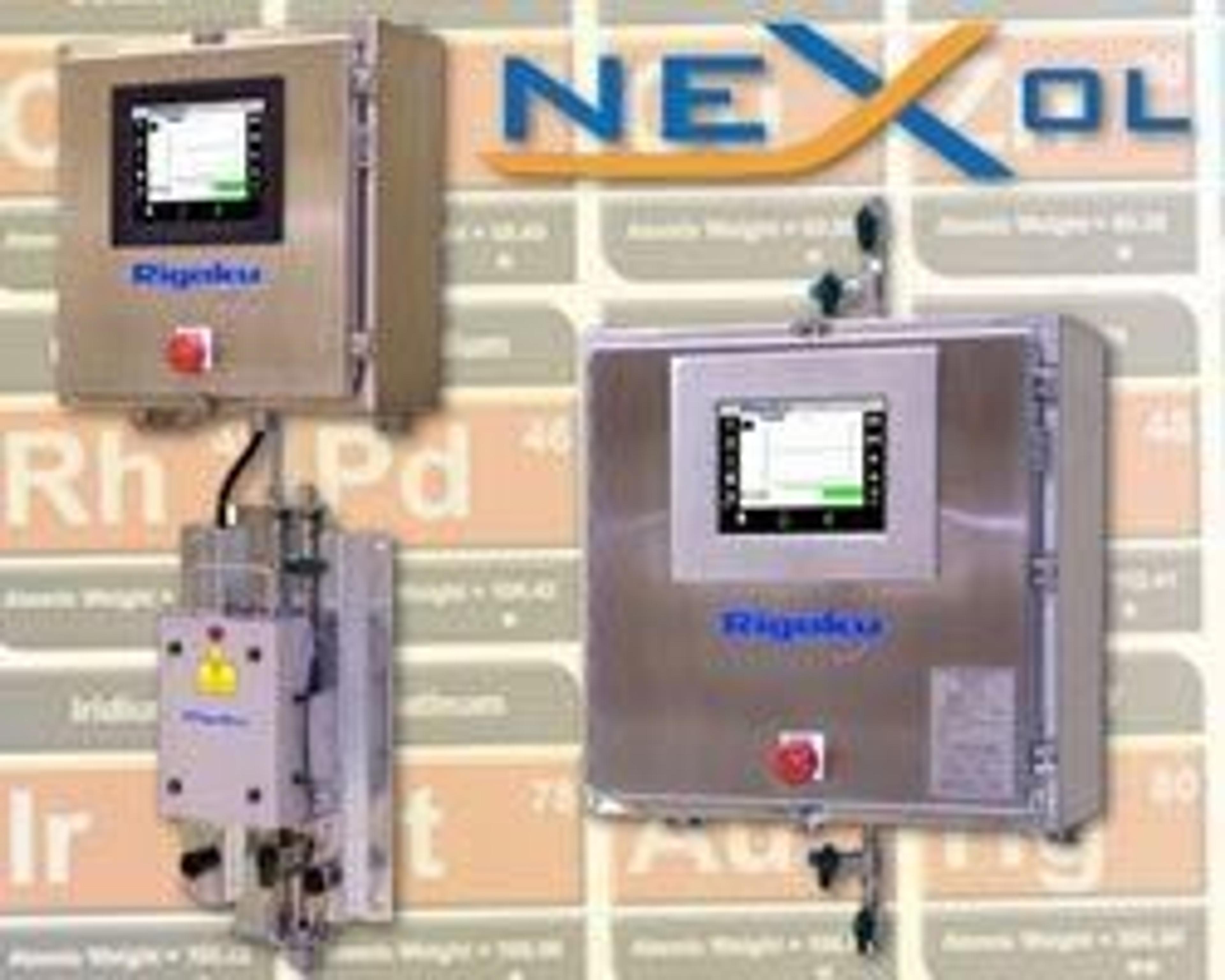
NEX OL Process Elemental Analyzer

Rigaku Corporation

On-line, real-time analysis by Energy Dispersive X-ray Fluorescence (EDXRF). Featuring advanced 3rd generation energy dispersive X-ray fluorescence (EDXRF) technology, the Rigaku NEX OL represents the next evolution of process elemental analysis for liquid stream and fixed position web or coil applications. Designed to span from heavy industrial through to food grade process gauging solutions, the NEX OL is configurable for use in both classified and non-classified areas. Features and Benefits of NEX OL Process Elemental Analyser: Real-time process control by elemental analysis Measure elements 13Al to 92 From ppm levels to weight percent (wt%) Robust NEX QC+ optics with SDD detector Industrial touch screen user interface Easy empirical calibration and routine operation Toolless routine maintenance Multiple remote analysis heads (non-classified) No dangerous radioisotopes

(0)

Links

Tags

X-ray CrystallographyX-ray crystallography is an analytical technique used to determine the arrangement of atoms in a crystal. Monochromatic x-rays are produced from a synchrotron or x-ray generator. An x-ray crystallography system uses a detector to measure the x-ray diffraction from the crystal. The information is used to generate a 3D image of the crystal.X-Ray Diffraction and SpectroscopyX-Ray diffraction & spectroscopy are used in material characterization to discern the structure and elemental composition of a sample. X-Ray diffractometers (XRD) are superior instruments in elucidating the dimensional atomic structure of crystalline materials, including powders, thin films and single crystals. For large unit cells or ordered macromolecules, consider small-angle X-ray scattering (SAXS). X-ray spectroscopic techniques include X-ray fluorescence (XRF) and X-ray photoelectron spectroscopy (XPS), both providing simple and accurate methods for determining the elemental composition of a material. Energy dispersive (EDXRF) and wavelength dispersive (WDXRF) XRF spectrometers are available, as well as handheld/portable devices. High-resolution, 3D microstructure characterization of materials can be achieved with X-ray microscopes combining sub-micron resolution imaging with 3D computed tomography. Find the best XRD and XRF spectrometers in our peer-reviewed product directory: compare products, check customer reviews and receive pricing direct from manufacturers.X-Ray FluorescenceX-ray fluorescence (XRF) is an analytical technique used to determine the elemental composition of materials. It is widely used in geology, materials science, and environmental testing for detecting heavy metals and other elements. Browse our peer-reviewed product directory to find the best XRF systems, compare products, check reviews, and get pricing directly from manufacturers.X-Ray SourceX-ray Microscopy
Rigaku to Promote Latest X-ray Analytical Instrumentation at Norwegian X-Ray Conference