Rigaku Publishes New Article on Elemental Analysis of Pharmaceuticals by WDXRF

28 Mar 2017
Mia Harley
Biochemist

Industry news

Rigaku Corporation has published a new article examining how wavelength dispersive X-ray fluorescence (WDXRF) can be used to detect and quantify elemental impurities in pharmaceuticals, in compliance with new guidelines from the International Conference on Harmonization (ICH). The guidelines enumerated in the document, ICH Q3D, “Elemental Impurities,” call for the pharmaceutical industry to test its products for elemental impurities, outline the impurity limits, and suggest analytical procedures.

The article, entitled “Elemental Analysis by WDXRF: A Simplified Approach,” appears in the March 2017 edition of Tablets and Capsules and was authored by Glenn Williams, PhD, Thanh Nguyen, PhD and Nicole McNulty of Rigaku. It describes how WDXRF can be used to detect and quantify elemental impurities in compliance with ICH Q3D. It also discusses how WDXRF—a direct technique that eliminates sample digestion—can analyze final products as unadulterated tablets in a nondestructive way. In basic terms, WDXRF entails excitation of atoms in a solid or liquid sample to produce characteristic X-rays that are separated by wavelength dispersion and detected.

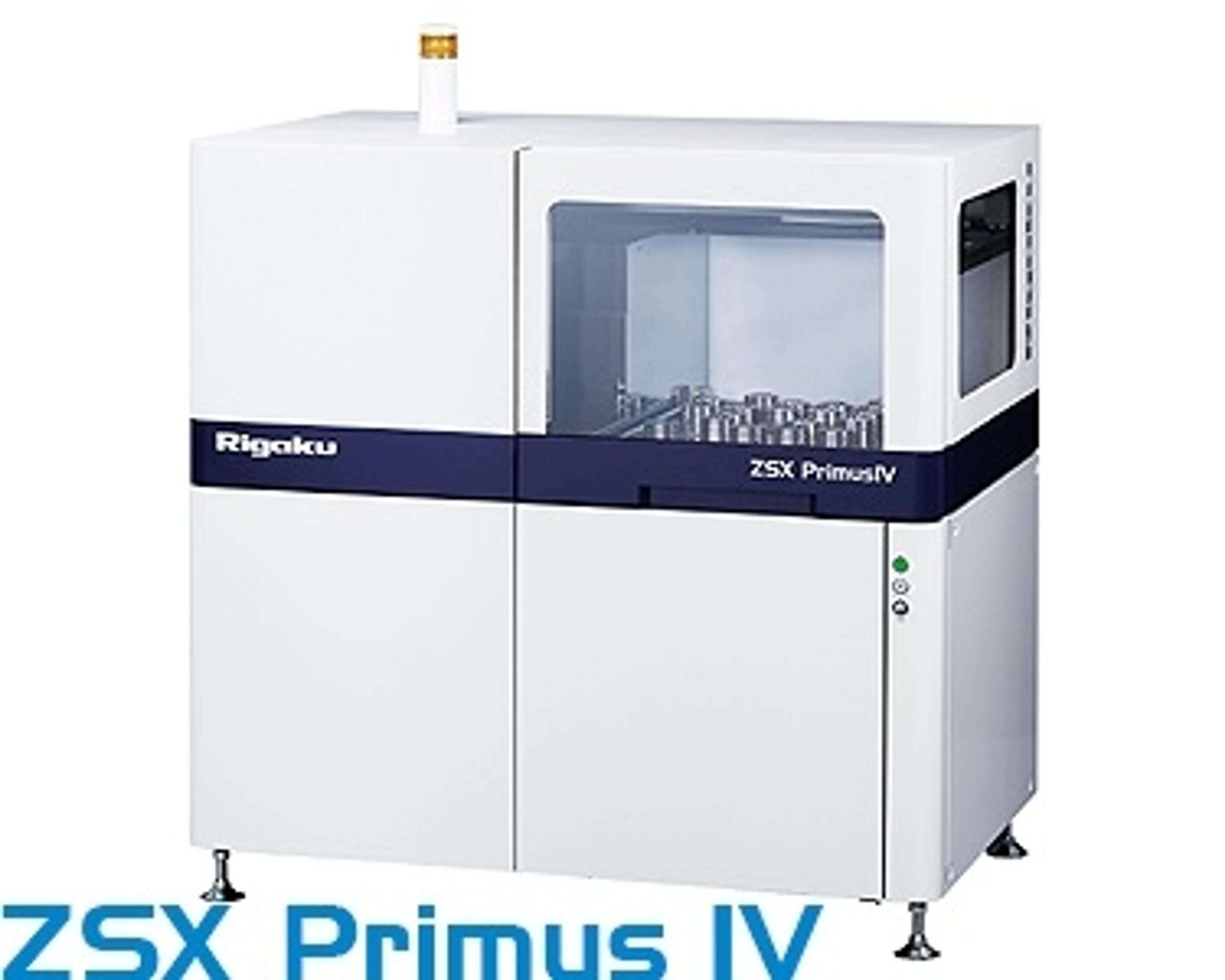
An overview of X-ray fluorescence technology, standard and sample preparation procedures, analysis methodology, and detailed results are presented. All quantitative analyses were performed using a Rigaku ZSX Primus IV sequential WDXRF spectrometer. The unit operates at a maximum power of 4 kilowatts and features an optics-above configuration.

Laboratories that use inductively coupled plasma (ICP) techniques typically focus their control strategy on raw materials and processes, and avoid routine testing of final dosage forms. The results reported in the new article demonstrate the huge potential that the WDXRF technique has for analyzing finished pharmaceutical dosage forms. Implementing WDXRF— an easy-to-operate, nondestructive, and direct analysis technique—enables lab personnel to conduct testing that ensures finished products meet needed safety requirements.

Links

Tags

Fluorescence SpectroscopyFluorometers and spectrofluorometers (also called fluorescence spectrometers) are used to measure the intensity and wavelength of fluorescent light emitted from a sample after excitation by illumination. Spectrofluorometers utilize monochromators to select the desired wavelengths, whereas filter fluorometers employ a set of filters. Spectrofluorometers for measuring steady-state fluorescence and lifetime fluorescence (or time-resolved fluorescence) are available, as well as fluorescence microscopes and microplate readers. Find the best fluorescence spectroscopy products in our peer-reviewed product directory: compare products, check customer reviews and receive pricing direct from manufacturers.X-Ray Diffraction and SpectroscopyX-Ray diffraction & spectroscopy are used in material characterization to discern the structure and elemental composition of a sample. X-Ray diffractometers (XRD) are superior instruments in elucidating the dimensional atomic structure of crystalline materials, including powders, thin films and single crystals. For large unit cells or ordered macromolecules, consider small-angle X-ray scattering (SAXS). X-ray spectroscopic techniques include X-ray fluorescence (XRF) and X-ray photoelectron spectroscopy (XPS), both providing simple and accurate methods for determining the elemental composition of a material. Energy dispersive (EDXRF) and wavelength dispersive (WDXRF) XRF spectrometers are available, as well as handheld/portable devices. High-resolution, 3D microstructure characterization of materials can be achieved with X-ray microscopes combining sub-micron resolution imaging with 3D computed tomography. Find the best XRD and XRF spectrometers in our peer-reviewed product directory: compare products, check customer reviews and receive pricing direct from manufacturers.Particle CharacterizationParticle characterization instruments are used to determine particle size distribution, shape, surface area, zeta potential, density and porosity of particles and materials. Multiple tecchniques are available for determining particle size, shape and count including dynamic light scattering (DLS), laser diffraction, electrozone (Coulter technique), imaging particle analysis and single particle optical sensing. Determine the density of your material with a gas pycnometer or examine its surface area and porosity with gas adsorption analyzers and mercury porosimeters. Find the best particle characterization instruments in our peer-reviewed product directory: compare products, check customer reviews and receive pricing direct from manufacturers.X-Ray FluorescenceX-ray fluorescence (XRF) is an analytical technique used to determine the elemental composition of materials. It is widely used in geology, materials science, and environmental testing for detecting heavy metals and other elements. Browse our peer-reviewed product directory to find the best XRF systems, compare products, check reviews, and get pricing directly from manufacturers.Elemental AnalysisElemental analysis involves determining the elemental composition of a sample, often used in environmental, pharmaceutical, and material sciences. Techniques like ICP-MS, X-ray fluorescence, and atomic absorption spectroscopy allow precise quantification of elements such as metals and nonmetals in complex matrices. Browse our peer-reviewed product directory to find the best elemental analysis tools, compare products, check reviews, and get pricing directly from manufacturers.