
Rigaku Publishes Method for EDXRF Analysis of Dolomite
Applied Rigaku Technologies, Inc. announce a new empirical method for the elemental analysis of oxide minerals in dolomite
18 Jan 2017
Product news
Rigaku Application Note #1626 describes a method employing energy dispersive X-ray fluorescence (EDXRF) for the measurement of calcium carbonate (CaCO3), magnesium carbonate (MgCO3), ferric oxide (Fe2O3), aluminum oxide (Al2O3), silicon dioxide (SiO2) and potassium oxide (K2O) in dolomite using empirical calibration. The report includes detailed information describing sample preparation, calibration and repeatability, and highlights the performance of the Rigaku NEX QC+ high-resolution benchtop EDXRF spectrometer.
Dolomite is typically used as an aggregate in concrete and asphalt for building roads. During mining and processing operations, dolomite composition must be monitored and controlled to ensure proper quality and desired characteristics for various applications.
For the analysis described in the report, the sample is ground into a homogeneous powder approximately 100-200 mesh and prepared as a hydraulically pressed pellet.
Measurement was performed using the NEX QC+ EDXRF spectrometer, a self-contained analyzer with simple touch screen operation; it is suited for at-line control and quality checks throughout the mining and processing of dolomite. As a high-performance, low cost benchtop EDXRF system, the NEX QC+ analyzer is designed to provide an optimal means for measuring major carbonate and oxide components in dolomite, with simple and intuitive software designed for the non-technical at-line operator or for use in quality control labs.
The performance shown in the report demonstrates that the NEX QC+ system provides excellent sensitivity and performance for the measurement of carbonates and major oxides in dolomite. Self-contained with simple touch screen operation, NEX QC+ is an ideal tool for at-line control and quality checks throughout the mining and processing of dolomite.
A copy of this report may be requested here.
Related products
Request Quote for All Products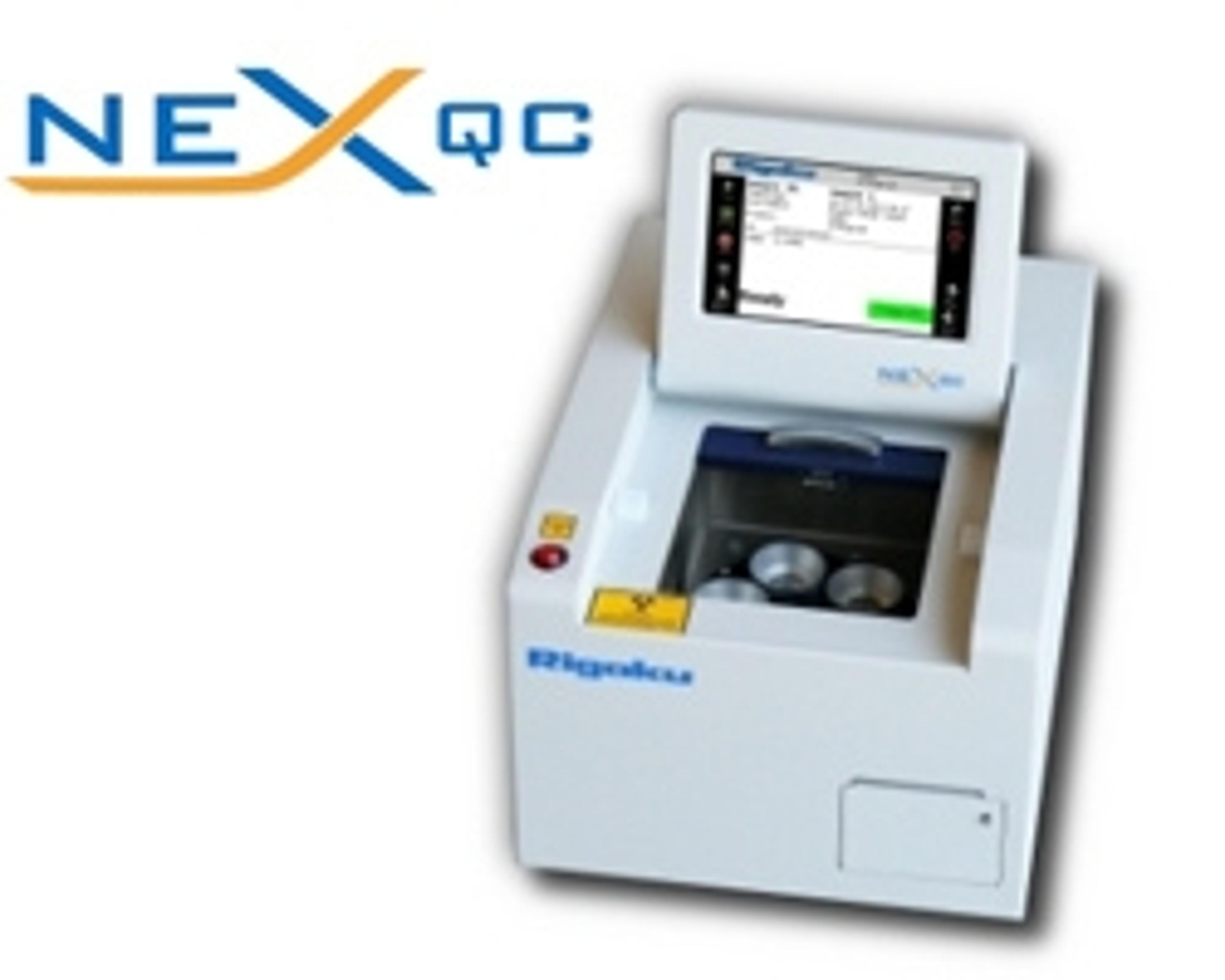
Rigaku NEX QC: Low Cost Elemental Analyzer
Rigaku CorporationAs a premium low cost benchtop Energy Dispersive X-ray Fluorescence (EDXRF) elemental analyzer, the Rigaku NEX QC delivers wide elemental coverage with an easy-to-learn software interface in a robust package designed for industrial at-line quality control applications. Specifically designed for routine quality control elemental analysis applications, the new Rigaku NEX QC features an intuitive "icon-driven" touch screen interface for easy operation and a built-in printer for convenience.The shuttered 50kV X-ray tube and Peltier cooled semiconductor detector deliver exceptional short-term repeatability and long-term reproducibility with excellent element peak resolution. This high voltage capability (50 kV), along with multiple automated X-ray tube filters, provides a wide range of XRF applications versatility and low limits-of-detection (LOD).NEX QC Features: Analyze 11Na to 92U non-destructively Solids, liquids, alloys, powders and thin films 50kV X-ray tube for wide elemental coverage Semiconductor detector for superior data quality Modern smartphone style "icon driven" user interface Multiple automated tube filters for enhanced sensitivity Convenient built in thermal printer Low cost with unmatched performance-to-price ratio Optional fundamental parameters

NEX QC+ EDXRF Analyzer
Rigaku CorporationFor more demanding applications, or for situations where analysis time or sample throughput is critical, Rigaku offers the new NEX QC+ spectrometer. Employing the next generation silicon detector technology, the enhanced NEX QC+ affords significant improvement in elemental peak resolution and counting statistics, resulting in superior calibrations and measurement precision for the most challenging measurements.Specifically designed for routine quality control applications, the new Rigaku NEX QC+ features an intuitive "icon-driven" touch screen interface for easy operation and a built-in printer for convenience.The shuttered 50kV X-ray tube and Peltier cooled semiconductor detector deliver exceptional short-term repeatability and long-term reproducibility with excellent element peak resolution. This high voltage capability (50 kV), along with multiple automated X-ray tube filters, provides a wide range of applications versatility and low limits-of-detection (LOD).NEX QC+ Features: Analyze 11Na to 92U non-destructively Solids, liquids, alloys, powders and thin films 50kV X-ray tube for wide elemental coverage SDD detector for superior resolution and sensitivity Modern smartphone style "icon driven" user interface Multiple automated tube filters for enhanced sensitivity Convenient built in thermal printer Low cost with unmatched performance-to-price ratio Optional fundamental parameters