
Rigaku Announces Further Enhancements to its Lab X-ray Source
13 Nov 2012Product news
Rigaku Corporation introduced the new FR-X rotating anode X-ray source at the 2012 meeting of the PSDI (Protein Structure Determination in Industry) meeting being held in Chantilly, France November 11-13. The FR-X was designed to be utilized in structural biology and material science, and produces the highest usable X-ray flux available to the laboratory researcher.
The new generator provides 20% more flux compared to the previous model, and a new direct-drive anode design reduces maintenance expense considerably. The dual port design of the FR-X, coupled with an optional dual wavelength anode, provides the ultimate in experimental flexibility and end station utilization.
Rigaku introduced the first rotating anode X-ray generator in 1952 and has continuously advanced the technology since. Ninety percent of the protein structures deposited in the Protein Databank (PDB) that was determined in a home lab was solved from data measured with a Rigaku rotating anode source.
Related products
Request Quote for All Products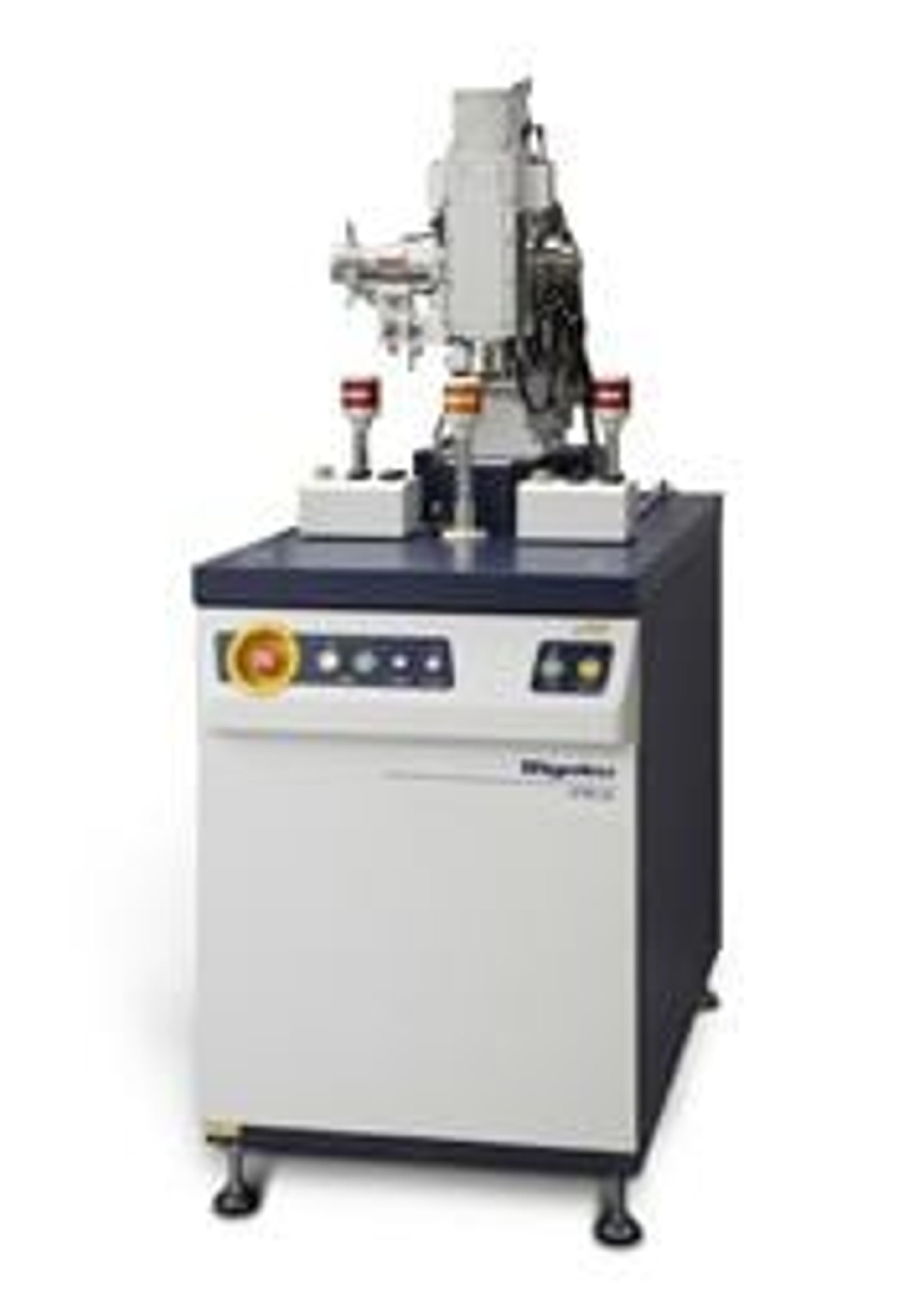
FR-X Rotating Anode X-ray Source
Rigaku CorporationThe FR-X was designed to be utilized in structural biology and material science, and provides the highest usable X-ray flux available for the laboratory researcher.The new design provides 20% more flux compared to the previous model as well as a new direct-drive anode that reduces maintenance expense considerably. The standard dual port design can be coupled with an optional dual wavelength anode to provide the ultimate in experimental flexibility and end-station utilization.The FR-X design is based on decades of proven craftsmanship to provide outstanding instrument reliability. With a Rigaku X-ray source you do not take a chance that your X-ray source will fail to provide you with the uptime and performance that your research demands.Perhaps the most important feature of the FR-X is the standard dual port configuration. When investing in a high-end X-ray source, only a dual-port configuration allows one to obtain the most from their investment as well as take full advantage of the photons that are generated. Whether you have the need for two experimental end-stations now or not, there is no reason to limit the expansion of your facility in the future.FR-X Features: Reliable, Dependable, Powerful Engineered to operate 24/7 Dual ports for maximum flexibility Optional dual wavelength configurations