
Rigaku Americas strengthens team by hiring X-ray analysis expert Dr. Simon Bates
Dr. Simon Bates’ addition supports continued focus on innovation, development, and customer experience for X-ray analysis
29 Mar 2021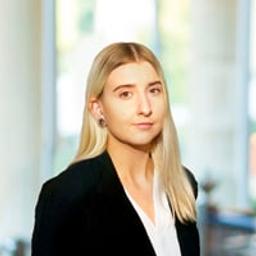
Industry news
Rigaku Americas Corporation has announced the hiring of Dr. Simon Bates to the X-ray analysis team. Dr. Bates brings a wealth of experience and knowledge to the Rigaku team, with decades of hands-on work in X-ray diffraction, X-ray reflectivity and other advanced material analyses, combined with business acumen.
Simon joins a passionate team of scientists and engineers with deep, industry-leading knowledge and a focus on serving the customer first. The team provides solutions for their users based on a detailed understanding of their needs and applications. Rigaku will use his vast experience with applications and hardware to help tailor systems like the highly versatile SmartLab XRD to clients’ needs and to push Rigaku technologies into new markets.
Commenting on his new appointment, Dr. Bates said, "Rigaku has always been an innovative organization. I am happy to be part of a company that's at the cutting edge of technology serving a wide variety of industries."
Keith Crane, President of Rigaku Americas Corporation replied, "We are grateful to be adding Dr. Bates to our team. We always strive to provide great value to the people we serve and believe Simon's expertise and enthusiasm will amplify and extend that value in many ways."
Simon’s early work at both Philips NV and Bede Scientific focused on the development of high-resolution X-ray methods for the measurement and modeling of advanced materials. His recent work at Triclinic Labs focused on the development of advanced characterization methods for formulated pharmaceutical products based on the analysis of structure (crystalline, non-crystalline, meso-phase, polymorph, salt, co-crystal, etc.), microstructure (texture, strain, crystal size, habit, etc.) and their functional relationships in the solid state.
Simon also holds an appointment as an Adjunct Professor at Long Island University (LIU) in the Division of Pharmaceutical Sciences. He has an impressive publication list, with numerous papers featuring data generated on Rigaku instruments. His experience will be invaluable for both clients and the Rigaku team.
Want the latest science news straight to your inbox? Become a SelectScience member for free today>>
Related products
Request Quote for All Products
SmartLab
Rigaku CorporationThe SmartLab is the most novel high-resolution diffractometer available today. Perhaps its most novel feature is the SmartLab Guidance software, which provides the user with an intelligent interface that guides you through the intricacies of each experiment. It is like having an expert standing by your side. The system incorporates a high resolution θ/θ closed loop goniometer drive system, cross beam optics (CBO), an in-plane scattering arm, and an optional 9.0 kW rotating anode generator.Coupling a computer controlled alignment system with a fully automated optical system and the Guidance software makes it easy to switch between hardware modes, ensuring that your hardware complexity is never holding back your research.Whether you are working with thin films, nanomaterials, powders, or liquids the SmartLab will give you the functionality to make the measurements you want to make when you want to make them.SmartLab Features: Full automated alignment under computer control. Optional in-plane diffraction arm for in-plane measurements without reconfiguration. Focusing and parallel beam geometries without reconfiguration. SAXS capabilities.