
Revvity ignites scientific breakthroughs at SLAS2025
Revvity is set to unveil its new Phenologic.AI software at SLAS2025 International Conference & Exhibition in San Diego, California
27 Jan 2025
At SLAS2025 International Conference & Exhibition, Revvity will be showcasing its new Phenologic.AI™ software, designed to redefine cellular imaging workflows for Revvity’s Harmony™ and Signals Image Artist™ software packages. The Phenologic.AI software leverages pre-trained deep-learning models to analyze brightfield images, providing an additional multiplexing channel and streamlined workflows for live cell analysis.
This significant advancement expands the possibilities for understanding cellular behaviors and disease mechanisms. The Phenologic.AI offering provides scalable, efficient, and objective analysis and can be integrated with Revvity Signals Research Suite™ to provide more in-depth data analytics.
Complementing this launch, Revvity will also introduce other notable products, including the latest Harmony™ 5.3 software, which simplifies data management for high-content imaging and analysis, providing faster and more intuitive data handling.
SLAS attendees can explore these technologies and more at Revvity’s booth (#1318), where over 40 products from its life sciences portfolio will be showcased. These include solutions for assay development, automation, cellular research, liquid handling, flow cytometry, and reagents, all designed to accelerate innovation and efficiency across drug discovery and development.
Key exhibits will include:
- Assay development and automation: Custom automation solutions to boost throughput and reliability, including the explorer™ G3 integrated workstation.
- Automated liquid handling: The Fontus™ liquid handler offers intuitive software, optimized protocols, and reformatting capabilities for streamlined productivity.
- Cell imaging and AI: Advanced tools like the Opera Phenix™ Plus HCS system, alongside the Phenologic.AI offering.
- Reagents portfolio: Including PhenoVue™ imaging reagents, BioLegend antibodies, and Dharmacon™ CRISPR screening libraries.
For research use only. Not for use in diagnostic procedures.
Want the latest science news straight to your inbox? Become a SelectScience member for free today>>
Related products
Request Quote for All Products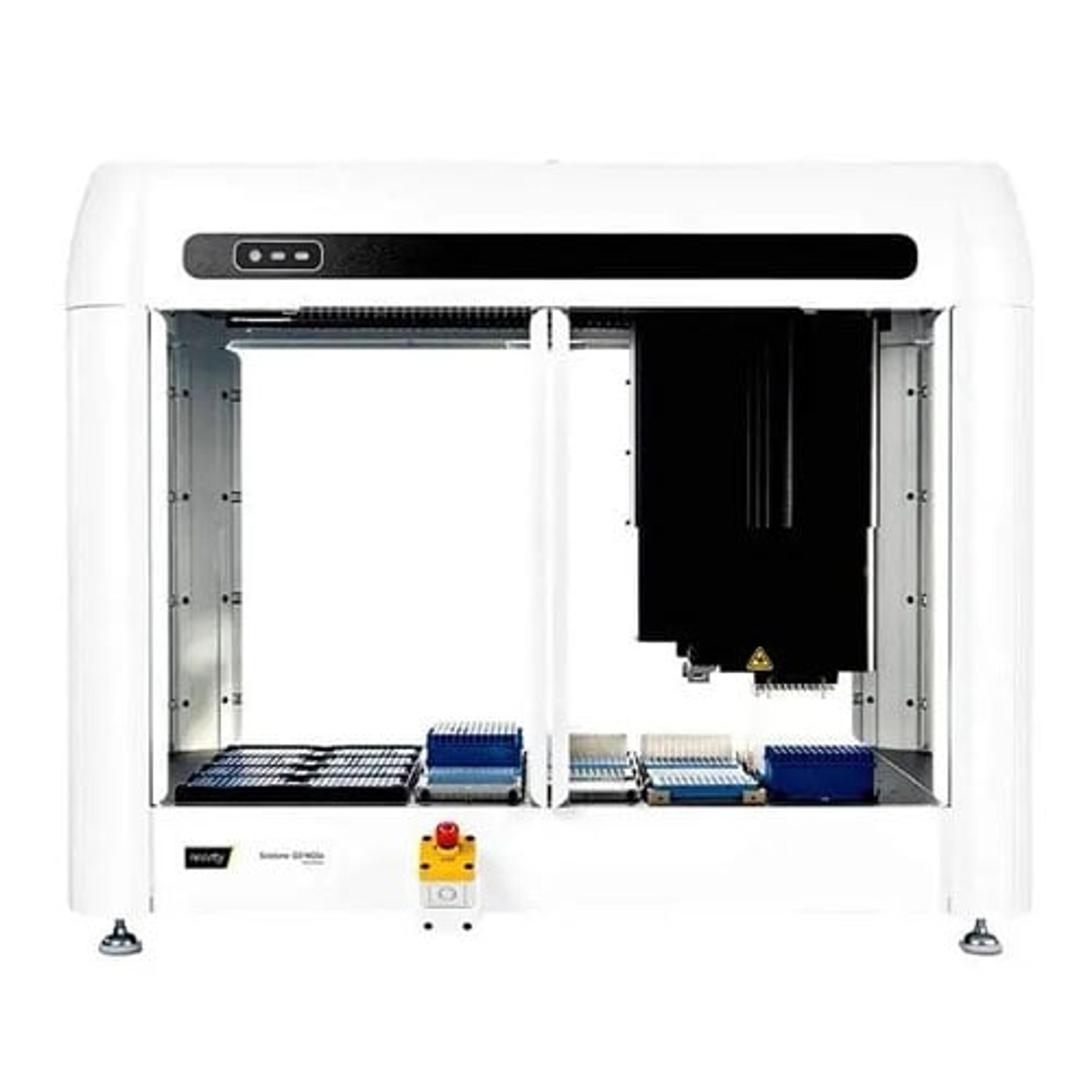
Sciclone™ G3 NGS Workstation
RevvityThe Sciclone™ G3 NGSx workstation is a complete benchtop solution for the automated construction of up to or greater than 96 libraries per day. For Research Use Only. Not for use in diagnostic procedures.