Revolutionizing the lab: A spotlight on the latest innovations and breakthroughs from SLAS 2023

Discover the game-changing advancements and key discussions driving lab automation forward

25 May 2023

Dora Wells
Clinical Content Editor

Editorial article

SelectScience roundup of SLAS 2023

The recent international conference and exhibition hosted by the Society for Laboratory Automation and Screening (SLAS) in San Diego, from February 25 to March 1, 2023, provided an invaluable opportunity for scientists worldwide to gather and reflect on the latest advancements in the field. The innovative new technologies showcased at this event will undoubtedly help shape the future of laboratory automation and screening and will form the backbone of future scientific breakthroughs.

For many years, the SelectScience®editorial team has been participating in scientific conferences around the globe to provide audiences with news regarding cutting-edge technological advances, research breakthroughs, and emerging products that could benefit their research and work. Recognizing the crucial role that these events play in the advancement of science, SelectScience presents live show and post-show conference highlights, featuring ground-breaking technology and advancements across a variety of scientific domains.

Some key themes that emerged during SLAS 2023 included how artificial intelligence may play a role in accelerating the discovery of therapeutics and biomarkers, what laboratories of the future may look like, and how automation can be used to free up scientists’ time so they can focus on performing the science that matters. Read on for key news highlights, expert interviews, and product launches from the show.

Laboratory automation news: Technology highlights

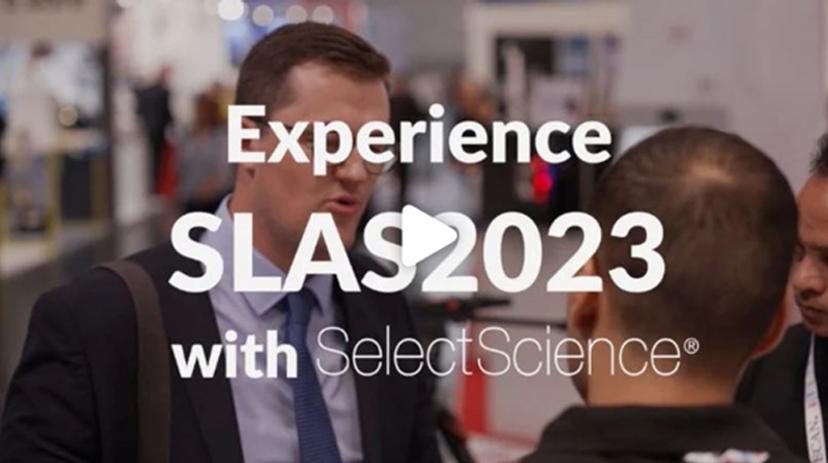
SelectScience spoke to manufacturers and scientists on the show floor to learn more about the latest laboratory automation products streamlining workflows. Watch the video below to see our editorial roundup of SLAS 2023. Then explore a selection of key video interviews filmed during the show.
The impact of barcoded sample management systems in cancer therapy development pipelines

The impact of barcoded sample management systems in cancer therapy development pipelines

Gina Chen, Compound Manager at Ikena Oncology, described how the Mosaic Sample Management Software by Titian has helped to transform Ikena Oncology’s small molecule development pipelines.

Watch video


Streamlining compound library preparation with an integrated sample management platform

Streamlining compound library preparation with an integrated sample management platform

Corbin Occhino, Senior Scientist at Tyra Biosciences, shared how the Mosaic Sample Management Software by Titian has transformed the way the precision oncology company manages its compound libraries.

Watch video


Increase cell line selection throughput for biotherapeutics with automated clone selection

Increase cell line selection throughput for biotherapeutics with automated clone selection

Dieter Wagner, Product Manager of Cytomat at Thermo Fisher Scientific, explained how the new Thermo Scientific Cytomat 2 Selector can accelerate your cell line selection while simplifying your workflow with less consumables, and hands-on time.

Watch video


Dynamic laboratory automation system can easily reconfigure your setup

Dynamic laboratory automation system can easily reconfigure your setup

Shaival Desai, Product Manager, Lab Automation Hardware at Thermo Fisher Scientific, shared how Thermo Scientific SmartCarts transform conventional docking methods to connect your workflows, while the Thermo Scientific Spinnaker microplate moving robot can easily adjust to new configurations.


Watch video


Accelerate genomics research with this compact, all-in-one liquid handler

Accelerate genomics research with this compact, all-in-one liquid handler

Paul Lomax, Head of Genomics at SPT Labtech, explained how the firefly® all-in-one compact liquid handling workstation from SPT Labtech incorporates pipetting, dispensing, incubating, and shaking, making it ideal for genomics applications.

Watch video


Miniaturize NGS methods with an automated liquid handler duo

Miniaturize NGS methods with an automated liquid handler duo

Chris Waddling, Field Application Scientist at SPT Labtech, described how genomics researchers can miniaturize next-generation sequencing (NGS) methods to increase throughput and lower costs using the combination of the mosquito® and dragonfly® automated liquid handlers from SPT Labtech.

Watch video


Revolutionizing tube labeling with advanced laser tech

Revolutionizing tube labeling with advanced laser tech

Waldemar Janzen, Global Product Manager at LVL Technologies GmbH & Co. KG, introduced the new Tube Laser Marker (TLM 864) and explained how this instrument can mark tubes with specific information, without the need for time-consuming and non-secure labeling and lettering methods.


Watch video


Airflow in automation: Custom solutions for enhanced biosafety

Airflow in automation: Custom solutions for enhanced biosafety

Seth De Penning and Drew Pippin from NuAire discussed how a biosafety cabinet is an important complement to any automated equipment, and detailed how a custom solution can overcome the challenges with airflow.


Watch video


Highlights from the show also included a series of presentations from key opinion leaders, hosted by Tecan. The presentations included talks on a semi-automated workflow for cell seeding drug treatment and the real-time assessment of snake venom toxicity on a 3D blood vessel model. CN Bio presented its portfolio of PhysioMimix OOC Microphysiological Systems and Automata displayed its LINQ platform for fully automated workflows and the transport of labware.

The SelectScience team also caught up with ePrep to learn more about its robotic sample preparation workstation for chromatography users and PerkinElmer for an overview of its new EnVision® Nexus multimode plate reader.


For more coverage on future and past innovations in science, visit our dedicated Accelerating Science Special Feature page

Links

Tags

AntibodiesAntibodies are used in techniques such as confocal and fluorescence microscopy, flow cytometry, ELISA, ELISPOT, immunohistochemistry, western blotting and immunopreciptation. Select specific antigen reactivity, high specific affinity, low non-specific binding, monoclonal or polyclonal, primary or secondary antibodies and associated conjugates such as an enzyme or dye for visualization.Lab-on-a-ChipLab-on-a-chip (LOC) technology uses microfluidic chips, such as microarrays, to perform biochemical assays on a small scale. Benefits of lab-on-a-chip include the small volume of sample required as well as the speed of analysis. In selecting lab-on-a-chip devices consider the assay, cost, reliability, sensitivity and signal to noise ratio.MicroplatesMicroplates are multi-well plates used to increase the throughput of biological investigations. The number of wells microplates contain can range from 6 to 3243 wells, with the 96-well format being the most commonly used. Microplates can come tailored for a range of applications including cell culture, PCR, filtration, storage, non-binding surface, protein crystallization, as well as pre-coated, deep well and normal Standard microplates. Additionally, options for microplate colors include clear , black, white or black with clear bottom and white with clear bottom for absorbance microplate reader applications. Find the best microplates for your lab in our peer-reviewed product directory: compare products, check customer reviews and receive pricing direct from manufacturers.ProteomicsProteomics is the systemic bioinformatics study of proteins and amino acids, including their structure, size, function and identification. Tools used in proteomics include chromatography, blotting and gels, protein arrays, mass spectrometry and ELISA and associated analysis software. Analyzers and proteomic systems should be sensitive, high resolution, fast and may be automated for high-throughput.Microplate Readers / DetectorsMicroplate readers are used to automate the detection and analysis of labeled or label-free components in microplates during assays or live-cell monitoring. Microplate readers are generally distinguished by their mode of detection. Types include absorbance, luminescence, fluorescence intensity, fluorescence polarization, TRF / FRET and multimode microplate readers. Microplate readers deliver a high throughput of samples by reading multiple wells simultaneously, with the 96-well format the most commonly used. As a result, microplate readers are often used in the drug discovery, bioassays, research and pharmaceutical industries for screening applications. Microplate loading can also be automated, with robotic microplate stackers to increase throughput. Find the best microplate readers in our peer-reviewed product directory: compare products, check customer reviews and receive pricing direct from manufacturers.Sample ManagementSample management systems include sample storage devices such as freezers and plate storers, sample environment enclosures and sample organization, retrieval and sorter systems. Useful system features include high-throughput, automation, robotic arms, automated liquid handling and associated database systems. Accessories in sample management include barcode scanners, heat sealers and tubes.Assay AssemblyAssay Assembly is technique used in drug discovery to develop assays to test the cytotoxicity, genotoxicity, or other activities of a compound on a cell. Assay assembly requires chip assembly, a delivery system and a detection and analysis method. Beneficial features of assay kits or automated systems include high-throughput, high speed and sensitivity and low signal to noise ratio.BiomarkersBiomarkers are biological markers which can be measured and evaluated to indicate a biological state. The use of biomarkers in research and diagnosis can indicate a normal or disease state or drug response of cells / tissues. Biomarkers include genetic markers, cell surface markers such as antigens, antibodies or receptors and secreted molecules such as cytokines. An assay system is required for identification of biomarkers. :Clinical TrialsClinical Trials, an essential part of drug discovery process, assess the safety and effectiveness of a new medication or device in the pharmaceutical industry. Clinical Trials are a phased process (Phase 0, Phase I, Phase II, Phase III and Phase IV) which begins after initial preclinical testing.Robotic InstrumentsRobotic instruments can be used for high-throughput automation of many lab processes. Such processes use instruments for assays like cell based assays and ELISA, for sample preparation like shakers, centrifuges and incubators, and for analysis such as sequencing and western blot analyzers. Useful features of robotic instruments include speed, reproducibility, barcode readers, software and automation.Robotic WorkstationsRobotic workstations are automated platforms enabling the user to perform high-throughput, multi-application processes, from sample preparation tasks such as PCR set-up, DNA purification and NGS library preparation, to integrated sample prep and analysis workstations. Automation makes processes consistent, fast, precise and fully walk-away. Find the best robotic workstations in our peer-reviewed product directory: compare products, check customer reviews and receive pricing direct from manufacturers.Software PlatformsSoftware platforms are useful for various stages of laboratory experiments from data collection to data storage and processing. For instance lab software is available for system control, data management, data analysis and qualification / validation.Automation Supplies / AccessoriesAutomated accessories and consumables make lab processes fast, efficient and reliable. Useful automation accessories include microplate sealers, label printers and reagent reservoirs.Plate ProcessingAutomated plate processing is used in microplate technologies for high-throughput, speed and efficiency. Plate processing systems include microplate handlers for moving plates, heat sealers, stackers and carousels for storage, retrieval and delivery, microplate washers and piercers. Useful features of plate processors include walk-away automation, compatibility and easy integration with microplate systems.Automated Liquid HandlingAutomated liquid handling equipment is used to mix, dilute and dispense allotted volumes of liquid into microplates and other vessels automatically. The robotic, liquid handling arms can dispense from single channel to 3456 multichannel as well as operate nanoliter dispensing, enabling high throughput of samples. Find the best automated liquid handlers in our peer-reviewed product directory: compare products, check customer reviews and receive pricing direct from manufacturers.