
Renishaw Showcase New Eclipse Filters for Quick and Easy Low Wavenumber Analysis at Pittcon 2013
14 Mar 2013
Product news
Study low wavenumber Raman features quickly and easily with Renishaw's Eclipse filters for the inVia Raman microscope; block the laser, not Raman bands.
Most materials can be successfully analysed by studying the Raman bands in the 'fingerprint' region (200 cm-1 to 1800 cm-1). However, Raman analysis at much lower Raman shifts (below 200 cm-1) can reveal very valuable information for vibrations such as:
• shear modes
• lattice modes
• acoustic modes
• breathing modes
• folding modes
• rotational modes
• heavy atom vibrations
Eclipse performance
Eclipse filters make low wavenumber Raman analysis easy:
• performance down to 5 cm-1 (typical - excitation specific)
• high signal levels because of high transmission efficiency for Raman-scattered light
• low noise levels from strong blocking of the Rayleigh-scattered light
• suitable for photoluminescence measurements, in addition to Raman measurements (broad bandpass)
• study both Stokes and anti-Stokes scattering; notch, rather than edge filter technology
• longevity; robust glass-based filter technology
• trouble-free use, from highly stable Renishaw mechanical mounts
• easy switching between filters with Renishaw's encoded multi-filter motorised mount
For more information about Eclipse—and other Renishaw filters—contact a local sales representative or visit www.renishaw.com/invia
Image: Stokes/anti-Stokes Raman bands of L-cystine (a standard sample for testing low wavenumber performance), showing bands at both 9 cm-1 and 15 cm-1.
Related products
Request Quote for All Products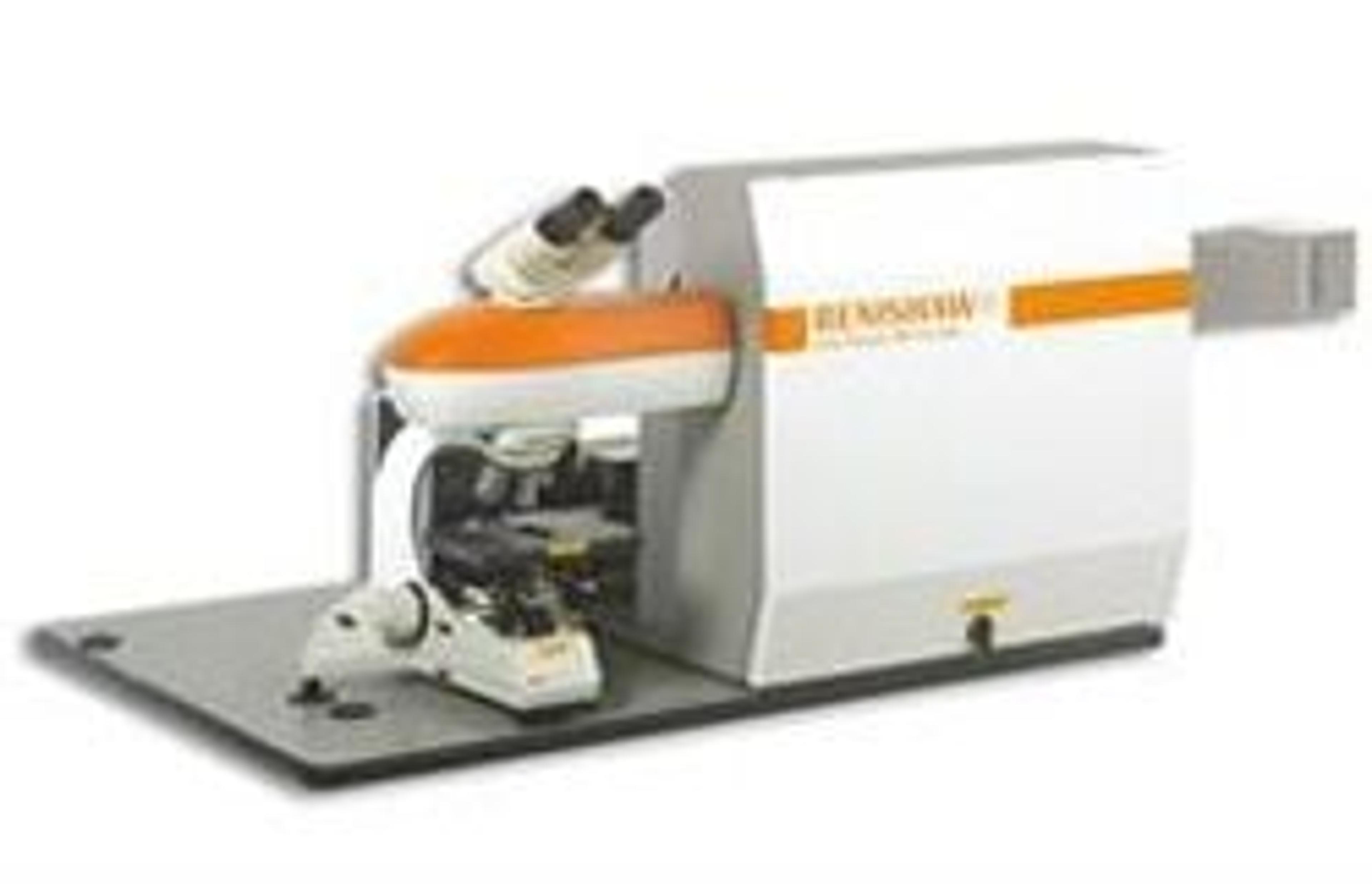
inVia Raman microscope
Renishaw plc.Since being launched, the Renishaw inVia Raman microscope has become the world's best selling research Raman system. The inVia Raman microscope combines simplicity of operation with the high performance and unparalleled flexibility for which Renishaw Raman systems are renowned. inVia Raman microscopes are high-sensitivity systems with integrated research grade microscopes, enabling high resolution confocal measurements. inVia Raman microscopes support multiple lasers, with automatic software switching of excitation wavelength.