Renishaw's inVia Used to Study Graphene and Other Nano-Materials at The University of Tokyo

29 Feb 2016
Alex Waite
Editorial Assistant

Product news

The Mechanical Engineering Department of the University of Tokyo uses a Renishaw inVia confocal Raman microscope to study graphene and other nano-materials in the development of energy related devices such as solar cells.

The University of Tokyo’s Department of Mechanical Engineering was established in 1879, providing education based on four disciplines; mechanics, materials, hydrodynamics and thermodynamics.

Within the Department, the Maruyama-Chiashi Laboratory focuses its research on the synthesis and analysis of carbon nanotubes (CNT), graphene and other nano-materials. They study applications related to the development of energy related devices, such as solar cells. The laboratory uses scanning Raman spectroscopy as an important tool for the investigation of the synthesized materials and their structure.

Lecturer Dr Shohei Chiashi says, “The Renishaw inVia is one of the most frequently used instruments in our university. Scanning Raman imaging spectroscopy is very useful for observing the structure of CNTs and graphene. It is one of the most important tools for our research. We find it possible to measure Raman images quickly and stably using inVia. Additionally, we find the software very useful for image analysis.”

Dr Chiashi, along with Professor Maruyama and colleagues, recently published two papers where the inVia was used as one of the principle characterization tools. The first reports the Raman characterization of single layer hexagonal graphene flakes produced from ethanol via chemical vapor deposition. The second uses systematic Raman mapping to evaluate single-walled carbon nanotubes of different chirality.

David Reece, Marketing Manager of the spectroscopy group at Renishaw, commented, “inVia is used throughout the world as an essential tool for researchers investigating the unique properties of CNT and graphene. I am glad to see our growing customer base publishing such excellent research utilizing our equipment in this exciting area.”

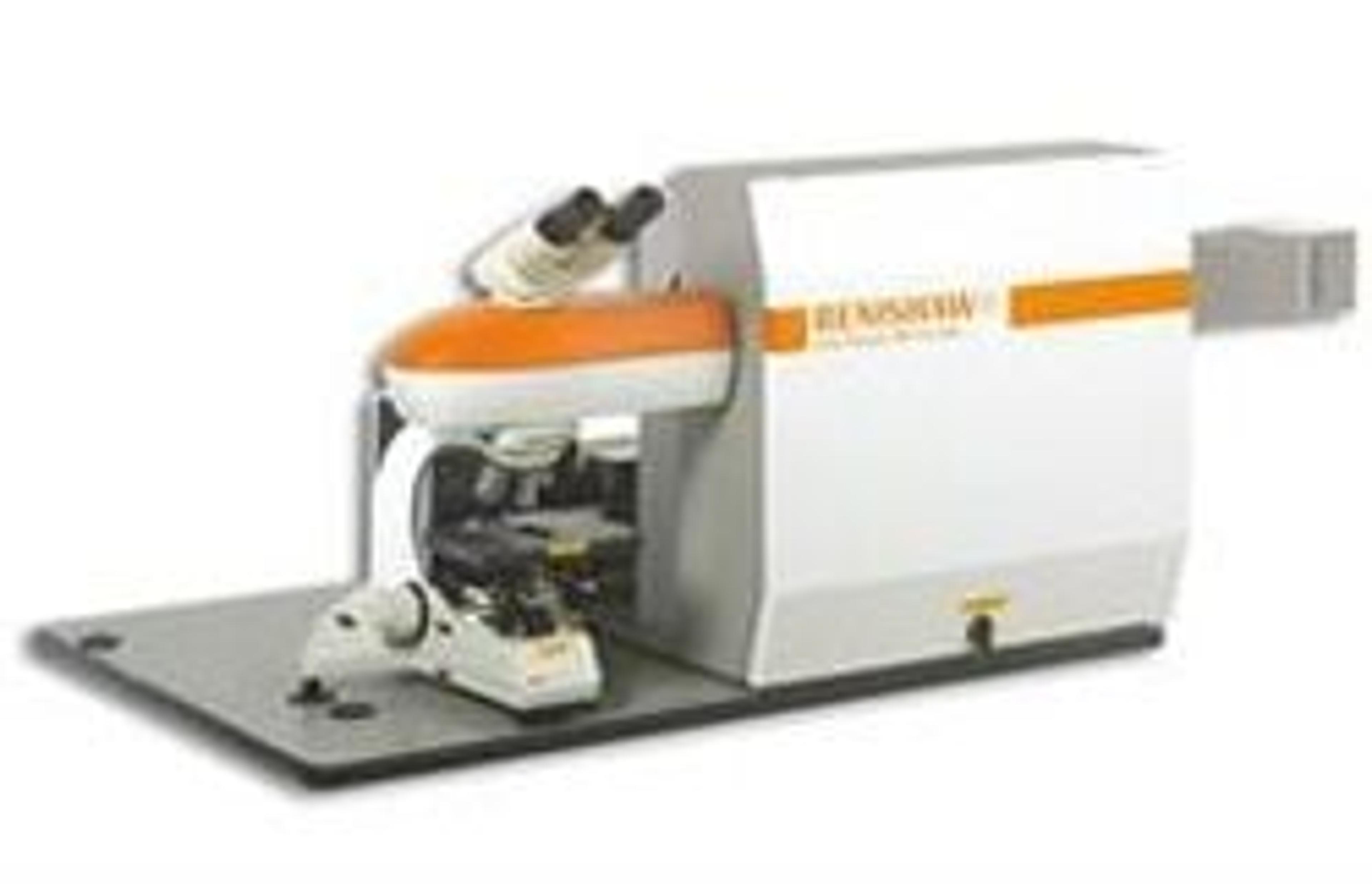
inVia Raman microscope

Renishaw plc.

Since being launched, the Renishaw inVia Raman microscope has become the world's best selling research Raman system. The inVia Raman microscope combines simplicity of operation with the high performance and unparalleled flexibility for which Renishaw Raman systems are renowned. inVia Raman microscopes are high-sensitivity systems with integrated research grade microscopes, enabling high resolution confocal measurements. inVia Raman microscopes support multiple lasers, with automatic software switching of excitation wavelength.

(19)

Links

Tags

Sample PreparationSample preparation can improve the quality and speed of separation techniques. Products to assist sample preparation include filtration equipment, evaporators, membranes and sieves.Raman SpectroscopyRaman spectroscopy is used to discern the vibrational and rotational states of molecules and hence the chemical composition of a sample by measuring the inelastic scattering of monochromatic light. Explore a range of Raman spectrometers, including handheld/portable Raman spectrometers for QC/QA labs and in situ spectrometers for processes. Conduct Raman imaging for microanalysis of mixed samples using a Raman microscope. Raman spectrographs are also available. Find the best Raman spectroscopy products in our peer-reviewed product directory: compare products, check customer reviews and receive pricing direct from manufacturers.NanotechnologyNanotechnology, or nanotech, is an engineering technique using molecular scale functional systems. Applications of nanotechnology include medicine and medical devices, electronics, air and water purification, food science and energy production.Particle CharacterizationParticle characterization instruments are used to determine particle size distribution, shape, surface area, zeta potential, density and porosity of particles and materials. Multiple tecchniques are available for determining particle size, shape and count including dynamic light scattering (DLS), laser diffraction, electrozone (Coulter technique), imaging particle analysis and single particle optical sensing. Determine the density of your material with a gas pycnometer or examine its surface area and porosity with gas adsorption analyzers and mercury porosimeters. Find the best particle characterization instruments in our peer-reviewed product directory: compare products, check customer reviews and receive pricing direct from manufacturers.Thermal Analysis EquipmentThermal analysis equipment is used for measuring heat flow, weight loss, dimension changes or thermomechanical properties and is important for analyzing a material’s performance and stability. Thermal analysis equipment includes differential scanning calorimeters (DSC), thermogravimetric analyzers (TGA), thermomechanical analyzers (TMA), dilatometers, thermometers, vapor sorption analyzers, boiling and melting point apparatus. Thermal analyzers can reveal properties such as melting, crystallization and glass transitions or other processes such as oxidation, decomposition, volatilization, as well as coefficients of thermal expansion and modulus. Find the best thermal analysis equipment in our peer-reviewed product directory: compare products, check customer reviews and receive pricing direct from manufacturers.Mechanical TestingMechanical testing explores the elastic and inelastic nature of a material when force is applied. A mechanical test shows whether a material is suitable for its intended application by measuring hardness, tensile strength, elongation, elasticity, and fatigue limit.Surface Area TestingPhysisorption studies fundamental parameters essential for the characterization of materials such as the specific surface area and pore size distribution. Properties such as porosity, strength, hardness, permeability, separation selectivity, corrosion, and thermal stress resistance can all be directly correlated to the porous structure of a material.Thermal ProcessesSpectroscopySpectroscopy is a technique that analyzes the interaction of light with matter to study molecular properties, concentrations, and structural information. Widely used in chemical, pharmaceutical, and environmental analysis, spectroscopy offers insights into molecular composition and helps identify unknown compounds. It plays a key role in quality control, research, and diagnostics. Browse our peer-reviewed product directory to compare spectroscopy tools, read reviews, and get prices directly from manufacturers.GrapheneGraphene is a two-dimensional structure that comprises of a hexagonal honeycomb lattice of carbon atoms. Graphene can conduct electricity and heat, is almost transparent and is 100x stronger than steel by weight.NanomaterialsNanomaterials such as carbon nanotubes, fullerenes and nanoparticles are a group of materials that measure between 1-1000nm for a single unit. Analysis techniques include AFM, electron microscopy and super resolution microscopy.
Renishaw's inVia Used to Study Graphene and Other Nano-Materials at The University of Tokyo