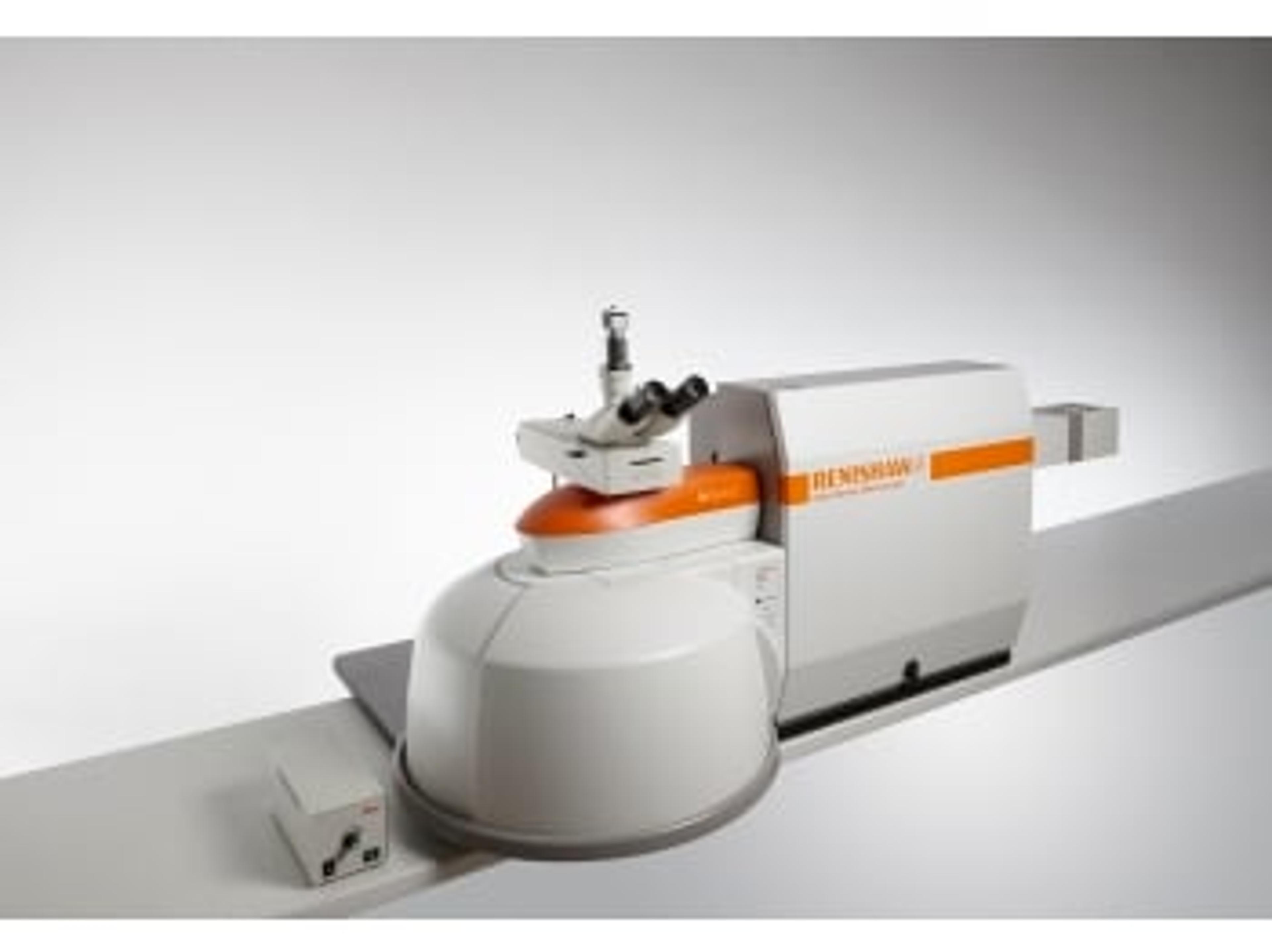
Renishaw launches raman system for forensic analysis

The latest inVia InSpect confocal microscope has been optimized for forensic trace analysis and promises greater capabilities

11 May 2020

Diane Li
Assistant Editor

Product news

Renishaw has announced the launch of the inVia™ InSpect, a new version of its bestselling inVia confocal Raman microscope, optimised for use in forensic laboratories for trace evidence analysis.

Forensic science covers many disciplines because evidence can take many different forms. This means the typical forensic laboratory is home to a range of analytical systems. Renishaw has designed the inVia InSpect Raman microscope to complement these technologies. It can be used in isolation to analyse samples that cannot be examined fully using other techniques, and it can also be used with them to obtain more detailed chemical information.

Why use the inVia InSpect?

The inVia InSpect can identify materials that may be difficult or time consuming to prepare. For example, hard crystalline powders, ceramic shards and glass chips can all be easily analysed with virtually no preparation required. InSpect also offers a powerful confocal Raman capability, providing pinpoint analysis whilst minimising interference from surrounding adjacent materials – vital for analysing complex structures containing layers, voids or inclusions.

Dr Chris Dyer, Product Manager for Chemical and Forensic Sciences at Renishaw plc, said “We have spoken to staff at forensics laboratories worldwide and identified a need for a highly sensitive Raman microscope that can process samples that are currently not compatible with more commonly used microscopy systems…

“Renishaw’s inVia Raman microscope is one of the best on the market, renowned for its sensitivity and overall efficiency. We have honed it and added features to optimise it for use in the majority of forensic laboratories. Users will be able to process more samples, more rapidly; even those which are usually difficult or time consuming to analyse. Furthermore, samples will retain their integrity as minimal preparation is required. And users who are unfamiliar with Raman will find the InSpect simple to learn and easy to use.”

Features

The inVia InSpect comes equipped as standard with features that are essential for effective forensic analysis in the routine laboratory:

  • Highly automated data collection and analysis – saving time and increasing throughput of samples
  • A range of microscope contrast techniques, including bright field, dark field and polarisation contrast
  • High-performance video camera and long working distance objectives – to confidently locate areas of interest even on complex substrates
  • Fully-integrated confocal capability – choose the optimum confocal settings for different situations, to precisely define the analysed region
  • Powerful chemical image creation – use fully-integrated mapping techniques to reveal the distribution of components within a sample
  • Particle analysis – use advanced image recognition algorithms and instrument control features to characterise particle distributions
  • Correlative imaging – bring data from other microscopy techniques together with Raman analysis and create composite images rich with information
  • Dual laser wavelengths – choose the wavelength which gives the best Raman data for different sample types, without needing to change optics or gratings.
  • Automated calibration and alignment – easy to operate, and easy to optimise

Why use Raman for forensics?

Raman spectroscopy is a non-contact, typically non-destructive analytical technique, meaning that samples can be reanalysed multiple times without damage or contamination. There is typically very little preparation needed. Raman spectroscopy also works through transparent containers and in solution, so samples that are potentially dangerous or require special handling can be safely examined.

Do you use Renishaw products in your lab? Write a review today for your chance to win $400 Amazon gift card>>

Links

Tags

Raman SpectroscopyRaman spectroscopy is used to discern the vibrational and rotational states of molecules and hence the chemical composition of a sample by measuring the inelastic scattering of monochromatic light. Explore a range of Raman spectrometers, including handheld/portable Raman spectrometers for QC/QA labs and in situ spectrometers for processes. Conduct Raman imaging for microanalysis of mixed samples using a Raman microscope. Raman spectrographs are also available. Find the best Raman spectroscopy products in our peer-reviewed product directory: compare products, check customer reviews and receive pricing direct from manufacturers.Sample ManagementSample management systems include sample storage devices such as freezers and plate storers, sample environment enclosures and sample organization, retrieval and sorter systems. Useful system features include high-throughput, automation, robotic arms, automated liquid handling and associated database systems. Accessories in sample management include barcode scanners, heat sealers and tubes.DNA / RNA Extraction and PurificationPurified DNA and RNA are required for numerous downstream molecular biology applications. Consequently, the importance of high-quality DNA/RNA extraction and purification equipment cannot be underestimated. Many purification kits are available and are typically optimized for nucleic acid type and source, including plasmid DNA, genomic DNA, mRNA, RNA and viral nucleic acid purification kits. Automated extraction and purification of nucleic acids can be implemented with magnetic bead separator instruments or high-throughput purification workstations. Find the best DNA/RNA extraction and purification equipment in our peer-reviewed product directory: compare products, check customer reviews and receive pricing direct from manufacturers.Robotic WorkstationsRobotic workstations are automated platforms enabling the user to perform high-throughput, multi-application processes, from sample preparation tasks such as PCR set-up, DNA purification and NGS library preparation, to integrated sample prep and analysis workstations. Automation makes processes consistent, fast, precise and fully walk-away. Find the best robotic workstations in our peer-reviewed product directory: compare products, check customer reviews and receive pricing direct from manufacturers.Automated Liquid HandlingAutomated liquid handling equipment is used to mix, dilute and dispense allotted volumes of liquid into microplates and other vessels automatically. The robotic, liquid handling arms can dispense from single channel to 3456 multichannel as well as operate nanoliter dispensing, enabling high throughput of samples. Find the best automated liquid handlers in our peer-reviewed product directory: compare products, check customer reviews and receive pricing direct from manufacturers.Evidence Collection and AnalysisEvidence Collection and Analysis is the retrieval and subsequent investigation into criminal evidence obtained from a crime scene. Forensic genetic instruments, kits and reagents enable the analysis of evidence collected  at the crime scene. Reagents and kits for presumptive analysis for body fluids such as blood, saliva and semen in addition to drugs and narcotics test kits are used for CSI. Fingerprinting equipment, forensic light sources, casting kits and equipment for collecting recoverable materials can be found in the directory.Light MicroscopyLight microscopes or optical microscopes are used to visualize microscale objects under magnification, including cells, clinical specimens and materials. Lab equipment for light microscopy includes confocal microscopes, fluorescence microscopes, zoom and stereo microscopes. Microscope slides and imaging reagents are available for visualizing samples, as well as various microscope stages and incubators for large or temperature-sensitive samples. Find the best light microscopes in our peer-reviewed product directory: compare products, check customer reviews and receive pricing direct from manufacturers.Electron MicroscopyElectron microscopes (EM) are used to create high-resolution images of samples at the nanoscale by means of an accelerated beam of electrons as a source of illumination. Types of electron microscope include scanning electron microscopes (SEM), transmission electron microscopes (TEM), scanning transmission electron microscopes (STEM) and cryo-electron microscopes. Focused ion beam (FIB) microscopes are useful for modifying or milling a sample surface with nanometer precision, as well as imaging. Find the best electron microscopes in our peer-reviewed product directory: compare products, check customer reviews and receive pricing direct from manufacturers.ConfocalTrace Level ImpuritiesTrace level impurities refer to low concentrations of unwanted substances found in chemicals, pharmaceuticals, and other products. Detecting and removing these impurities is crucial for product safety and regulatory compliance. Explore trace impurity analysis tools in our peer-reviewed product directory; compare products, check reviews, and get pricing directly from manufacturers.MicroscopyMicroscopy is a technique used to observe small objects in detail, from cells to materials, using light or electron microscopes. It enables researchers to examine structures with high resolution, aiding in fields such as biology, medicine, and materials science. With advanced microscopy techniques, scientists can gain insights into cellular processes, tissue structures, and material properties. Explore the best microscopy solutions in our peer-reviewed product directory, compare products, read customer reviews, and get pricing directly from manufacturers.Forensic InvestigationForensic investigation is a diverse collection of scientific techniques and methods for the identification and characterization of chemicals relating to crime scene investigations.
Renishaw launches raman system for forensic analysis