
Reliable Sample Preparation for Neonatal Screening
8 Feb 2018
Product news
Genevac reports on how its hydrochloric acid (HCl) resistant EZ-2 evaporator offers significant benefits to clinical labs tasked with analysing plasma, blood or urine samples for neonatal disorders.
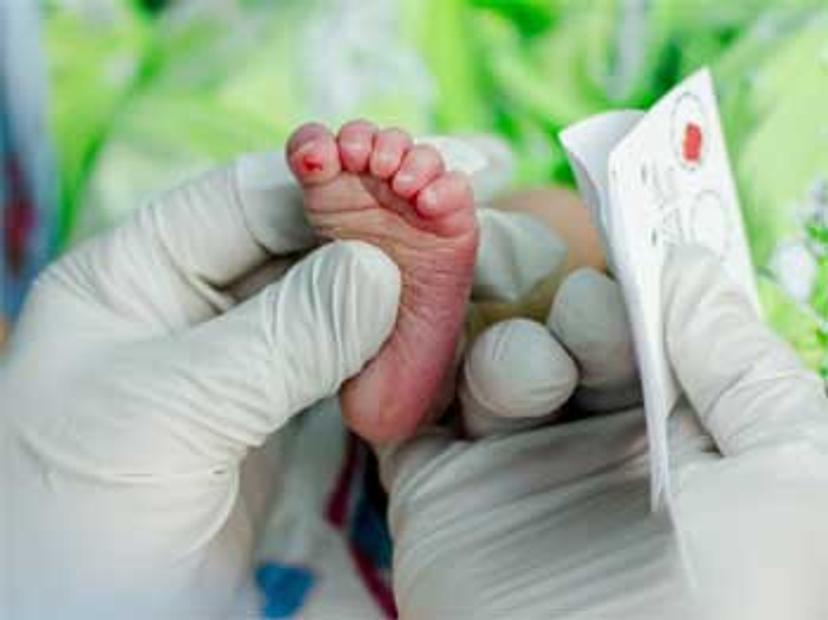
In new born infants, tandem Liquid Chromatography Mass Spectrometry (LC/MS/MS) is a widely used analytical technique to identify metabolic neonatal disorders which include aminoacidemia’s, urea cycle disorders, organic acidurias, and fatty acid oxidation disease.
Sample preparation techniques widely used in neonatal screening include solvent extraction, acid derivatisation and evaporation prior to reconstitution in a suitable medium for injection into the LC/MS/MS system. Evaporation of the butanol / HCl solvent mixture, commonly used for derivatisation, using blowdown techniques creates acid vapours which often results in corrosion of the system especially the pins/needles/jets which can lead to contamination of samples and erroneous results. Additionally, acid vapours evolved may damage other nearby equipment and fume extraction systems.
Extensive testing demonstrates that using a HCl resistant EZ-2 evaporator for these sample preparation stages not only eliminates the corrosion problem that can lead to sample contamination / erroneous results but also can significantly increase productivity.

The HCl resistant EZ-2 evaporator has been designed specifically for solvent removal in life science and clinical research, be that concentration of samples, or complete drying. Key elements of the system are engineered in Hastelloy® glass or PTFE, to provide full protection against strong acids including HCl and trifluoroacetic acid (TFA). Genevac's long experience in vacuum engineering has resulted in the creation of a compact sample concentrator combining great performance, ease of use and compatibility with all commonly used solvents and many acids. At the heart of the evaporator are a robust, solvent resistant, oil free pump and the high efficiency, defrost-free SpeedTrap, which traps all solvents as liquids. To enable users to achieve excellent results every time there is no need for special training - just load, set and walk away. Once the samples are dry, or the concentration end point is reached, the run stops automatically. The high capacity rotor design of the HCl resistant EZ-2 evaporator accommodates flasks, tubes, vials, reaction blocks, microplates and SampleGenie.
Related products
Request Quote for All Products
EZ-2 Series
GenevacUsing the most advanced proven technology in evaporation science, the third generation of the EZ-2 Series has been designed specifically for solvent removal in life science research; be that concentration of samples or complete drying. The innovative design of the EZ-2 Series presents many advantages for working in parallel within synthesis chemistry, analytical sample preparation and for general-purpose solvent removal needs in life science laboratories. At the heart of the evaporator is a solvent resistant, oil-free vacuum pump, and the high efficiency, defrost-free, SpeedTrap™, which traps all solvents as liquids, even water. Solvents collect in the insulated, plastic coated glass vessel, enabling the user to see the progress of evaporation and determine when the trap should be emptied. The EZ-2 Elite has a special auto-draining collection vessel fitted to the SpeedTrap, which uses the very powerful Scroll pump. The Elite can therefore evaporate the highest boiling solvents such as DMSO and perform the Genevac LyoSpeed fast lyophilisation method for HPLC fractions. There is a low-cost option available on the Standard, Plus and Elite that allows the routine use of hydrochloric acid and aggressive solvents. By building key elements in Hastelloy®, glass or PTFE, full protection against acid chlorides is achieved. New to the HCl Resistance option is the ability to evaporate concentrated nitric acid. This option must be specified when ordering, as it cannot be retrofitted. All EZ-2 models are resistant to routine use of high concentrations of TFA as standard. An additional option is available to allow safe operation for those wishing to use highly explosive solvents, such as pentane or diethyl ether - the inert gas purge system. This system can also be used to preserve oxygen or moisture sensitive samples under an inert gas blanket until the user returns to the evaporator. The EZ-2 Series can also accommodate a wide selection of sample holders, including round-bottom flasks up to 500ml, tubes up to 160mm long (including Dionex ASE® and Radleys Carousel tubes), custom reaction blocks, and shallow or deep-well microtitre plates. EZ-2 Series Models: The Standard (EZ-2) is suitable for water and volatile solvents The Envi (EZ-2 Envi) is recommended for concentration of volatile solvents The Plus (EZ-2 Plus) is recommended for solvents with boiling points upto 165°C The Elite (EZ-2 Elite) is recommended for solvents with boiling points upto 220°C