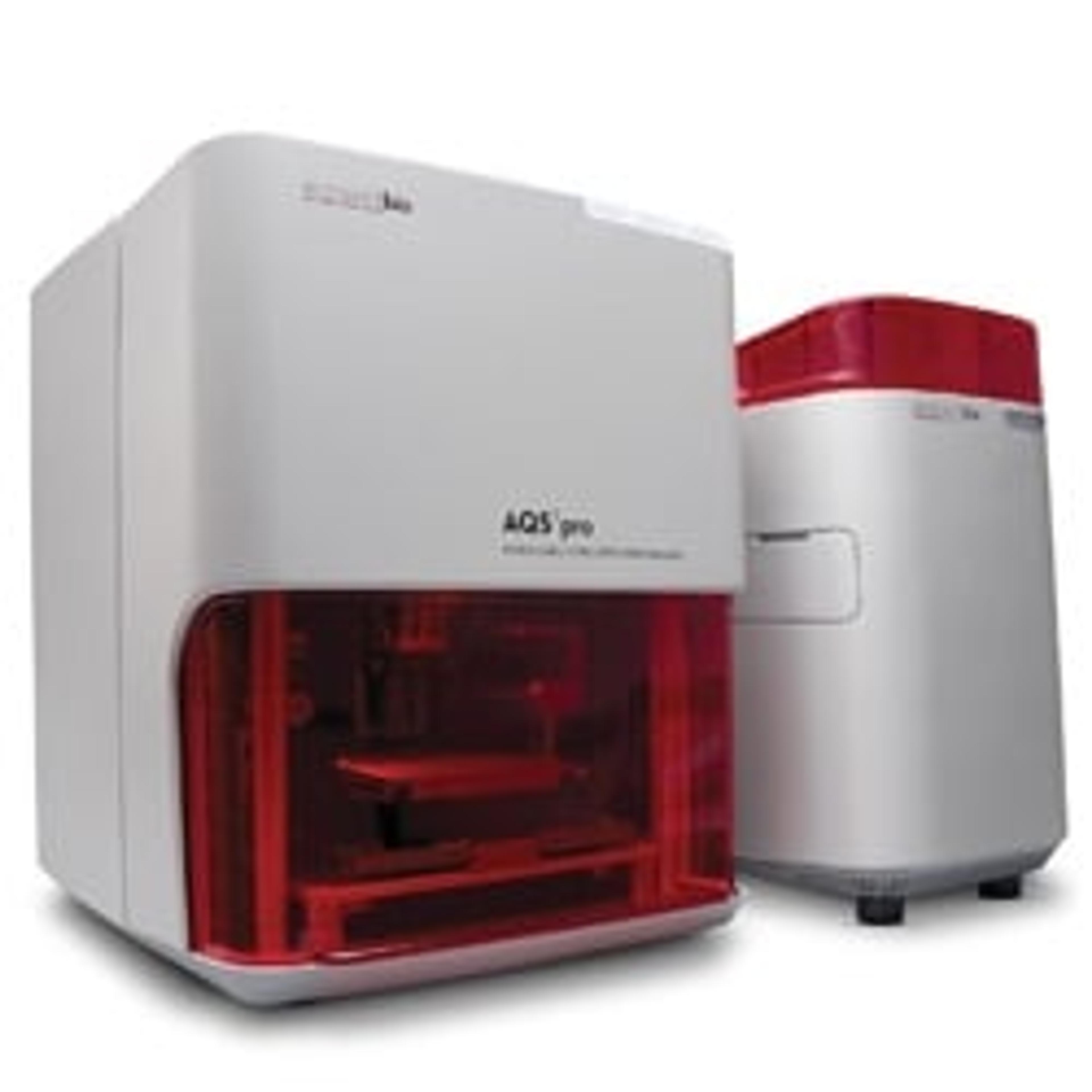
RedShift BioAnalytics announces launch of next generation Apollo for ultra-sensitive biophysical characterization of biomolecules

Apollo incorporates major advances over first-generation instrument to support rapidly growing market demand

2 May 2022

Blake Forman
Content Creator

Product news

RedShift BioAnalytics has announced the launch of Apollo, the company’s latest system using ground-breaking MMS technology. Apollo provides ultra-sensitive, ultra-precise measurements of the structure of biomolecules through a novel technology called Microfluidic Modulation Spectroscopy (MMS), now even more rapidly, with less sample volume, and with improved software and analytics features.

MMS overcomes many of the limitations of existing technologies in a typical biophysical characterization toolkit with ultra-sensitive and highly reproducible structural measurements of proteins and other biomolecules. Users can compare higher-order structure and similarity profiles for confidence in structural similarity and activity to inform discovery, screening, formulation, and quality control in biopharmaceutical drug development. It can be used for a wide range of biomolecules from mAb-based biotherapeutics to robust measurements of ADCs, AAVs, and mRNA.

Key features and benefits of Apollo include:

  • Accurate and reproducible measurements with a broad concentration range from 0.1 mg/ml to >200 mg/ml allows measurements in native conditions
  • 20x faster and 30x more sensitive to changes in structure than CD or FTIR
  • Real-time buffer subtraction minimizes background noise and interference from excipients
  • Dramatically reduced sample volume requirements from first-generation AQS3pro

“Apollo represents a tremendous step forward in our product portfolio, incorporating the feedback from our customers at leading biopharmaceutical companies in North America, Europe, and Asia,” said Julien Bradley, CEO of RedShiftBio. “The improvements over our first generation AQS3pro system are very significant and will make our already industry-leading tool in biophysical characterization even more valuable and easy to use in a wider range of applications.”

Find news coverage of PEGS Boston 2022 by SelectScience by clicking here >>

Want the latest science news straight to your inbox? Become a SelectScience member for free today>>

Links

Tags

High-Throughput ScreeningHigh-throughput screening (HTS) is an automated drug discovery technique for identification of active compounds against a compound library. Use HTS readers and integrated assay preparation / analysis workstations to screen your compounds. Identify active compounds against various HTS libraries, including membranes, proteins and peptides and HTS cell lines. Find the best high-throughput screening products in our peer-reviewed product directory: compare products, check customer reviews and receive pricing direct from manufacturers.Protein CrystallographyProtein crystallization is the process of crystallizing purified proteins for 3D structure analysis by x-ray crystallography. The main methods of protein crystallization include sitting drop, hanging drop and microbatch. It is important to control parameters such as pH, temperature and concentration. Following crystallization, detectors and software are used for data collection and analysis.Biopharmaceutical AdvancesBiopharmaceutical advances follow the development of pharmaceuticals derived from biotechnology, also known as biotechnology medicines. Biopharmaceuticals may be produced from cell lines, plants, or microbial cells. Important considerations of biopharmaceutical use include application, cost, production process and purification.Next Generation SequencingNext-generation sequencing (NGS), also known as whole-genome sequencing, high-throughput sequencing and massive parallel sequencing, produces and analyses thousands to millions of nucleotide sequences at once. Sequencing systems operate via varying technologies depending on the manufacturer, including sequencing by synthesis, ligation, pyrosequencing, ion semiconductor and single-molecule real-time sequencing. For NGS, library preparation is paramount to successful sequencing. In this section, explore a range of library preparation kits, from targeted, amplicon-based or hybridization-based kits including epigenomic, transcriptomic and genomic workflows to fragmentation kits. Find the best next-generation sequencing products in our peer-reviewed product directory: compare products, check customer reviews and receive pricing direct from manufacturers.Monoclonal AntibodiesMonoclonal antibodies (mAbs) are lab-made molecules that can bind to specific antigens on cells, making them highly effective in treating cancers, autoimmune diseases, and infections. These targeted therapies are transforming the treatment landscape for many conditions. Browse our peer-reviewed product directory to find monoclonal antibodies for research and clinical applications; compare products, check reviews, and get pricing directly from manufacturers.BiopharmaceuticalsBiopharmaceuticals are proteins and other compounds (such as nucleic acids) produced by living organisms that have uses as therapeutics or for in vivo diagnostics. The most well known example of a biopharmaceutical product, and the first to be approved for therapeutic use, was recombinant human insulin.Protein StructureProtein structure refers to the three-dimensional arrangement of amino acids in proteins, determining their function. Understanding protein structure is key in drug discovery, enzymology, and molecular biology. Explore protein structure analysis tools in our peer-reviewed product directory; compare products, check reviews, and get pricing directly from manufacturers.PEGSDrug DevelopmentDrug development refers to the process of bringing a new drug to market.