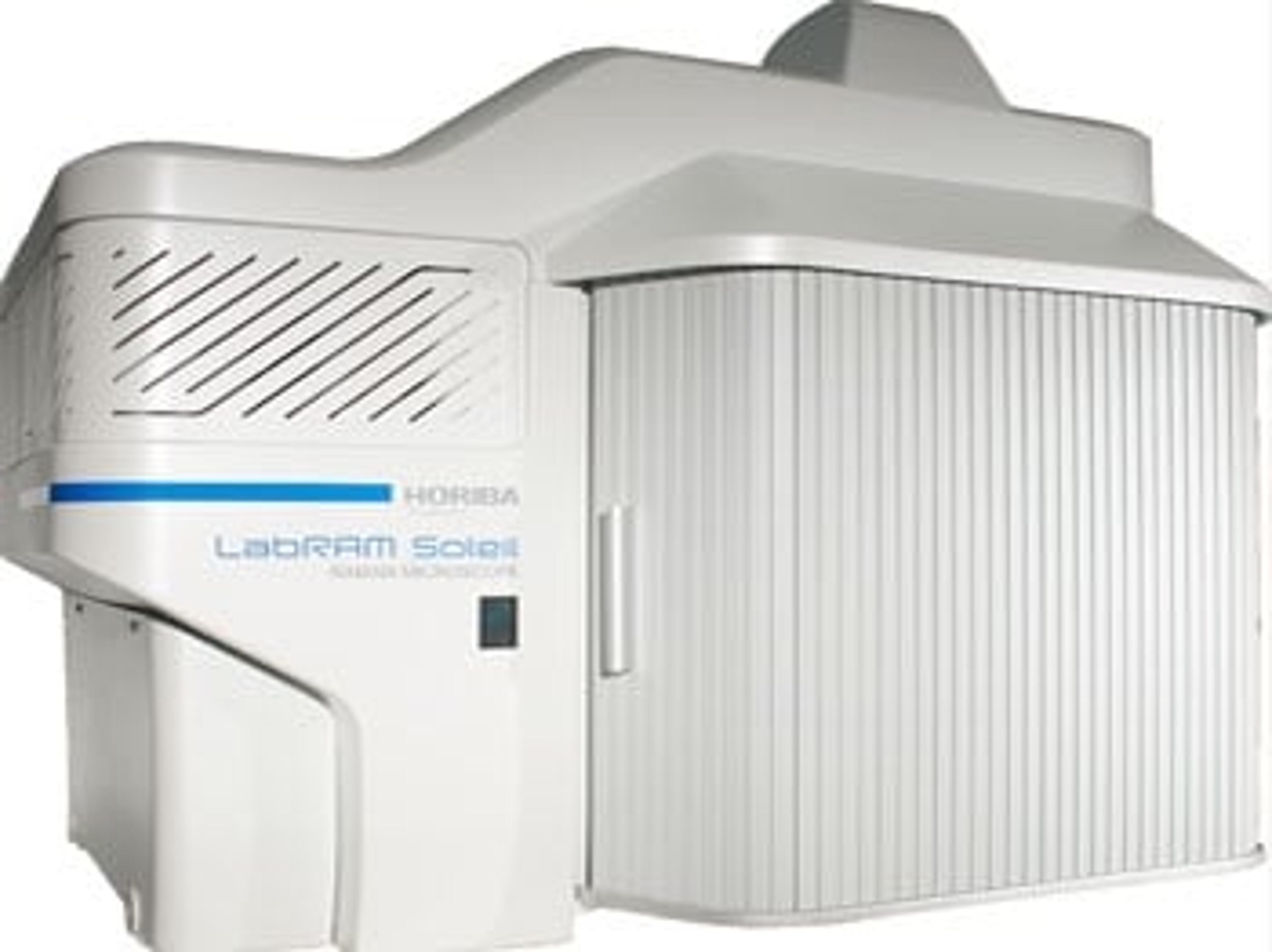
Raman microscopy: Comprehensive characterization of polymers

Join us on Monday, September 28, for this expert-led webinar on the intricacies of Raman technology

15 Sept 2020

Cameron Smith-Craig
Cameron Smith-Craig
Pharma and Applied Sciences Editor

Expert insights

Thibault Brulé, Raman Application Scientist, HORIBA

From monomer identification and analyzing crystallinity for quality control purposes to advanced studies on multilayer materials, developing new formulations or monitoring degradation kinetics, Raman microscopy is the only technique able to provide accurate non-destructive chemical identification combined with high precision imaging.

In this upcoming SelectScience webinar, Thibault Brulé, Raman Application Scientist at HORIBA, will breakdown Raman microscopy to give a detailed understanding of the polymerization process, polymer structure, and how to identify defects in final products.

Register here

Key learning objectives

  • Learn how Raman microscopy is a key technique for polymer studies using various application examples.
  • How to solve daily work changes with HORIBA micro-Raman and QScan functionalities.

Who should attend?

  • Academic researchers studying polymers
  • Industrial R&D departments
  • Industrial (polymer/chemistry) quality control labs
  • Academic/industrial polymer formulation teams
  • Control labs

Certificate of attendance

All webinar participants can request a certificate of attendance, and a learning outcomes summary document for continuing education purposes.

The live webinar takes place on Monday, September 28, at:

  • 15:00 BST
  • 16:00 CEST
  • 10:00 EDT
  • 07:00 PDT

Register for this webinar here>>

SelectScience runs more than 10 webinars a month across various scientific topics, discover more of our webinars here>>

XploRA - Raman microscopy

HORIBA Scientific

The XploRA™ is a new concept in Raman microscopy, bringing Raman chemical identification directly to your microscope. The XploRA can be coupled to both upright and inverted microscopes, allowing analysis of all sample types, ranging from semiconductors and nano-materials, through to biological cells and tissues. The system provides the established performance of HORIBA Scientific Raman microscopes at a surprising price. Combining microscopy and chemical analysis the XploRA™ retains the full functionality of your microscope coupled with high performance Raman spectroscopy. The concept of the XploRA™ is straightforward – a smarter microscopy. A compact, high performance Raman spectrometer is coupled to a research grade optical microscope (upright or inverted geometry), allowing both standard optical microscopy and detailed chemical analysis on a single system. The unique design ensures full capability of the optical microscope, and complete flexibility, full automation and true research performance of the Raman analyzer.

(9)

Links

Tags

Mass SpectrometryMass spectrometry (MS) is a powerful analytical technique used to identify and quantify molecules based on the mass-to-charge ratio of gas-phase ions. It provides detailed information about the structure, composition, and properties of compounds and is widely used across fields such as environmental monitoring, materials science, drug discovery and development, food and beverage testing, and wider chemical research. Key MS techniques include tandem mass spectrometry (MS/MS), liquid chromatography–mass spectrometry (LS-MS) and inductively coupled plasma (ICP-MS). Choosing from these wide range of techniques and technologies can be a daunting task, so keep up to date with scientific applications, performance expectations, and customer reviews here all in one place. Visit our product directory to receive quotes direct from the manufacturer. Raman SpectroscopyRaman spectroscopy is used to discern the vibrational and rotational states of molecules and hence the chemical composition of a sample by measuring the inelastic scattering of monochromatic light. Explore a range of Raman spectrometers, including handheld/portable Raman spectrometers for QC/QA labs and in situ spectrometers for processes. Conduct Raman imaging for microanalysis of mixed samples using a Raman microscope. Raman spectrographs are also available. Find the best Raman spectroscopy products in our peer-reviewed product directory: compare products, check customer reviews and receive pricing direct from manufacturers.BiomarkersBiomarkers are biological markers which can be measured and evaluated to indicate a biological state. The use of biomarkers in research and diagnosis can indicate a normal or disease state or drug response of cells / tissues. Biomarkers include genetic markers, cell surface markers such as antigens, antibodies or receptors and secreted molecules such as cytokines. An assay system is required for identification of biomarkers. :Particle CharacterizationParticle characterization instruments are used to determine particle size distribution, shape, surface area, zeta potential, density and porosity of particles and materials. Multiple tecchniques are available for determining particle size, shape and count including dynamic light scattering (DLS), laser diffraction, electrozone (Coulter technique), imaging particle analysis and single particle optical sensing. Determine the density of your material with a gas pycnometer or examine its surface area and porosity with gas adsorption analyzers and mercury porosimeters. Find the best particle characterization instruments in our peer-reviewed product directory: compare products, check customer reviews and receive pricing direct from manufacturers.Light MicroscopyLight microscopes or optical microscopes are used to visualize microscale objects under magnification, including cells, clinical specimens and materials. Lab equipment for light microscopy includes confocal microscopes, fluorescence microscopes, zoom and stereo microscopes. Microscope slides and imaging reagents are available for visualizing samples, as well as various microscope stages and incubators for large or temperature-sensitive samples. Find the best light microscopes in our peer-reviewed product directory: compare products, check customer reviews and receive pricing direct from manufacturers.MicroscopyMicroscopy is a technique used to observe small objects in detail, from cells to materials, using light or electron microscopes. It enables researchers to examine structures with high resolution, aiding in fields such as biology, medicine, and materials science. With advanced microscopy techniques, scientists can gain insights into cellular processes, tissue structures, and material properties. Explore the best microscopy solutions in our peer-reviewed product directory, compare products, read customer reviews, and get pricing directly from manufacturers.