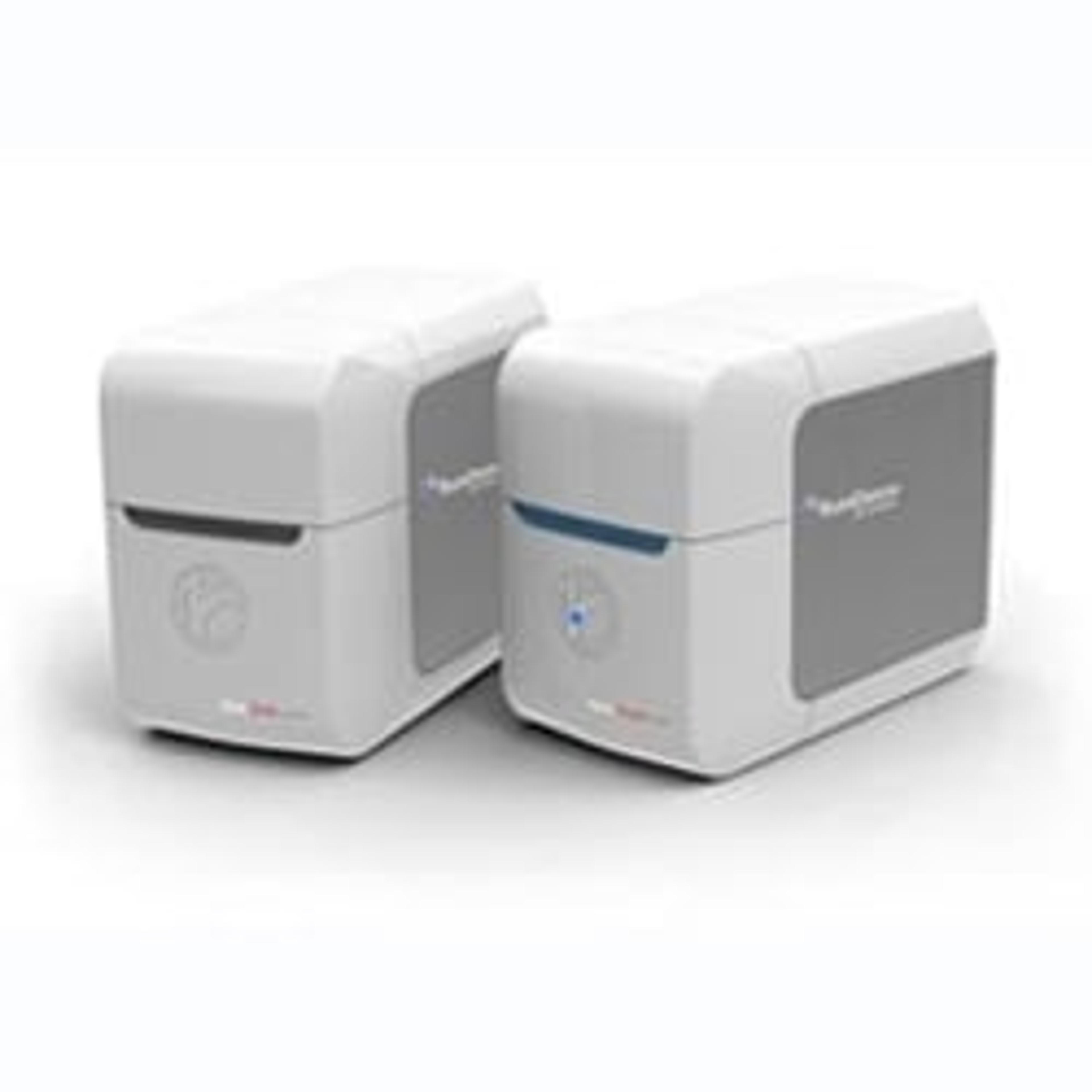
RainDance Technologies Launches Access Program for RainDrop™ Digital PCR System

26 Jul 2013
Tesni Perry
Administrator / Office Personnel

Product news

Participants get first access to game-changing platform for low frequency allele detection using their own samples. RainDance Technologies, Inc., the Digital Biology™ Company, today announced that it has begun accepting biological samples from participants of the RainDrop™ Digital PCR First Access Program.

Institutions and researchers accepted into this program are being given first access to run their samples against their own assays, or several ready-made assays, on the RainDrop system, as well as shipment and installation priority on system purchases made before commercial deliveries begin later this year.

Built on RainDance’s patented and proven RainStorm™ picodroplet technology, the RainDrop System generates up to 10 million picoliter-sized droplets per sample which is 500x - 1,000x more data points than legacy digital PCR offerings. Since each droplet encapsulates a single molecule, researchers can quickly determine the absolute number of droplets containing specific target DNA and compare that to the number of droplets with non-target DNA. The RainDrop System also shifts the current digital PCR paradigm from a single-color-per-marker approach to a two-color and varying probe intensity method that is capable of multiplexing up to 10 markers.

Initial applications for digital PCR include low frequency allele detection (e.g., blood screening of cell-free circulating DNA or RNA), copy number variation and gene expression studies.
“Our RainDrop System represents a fundamental breakthrough in PCR and the third generation of instruments built on our proven picodroplet technology,” said Rena McClory, Marketing Director, Digital PCR Business at RainDance Technologies. “We have already received purchase orders from customers in the U.S. and Europe and are very pleased with the significant interest we’ve seen to-date. We look forward to welcoming additional researchers into our First Access Program and are confident they will be very pleased with the data that is generated and its potential contribution to their research and publications.”

In a recent Lab on a Chip paper, scientists from Université de Strasbourg and Université Paris Descartes used the RainDance dPCR technology to detect a single mutated copy of KRAS in a background of 200,000 wild-type copies. By processing reactions in millions of picoliter droplets, the platform improved sensitivity over 100x compared to existing technologies.

“The combination of superior sensitivity, unprecedented multiplexing, and flexibility in experiment design provides a powerful genomic analysis platform for new research in cancer including rare variant detection, absolute quantitation of biomarkers, tumor profiling, and the ability to monitor residual disease,” said Darren Link, Ph.D., co-founder and Vice President of Research and Development at RainDance Technologies. “We already have 10 ready-to-go, high-performing assays covering mutations in several oncogenes including the T790M and L858R mutations in EGFR which can be quantitated at a mutant-to-wild type ratio of better than 1:6,000 and 1:100,000, respectively. We have also been successful in converting qPCR assays into digital PCR assays with performance of 100x-1,000x better sensitivity."

RainDrop™ Digital PCR System

RainDance Technologies, Inc.

A Billion Reactions. Digital Answers. Experience the Next Generation of PCR. Capable of generating more than a billion reactions in a single day, the RainDrop™ Digital PCR System surpasses all existing technologies and establishes a new performance standard in sensitivity, quantitation, and multiplexing.Based on RainDance’s proven picodroplet platform, the RainDrop System delivers absolute quantitation of target molecules. The RainDrop Digital PCR System fundamentally changes the performance of molecular assays by enabling digital answers across a number of important applications including low-frequency tumor allele detection, absolute quantitation of expression profiles or DNA copy numbers, and SNP measurement.A new gold standard in sensitivity is only possible through the careful consideration of every aspect of the system. The RainDrop System offers a number of innovative droplet-based design advantages.RainDrop™ Digital PCR System Features & Benefits: Superior Sensitivity - Detect 1 mutant amongst 250,000 wild-type molecules with a lower limit of detection of 1 in more than 1,000,000. Unprecedented Multiplexing - Conduct up to 10 tests or more on the same sample using the single molecule multi-color detection technique. Greater Study Design Flexibility - Optimize the number of PCR reactions based on your sensitivity AND multiplex requirements. Closed-Tube Design - Ensure the highest quality data by eliminating contamination or carryover Proven Picodroplet Platform - Leverage a decade of experience with the same technology found in RainDance’s Targeted Sequencing Systems. Lowest Cost per Data Point - Generate true digital answers with orders of magnitude more data per dollar.

(0)

Links

Tags

BiosensorsBiosensors are devices used to detect an analyte using biological molecules specific to the analyte coupled to a detector. Biosensor instruments may be photometric, typically using surface plasma resonance (SPR), electrochemical or QCM (quartz crystal microbalance) biosensors. Biosensors should be selective, portable, robust and sensitive and have a fast response time. Systems may be manual or automated and usually have associated software.Genome AnalysisGenomics, the study of genomes, includes functional genomics, evolutionary genomics and comparative genomics. There are many genomic technologies such as DNA sequencing of whole genomes, computational biology and bioinformatics. DNA and nucleic acids must be isolated and concentrated from cells for analysis with kits, automated analyzers and software. Other useful technologies for studying genomics include PCR, microarrays and electrophoresis.Lab-on-a-ChipLab-on-a-chip (LOC) technology uses microfluidic chips, such as microarrays, to perform biochemical assays on a small scale. Benefits of lab-on-a-chip include the small volume of sample required as well as the speed of analysis. In selecting lab-on-a-chip devices consider the assay, cost, reliability, sensitivity and signal to noise ratio.PCR and Thermal CyclingPolymerase chain reaction (PCR) kits and thermal cyclers are used for the in vitro amplification of DNA permitting subsequent analysis and experimental procedures. Explore a range of high-quality polymerase, primers and nucleotides or simplify your workflow with a PCR mastermix. Find reverse transcription PCR (RT-PCR) and cDNA synthesis kits for RNA products and libraries. Quantitatively measure the amplification of DNA with real-time PCR (qPCR) and droplet digital PCR (ddPCR) kits and systems, and discover automated PCR setup solutions to increase throughput. Alternative DNA amplification methods also include recombinase polymerase amplification (RPA) kits. Find the best PCR kits and thermal cyclers and purification equipment in our peer-reviewed product directory: compare products, check customer reviews and receive pricing direct from manufacturers.ADME-ToxicologyADME-toxicology (ADME-Tox) studies are used in pharmacology and pharmacokinetics to assess the activity/toxicity of drugs <i>in vivo</i> or <i>in vitro</i>. Find bioassays for absorption, distribution, metabolism, and excretion of drug molecules including cytotoxicity, transporter/permeability, metabolism and activity assays as well as hepatocytes and cell lines for ADME. Find the best ADME-toxicology products in our peer-reviewed product directory: compare products, check customer reviews and receive pricing direct from manufacturers.HematologyIn Haematology / Hematology, complete blood cell counts (or full blood counts) are obtained using automated blood count analyzers to enumerate blood cell types.  Hematology also encompasses haemostasis and coagulation, thrombophilia and hemophilia, plasma viscosity and ESR analysis, hemoglobinopathies, cell morphology and haematinic measurement.Cell-Based AssaysCell-based assays are used to monitor the presence, quantity and activities of a desired cellular analyte including drug molecules or biomarkers. This can reveal information on cell health (apoptosis, cytotoxicity, viability and proliferation assays), cell metabolism, cell migration and cell signaling mechanisms. Find the best cell-based assay products, kits and equipment with our peer reviewed product directory: compare products, check customer reviews and receiving pricing direct from manufacturers.Gene Expression and Molecular CloningMolecular cloning is a set of techniques that utilizes vectors to transfer recombinant DNA into host cells and is an essential tool for investigating the expression of genes and proteins in bacterial or mammalian cells. A variety of vectors optimized for gene cloning and expression in a range of host organisms are available, alongside competent cells for genetic replication. Here, you can explore a range of molecular tools, high-quality genomic and cDNA libraries, premade clones, transformation and transfection reagents and mutagenesis or gene expression detection assays and expression arrays. Find the best gene expression and molecular cloning products in our peer-reviewed product directory: compare products, check customer reviews and receive pricing direct from manufacturers.RNA InterferenceRNA interference (RNAi) uses siRNA or miRNA for transcriptional silencing, gene knockdown and regulation of gene expression. RNAi requires chemical synthesis, introduction of DNA vectors into cells, an assay of RNAi effects and RNAi quantification or analysis. Consider target sequence selection, reagent preparation, controls, high specificity and effectiveness and low non-specific gene knockdown.BiomarkersBiomarkers are biological markers which can be measured and evaluated to indicate a biological state. The use of biomarkers in research and diagnosis can indicate a normal or disease state or drug response of cells / tissues. Biomarkers include genetic markers, cell surface markers such as antigens, antibodies or receptors and secreted molecules such as cytokines. An assay system is required for identification of biomarkers. :Protein ExpressionProtein expression is the utilization of cell machinery for the synthesis of proteins and has become a critical tool in biotherapeutic, genomic, and proteomic research. Produce recombinant proteins with expression vectors in combination with a host cell suitable for high-level protein expression. For production of toxic proteins, consider cell-free expression vectors. Create and monitor post-translational modifications with protein modification kits. Find the best protein expression products in our peer-reviewed product directory: compare products, check customer reviews and receive pricing direct from manufacturers.Tumor ProfilingCancer ResearchAlthough cancer is often referred to as a single condition, it actually consists of more than 100 different diseases. Microscopy, mass spectrometry, high throughput sequencing and flow cytometry are some of the most common techniques employed in cancer research labs.
RainDance Technologies Launches Access Program for RainDrop™ Digital PCR System