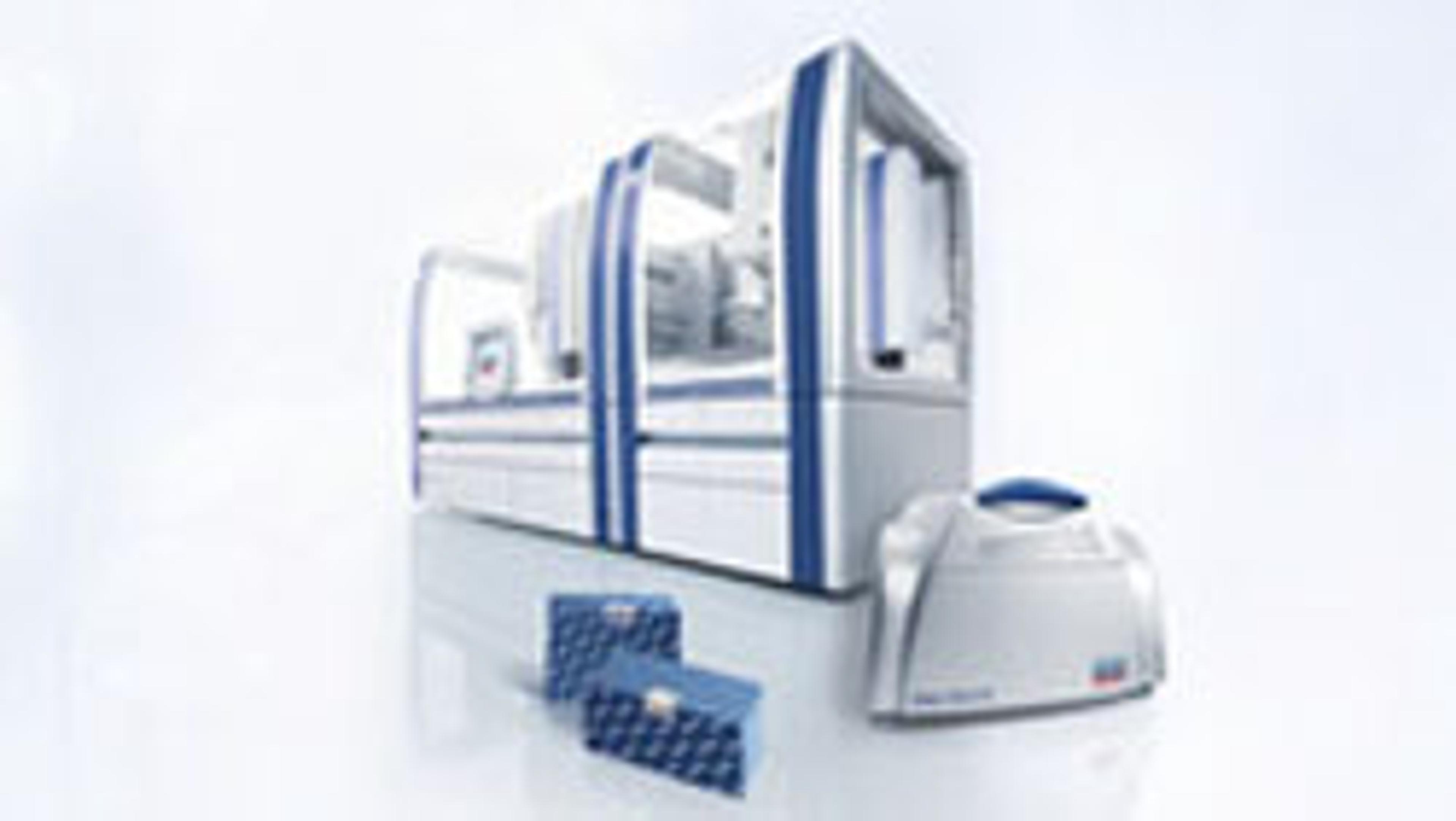
QIAGEN Receives U.S. FDA Approval for Cytomegalovirus (CMV) Testing on Automated QIAsymphony Platform

7 Jun 2017

Lois Manton-O'Byrne, PhD
Executive Editor

Product news

QIAGEN has announced it has received premarket approval from the U.S. Food and Drug Administration (FDA) for its automated artus® CMV QS-RGQ MDx kit for use on QIAGEN’s QIAsymphony platform, providing fast, reproducible, high-quality test results for use as an aid in the management of solid organ transplant patients who are undergoing anti-CMV therapy.

Patients who have undergone organ transplantation have an elevated risk of infection from CMV, which is a common virus that infects people of all ages. Over half of all adults by age 40 have been infected with CMV, according to the U.S. Centers for Disease Control (CDC). Once CMV is in a person’s body, it stays there for life in latent form and can reactivate.

Among organ transplant patients, an estimated 40-70% of post-transplant mortality is linked to higher susceptibility to opportunistic infections such as CMV. Timely and accurate monitoring of CMV viral load through a molecular test such as the artus CMV assay is essential to monitoring these patients, and in particular for those undergoing antiviral drug therapy for a CMV infection. The U.S. market for annual CMV testing is estimated at about 1.1 million tests, and QIAGEN is a leader in transplant-related molecular testing on a global scale and supported by a strong market presence in the U.S.

“QIAGEN is a leader in supporting clinical laboratories and physicians in the care of transplant patients with our unique portfolio of artus assays for molecular screening as well as the QuantiFERON portfolio of assays for assessment of a patient’s immune status. This application of our artus CMV kit on the QIAsymphony automation system will be an important catalyst to strengthen this comprehensive portfolio,” said Thierry Bernard, Senior Vice President, Molecular Diagnostics Business Area at QIAGEN. “This kit will allow QIAGEN to serve a new group of higher-volume CMV test customers, while providing our dedicated QIAsymphony base of customers a new test that will help them handle growing CMV test volumes. This marks the seventh FDA-cleared or approved QIAGEN test based on PCR technology, and strengthens the position of QIAsymphony as a versatile and high-performance molecular testing platform.”

The CMV kit, which processes human plasma samples (EDTA tube collection), is a migration of the FDA-approved artus® CMV RGQ MDx Kit to the QIAsymphony platform and offers many benefits in the management of solid organ transplant patients undergoing anti-CMV therapy:

  • Greater ease of use and flexibility since clinical laboratories with higher sample volumes will benefit from faster, higher-throughput processing with the QIAsymphony workflow, while lower-volume labs that send out all or part of current CMV testing now have an opportunity to bring CMV and transplant testing into their own laboratories in a cost-efficient and scalable manner. QIAsymphony is an industry-leading molecular testing automation platform, and appreciated by customers for features that include the ability to automate laboratory-developed tests (LDTs).
  • Proven clinical performance and standardization since the artus CMV QS-RGQ MDx kit is standardized to the World Health Organization (WHO) standard, and results are reported in IU/ml as recommended by international consensus guidelines for CMV management in solid organ transplant patients.1,2
  • Advances in market-leading transplant assay portfolio, with the new artus CMV QS-RGQ MDx kit as the latest addition to QIAGEN’s portfolio in the United States. In Europe, QIAGEN offers CE-IVD marked artus assays for the detection of numerous transplant-associated pathogens including CMV, EBV, BKV, HSV-1/2, VZV, JCV, HAdV and HHV6 on its QIAsymphony and Rotor-Gene platforms. These assays complement QIAGEN’s comprehensive range of CE-IVD marked immune monitoring solutions in transplant based on the proprietary QuantiFERON technology – QuantiFERON®-CMV and QuantiFERON Monitor® provide the most complete picture of transplant-patient immune status available from a single-source provider.

Kotton CN, Kumar D, Caliendo AM, et al. International consensus guidelines on the management of cytomegalovirus in solid organ transplantation. Transplantation 2010; 89: 779.

Kotton CN, Kumar D, Caliendo AM, et al. Updated international consensus guidelines on the management of cytomegalovirus in solid-organ transplantation. Transplantation 2013; 96(4):333.

Links

Tags

PCR and Thermal CyclingPolymerase chain reaction (PCR) kits and thermal cyclers are used for the in vitro amplification of DNA permitting subsequent analysis and experimental procedures. Explore a range of high-quality polymerase, primers and nucleotides or simplify your workflow with a PCR mastermix. Find reverse transcription PCR (RT-PCR) and cDNA synthesis kits for RNA products and libraries. Quantitatively measure the amplification of DNA with real-time PCR (qPCR) and droplet digital PCR (ddPCR) kits and systems, and discover automated PCR setup solutions to increase throughput. Alternative DNA amplification methods also include recombinase polymerase amplification (RPA) kits. Find the best PCR kits and thermal cyclers and purification equipment in our peer-reviewed product directory: compare products, check customer reviews and receive pricing direct from manufacturers.MicrobiologyMicrobiology is the study of microorganisms including protists, prokaryotes, fungi, and, often, viruses. Microorganisms are a useful research tool as genetic vectors and, in immunology, for antibiotic susceptibility testing, cellular biology and genetics. Microorganisms commonly grow readily in incubators with microbial culture media; this can contain chromogenic supplements to differentiate between cell lines. Estimate your culture’s density of microorganisms with colony counters, or screen and select colonies for desirable clones with automated colony pickers. Additionally, equipment is available to monitor environments for the presence of microbes and identify with microbial identification instruments. Find the best microbiology products in our peer-reviewed product directory: compare products, check customer reviews and receive pricing direct from manufacturers.Clinical MicrobiologyMicrobiology is the study of microorganisms including protists, prokaryotes, fungi, and, often, viruses. Microorganisms are a useful research tool as genetic vectors and, in immunology, for antibiotic susceptibility testing, cellular biology and genetics. Microorganisms commonly grow readily in incubators with microbial culture media; this can contain chromogenic supplements to differentiate between cell lines. Estimate your culture’s density of microorganisms with colony counters, or screen and select colonies for desirable clones with automated colony pickers. Additionally, equipment is available to monitor environments for the presence of microbes and identify with microbial identification instruments. Find the best microbiology products in our peer-reviewed product directory: compare products, check customer reviews and receive pricing direct from manufacturers.Gene Expression and Molecular CloningMolecular cloning is a set of techniques that utilizes vectors to transfer recombinant DNA into host cells and is an essential tool for investigating the expression of genes and proteins in bacterial or mammalian cells. A variety of vectors optimized for gene cloning and expression in a range of host organisms are available, alongside competent cells for genetic replication. Here, you can explore a range of molecular tools, high-quality genomic and cDNA libraries, premade clones, transformation and transfection reagents and mutagenesis or gene expression detection assays and expression arrays. Find the best gene expression and molecular cloning products in our peer-reviewed product directory: compare products, check customer reviews and receive pricing direct from manufacturers.CMVHigh ThroughputHigh throughput experiments allow the simultaneous processing of several samples. This parallelization reduces the cost per experiment and increases reproducibility and output volume of data.VirusesViruses are microscopic pathogens that require a host cell to replicate. Understanding their structure, replication cycle, and impact on the immune system is crucial in developing effective treatments, vaccines, and diagnostic methods. Research continues to focus on emerging viral diseases and antiviral drug discovery. Explore solutions for virus research, detection, and treatment in our peer-reviewed product directory; compare products, check customer reviews, and get pricing directly from manufacturers.Molecular DiagnosticsMolecular diagnostics use an individual’s genetic code and gene expression to diagnose and monitor diseases. The technique is used increasingly in the field of infectious diseases and oncology, as well as areas such as coagulation, HLA typing and pharmacogenomics. Molecular diagnostics plays a pivotal role in personalized medicine.Infectious DiseasesInfectious diseases are caused by pathogens such as bacteria, viruses, and fungi. Effective detection, prevention, and treatment are crucial to control outbreaks and improve public health. Diagnostic tools, vaccines, and antimicrobial treatments are essential components of managing these diseases. Research into emerging pathogens and resistance patterns continues to evolve. Browse our peer-reviewed product directory to find the best diagnostic tools, prevention solutions, and treatment options; compare products, read customer reviews, and get pricing directly from manufacturers.