QIAGEN advancing plans to launch three new sample preparation instruments by 2026 to improve lab automation

16 Apr 2025
Product news

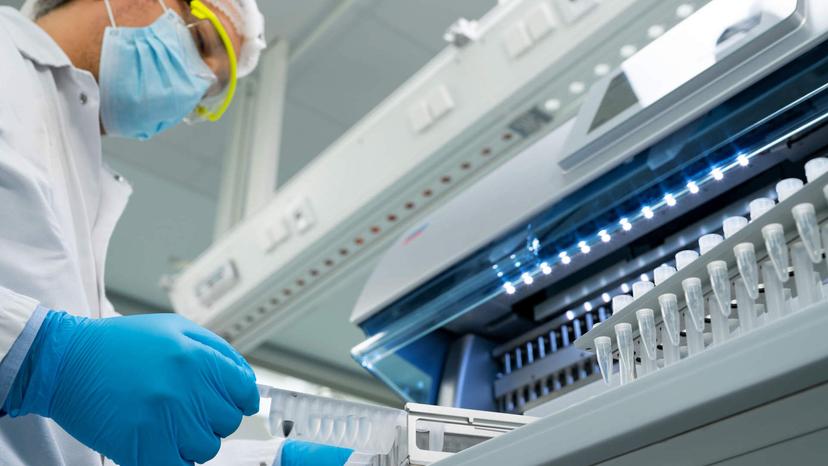
Image of a scientist placing a rack of test tubes into the QIAGEN EZ2 Connect benchtop instrument

The QIAGEN EZ2 Connect benchtop instrument

QIAGEN has announced that plans are advancing to launch three new sample preparation instruments during 2025 and 2026 to expand and strengthen its portfolio for automated sample preparation.

These systems are designed to deliver new levels of efficiency and sustainability for laboratories worldwide and address different customer segments:

QIAsymphony Connect

QIAsymphony Connect, which marks the next generation of the flagship QIAsymphony with over 3,300 cumulative placements, is progressing well toward a phased launch to selected customers starting in 2025.

Early customer sessions are being held at industry events during 2025 – including at the ESCMID (European Society of Clinical Microbiology and Infectious Diseases) conference in April 2025 in Vienna – to showcase the system’s enhanced capabilities in select settings upon request. The QIAsymphony Connect addresses pathogen nucleic acid extraction and various other applications including liquid biopsy, a non-invasive method for detecting cancer and other diseases through blood samples, as well as oncology, genomics, and clinical research workflows.

The system can process up to 96 samples at a time and features improved automation capabilities for sample tracking and new applications, higher yield for increase in assay sensitivity and digital connectivity. It is compatible with QIAsphere, QIAGEN’s cloud-based platform for remote monitoring, software updates and instrument status. It is being designed for in vitro diagnostic (IVD) use globally, enabling compliant workflows in most countries and including the U.S. and Europe.

QIAsprint Connect

QIAsprint Connect, on track for launch in 2026, marks the entry of QIAGEN into automated high-throughput sample processing.

The first demonstrations of QIAsprint Connect have showcased the system’s potential to process up to 192 samples per run with less than 30 minutes of hands-on time, enabling labs to scale up to 600 samples per day. The system supports both pre-programmed and customizable protocols, and its consumables are designed with sustainability in mind, reducing plastic waste by up to 50%.

“We were excited to test the QIAsprint. Its user-friendly design and ability to process large sample numbers efficiently is an ideal solution for laboratories like ours,” said Kerstin Luxa of the Max Planck Institute for Plant Breeding Research in Cologne, Germany.

The system supports a wide range of sample types, such as plant, microbial, soil, stool and human tissues, and is already being used to develop nine different applications. Its flexibility makes it ideal for labs working across various areas.

QIAmini

QIAmini, also on track for launch in 2026, expands QIAGEN’s automation portfolio into the low-throughput segment.

This cost-effective and low-complexity entry into automation brings the reliability of QIAGEN trusted kits to smaller labs and batch sizes. Ideal for replacing tedious pipetting, it delivers the reproducibility of automation with the flexibility to scale as needed.

QIAmini complements QIAGEN’s portfolio alongside the updated QIAcube Connect and EZ2 Connect systems, offering automation options for even smaller-scale workflows.

“These new sample preparation systems underscore our commitment to helping labs operate more efficiently, sustainably and flexibly,” said Nitin Sood, Senior Vice President and Head of Product Portfolio & Innovation at QIAGEN. “With QIAmini, QIAsprint Connect and QIAsymphony Connect, we are supporting customers with new ways to tackle complex challenges – from liquid biopsy to high-throughput screening – with smart, scalable solutions.”

These upcoming launches build on recent enhancements across QIAGEN’s automation portfolio, including the upgraded QIAcube Connect and EZ2 Connect systems. Together, they reflect QIAGEN’s strategy to provide modular, scalable solutions in sample preparation that match evolving lab needs from small research settings to high-volume testing labs.

Want the latest science news straight to your inbox? Become a SelectScience member for free today>>

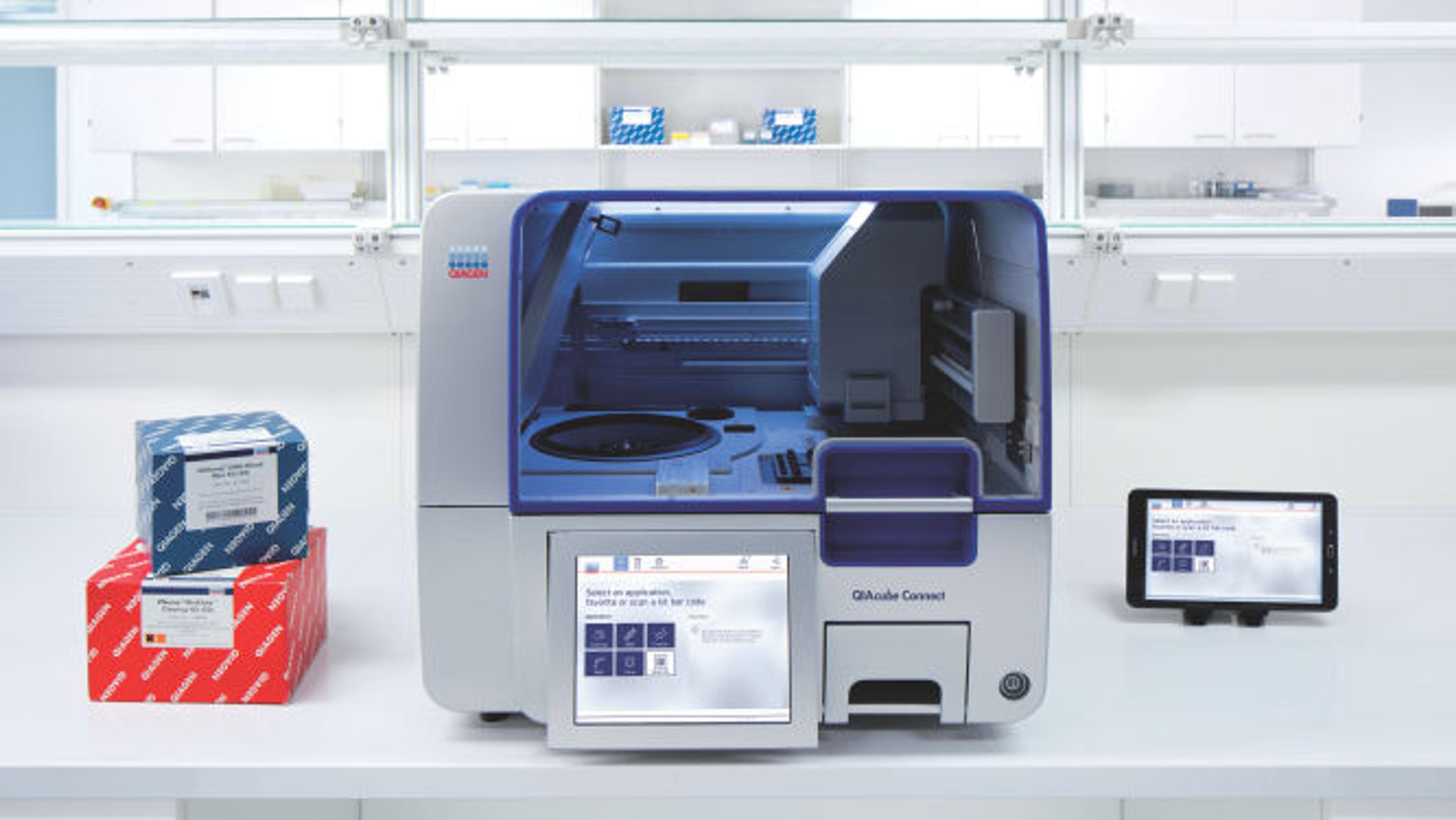
QIAcube Connect

QIAGEN

For fully automated, spin-column-based nucleic acid extraction that you can manage from outside the lab using QIAsphere

(3)

Links

Tags

PCR and Thermal CyclingPolymerase chain reaction (PCR) kits and thermal cyclers are used for the in vitro amplification of DNA permitting subsequent analysis and experimental procedures. Explore a range of high-quality polymerase, primers and nucleotides or simplify your workflow with a PCR mastermix. Find reverse transcription PCR (RT-PCR) and cDNA synthesis kits for RNA products and libraries. Quantitatively measure the amplification of DNA with real-time PCR (qPCR) and droplet digital PCR (ddPCR) kits and systems, and discover automated PCR setup solutions to increase throughput. Alternative DNA amplification methods also include recombinase polymerase amplification (RPA) kits. Find the best PCR kits and thermal cyclers and purification equipment in our peer-reviewed product directory: compare products, check customer reviews and receive pricing direct from manufacturers.Sample PreparationSample preparation can improve the quality and speed of separation techniques. Products to assist sample preparation include filtration equipment, evaporators, membranes and sieves.DNA / RNA Extraction and PurificationPurified DNA and RNA are required for numerous downstream molecular biology applications. Consequently, the importance of high-quality DNA/RNA extraction and purification equipment cannot be underestimated. Many purification kits are available and are typically optimized for nucleic acid type and source, including plasmid DNA, genomic DNA, mRNA, RNA and viral nucleic acid purification kits. Automated extraction and purification of nucleic acids can be implemented with magnetic bead separator instruments or high-throughput purification workstations. Find the best DNA/RNA extraction and purification equipment in our peer-reviewed product directory: compare products, check customer reviews and receive pricing direct from manufacturers.Clinical MicrobiologyMicrobiology is the study of microorganisms including protists, prokaryotes, fungi, and, often, viruses. Microorganisms are a useful research tool as genetic vectors and, in immunology, for antibiotic susceptibility testing, cellular biology and genetics. Microorganisms commonly grow readily in incubators with microbial culture media; this can contain chromogenic supplements to differentiate between cell lines. Estimate your culture’s density of microorganisms with colony counters, or screen and select colonies for desirable clones with automated colony pickers. Additionally, equipment is available to monitor environments for the presence of microbes and identify with microbial identification instruments. Find the best microbiology products in our peer-reviewed product directory: compare products, check customer reviews and receive pricing direct from manufacturers.Clinical GeneticsMolecular Genetics covers the analysis of hereditary genetic disease and chromosomal abnormalities. Genetics can be analysed using DNA, RNA, and protein microarrays, PCR, RT PCR and DNA sequencing. Genetic equipment includes genetic workstations, thermal cyclers, cooling blocks and electrophoresis products. Diagnostic kits are used for DNA / RNA extraction and purification.ECCMIDInfectious DiseasesInfectious diseases are caused by pathogens such as bacteria, viruses, and fungi. Effective detection, prevention, and treatment are crucial to control outbreaks and improve public health. Diagnostic tools, vaccines, and antimicrobial treatments are essential components of managing these diseases. Research into emerging pathogens and resistance patterns continues to evolve. Browse our peer-reviewed product directory to find the best diagnostic tools, prevention solutions, and treatment options; compare products, read customer reviews, and get pricing directly from manufacturers.Liquid BiopsiesLiquid biopsies are non-invasive tests used to detect cancer and other diseases by analyzing blood or other bodily fluids. This technique is gaining popularity for early detection, monitoring treatment response, and detecting minimal residual disease. Explore liquid biopsy solutions in our peer-reviewed product directory; compare products, check reviews, and get pricing directly from manufacturers.Cancer DiagnosticsThere are a wide variety of diagnostic tests for cancer available, and this range continues to expand as our knowledge of cancer improves. Current diagnostic methods include biopsy, imaging and blood tests for known biomarkers. New methods in research development include liquid biopsies and cancer breathalyzers.Plant SciencePlant science studies the biology of plants, including genetics, physiology, ecology, and biotechnology. Research in this field is essential for improving crop yields, disease resistance, and sustainability. Explore plant science tools in our peer-reviewed product directory; compare products, check reviews, and get pricing directly from manufacturers.Pathogen DetectionPathogen detection is the process of identifying harmful microorganisms, including bacteria, viruses, and fungi, that can cause diseases. Accurate pathogen detection is critical for food safety, public health, and clinical diagnostics. Explore pathogen detection products in our peer-reviewed product directory; compare products, check reviews, and get pricing directly from manufacturers.