
Protecting science’s next generation: Using ergonomic pipettes in a teaching laboratory
Hear how one research team supports students’ training at all stages and uses ergonomic pipettes to protect their health
4 Sept 2022
Editorial article

Principal Investigators have a lot of work to do establishing research programs within their lab, forming their group, and creating a supportive work environment and culture. This includes implementing equipment and ways of working that protect of the health of lab members.
In this article, new Principal Investigator and Associate Professor at the University of Idaho, Dr. Paul Rowley, speaks to SelectScience® about his research into toxins produced by yeasts, the educational and training ethos of his research group, and how he supports members’ health with ergonomic Ovation® Pipettes from VistaLab™ Technologies.
Fostering learning and teaching
“We do a lot of work with yeasts and viruses, both mammalian and microbial viruses,” Rowley explains of his team’s work. “I'm focusing on looking at viruses and toxins of yeasts – looking at Saccharomyces cerevisiae, bakers’ and brewers’ yeast, and studying the viruses that infect this organism, as well as the ability of the viruses to stimulate toxin production in the yeasts.”
“A lot of the times the toxins produced are because of the viral infection,” elaborates Rowley. “We don't know much about the viruses or the toxins, so it's a wide-open field. I'm starting to understand a little bit more about the types of toxins and how we can potentially use them to fight agricultural and human disease. We also have a lot of fun working with undergraduates to ask questions about the fundamentals of these molecules and viruses.”
Rowley’s group takes the responsibility of training the next generation of scientists seriously with a number of undergraduates and graduate students learning and working in the laboratory. “In the last six years, I've had about 47 undergraduates through my laboratory,” attests Rowley.
Rowley’s teaching support goes beyond those at university level. As he explains, “I just got a National Science Foundation Career Award, which is a prestigious award for early career faculty. That grant is all about public outreach. Getting high school students and undergraduate students to get out there and isolate yeast from the environment, from a range of sources such as tree bark, fruit, and insects that also harbor a lot of yeast. So, we're going to have this sort of citizen science project where they're collecting all these things.”
“Once we have the yeast, then we're going to look to see whether these different yeasts produce different toxins or not,” continues Rowley. “Then we can use these toxins to understand how certain cellular processes in yeasts work. If we can understand how these toxins are causing changes in the physiology of yeast cells, then we can hopefully apply these understandings to higher organisms and how these toxins affect multiple different animals and cell types. There's a mixture of discovery of new toxins, new viruses, and new yeasts, as well as fundamentals.”
“This is from graduate students and postdocs all the way down to high school students. So, a really nice diverse mix of people to do this work,” says Rowley. “I do like citizen science projects where people actually get to participate and make a meaningful contribution. It's not just an engagement project.”
Working in comfort with Ovation® pipettes
Training the next generation of scientists also includes providing them with laboratory equipment that could better suit them or protect their health. When performing repetitive movements – in the case of Rowley’s lab, regular pipetting – problems can arise.
Honestly, it was like night and day…The neck pain, the shoulder pain, it just essentially evaporated.
Dr. Paul Rowley University of Idaho
Early on in his career, Rowley experienced discomfort when using pipettes, “When I was a postdoc, I was working a lot on the bench. And I did start to notice that shoulder strain and neck pain. Back in Aberdeen, when I was an undergraduate, we also had a student that had carpal tunnel, and I remember these pipettors that sat on the bench and had this strange design.”
When it came to establishing his own lab, Rowley decided to find out more. He discovered the Ovation® pipettes by VistaLab™ Technologies. He was able to trial them before purchase to see if they made a difference, and, as Rowley says, “Honestly, it was like night and day. It really was a major game changer for me in terms of how I felt when I was on the bench. The neck pain, the shoulder pain, it just essentially evaporated. I really appreciated the ability to try and see whether it was right for me.”
The upright position and angle when holding the pipettes is a key factor for Rowley, as he expands, “It's not lying down on the bench, it's sitting on the bench. So, you don't have to scoop under it in order to grab it, and it’s less likely to get knocked off bench tops. The general design and the ability to pipette with your arms at right angles rather than up high with your hand above your shoulder – for me, that is by far the best feature.”
“My primary reason for searching for a new type of pipettor was my own health,” continues Rowley. “And then I thought, ‘Well, if it's affecting me so much, then when I start my new lab, I'm going to make sure I have that brand of pipettors.’ Because they've just made such a difference to me, I know it makes a difference to my students. I've had students that have left my lab and had to use regular pipettors actually complain. They say, ‘Wow, we really appreciate the Ovations now that we've left them behind.’ They go to another lab now and have to use regular pipettors and they notice the difference.”
You can find out more about Dr. Rowley’s laboratory’s work and citizen science projects here>>
Related products
Request Quote for All Products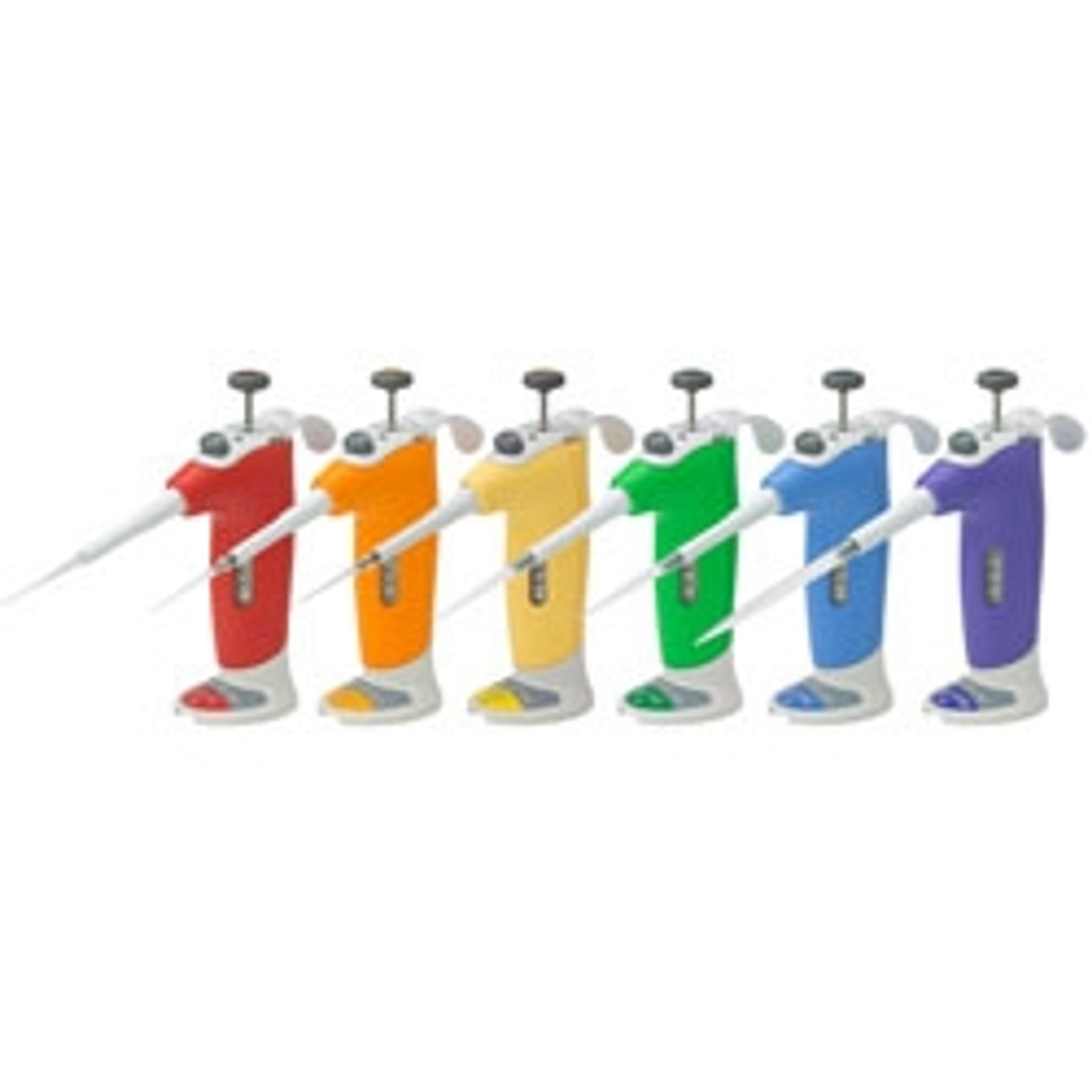
Ovation® M Single Channel Manual Pipettes
VistaLab TechnologiesOvation ® Single Channel Pipettes, fully autoclavable, easy manual operation, patented ergonomic design for proper pipetting body positioning to avoid RSI. Pipette with less pain for increased productivity and better accuracy.