
Promega Nano-Glo® Dual-Luciferase® Reporter Assay Enables More Sensitive Detection of Cellular Events with Greater Flexibility in Assay Design
7 Apr 2015Product news
Promega Corporation announces the launch of the new Nano-Glo® Dual-Luciferase® Reporter (NanoDLR™) Assay, a two-reporter system that incorporates NanoLuc® luciferase technology, providing increased data quality and greater sensitivity for biologically complex applications.
The new NanoDLR assay allows researchers to measure NanoLuc and firefly luciferases together in a convenient, easy-to-use format. With improved firefly chemistry and the small, ultra-sensitive NanoLuc luciferase, researchers gain more sensitivity to detect small changes in expression, more flexibility in assay design and more robust control reporter options.
"With Nano-Glo Dual-Luciferase Reporter Assay, scientists are now able to measure biology that could not be quantified reliably using previous dual reporter technologies," says Kevin Kopish, Senior Manager of Strategic Marketing at Promega Corporation.
In the NanoDLR Assay, firefly luciferase, NanoLuc luciferase, or both, can be used as dynamic reporters, greatly increasing versatility by allowing researchers to choose the primary reporter that best meets their experimental needs.
The new assay chemistry provides improved reagent stability over time, giving more consistent results and eliminating the need to freeze reagent. NanoDLR is a homogenous reagent system with stable glow-type luminescent signals, but can also be used with injection-based protocols or cell lysates, and is compatible with automated liquid handling and high density plates, including 1536-well formats.
One novel application of the two powerful primary reporters in the NanoDLR assay is the coincidence reporter assay, an innovation with great promise for high-throughput chemical library screening in drug discovery. This type of assay uses two independent reporters to measure a single transcription event, providing a way to distinguish true "hits" from experimental artifacts caused by interaction between library compounds and reporter proteins.
Along with the release of the NanoDLR Assay, several new NanoLuc and firefly luciferase plasmids are available. These include control vectors with the option of using the native phosphoglycerate kinase (PGK) promoter to replace promoters of viral origin, and plasmids for coincident reporter assays for high-throughput chemical library screening.
Related products
Request Quote for All Products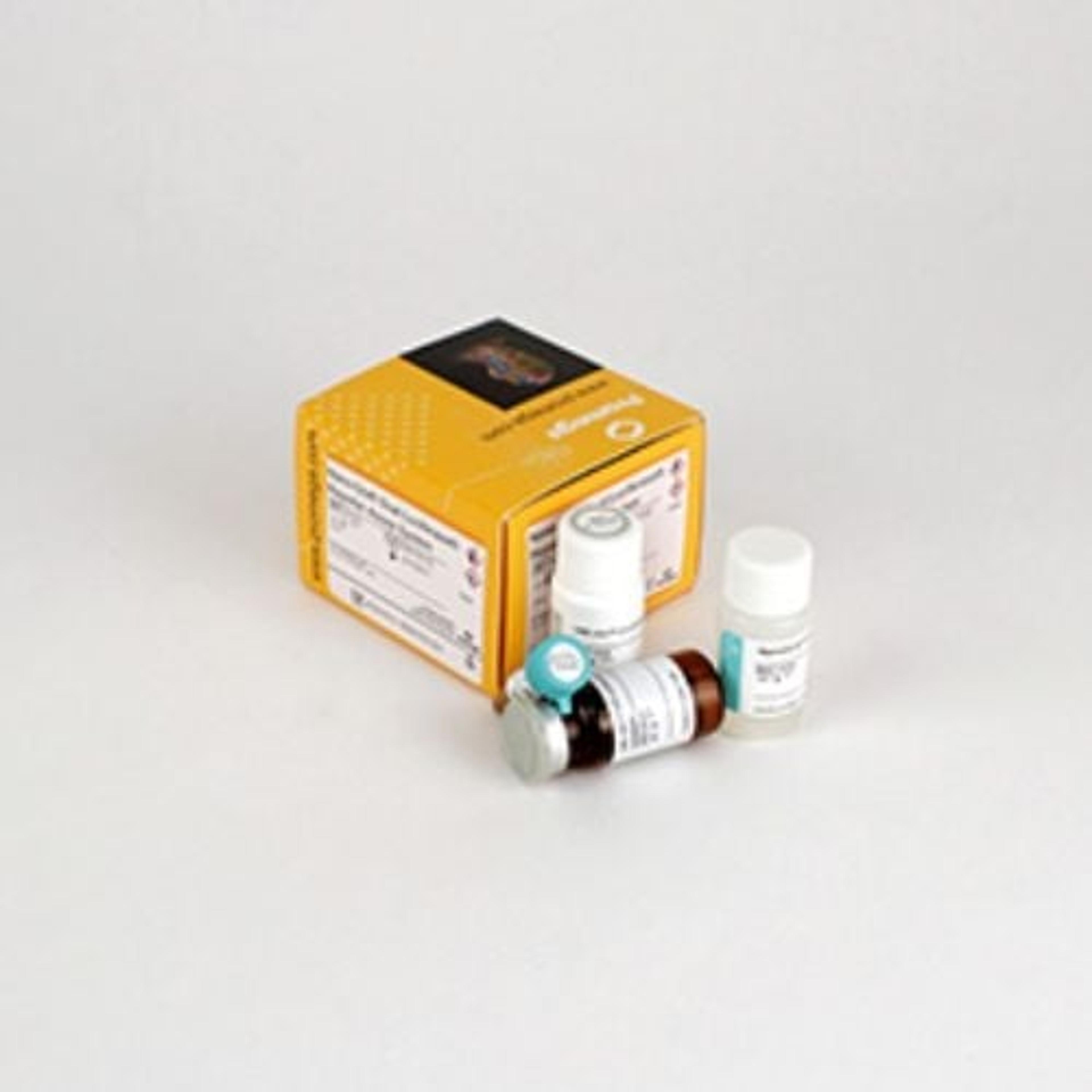
Nano-Glo® Dual-Luciferase® Reporter Assay System
Promega Corp.Switch Seamlessly from Your Current Dual-Luciferase® Assay!