Promega developing OncoMate MSI Assay as companion diagnostic for endometrial cancer drug candidate

Promega and Incyte intend to work together in the future to develop the Promega OncoMate MSI Assay as a companion diagnostic

22 Sept 2020

Diane Li
Assistant Editor

Industry news

Promega Corporation has announced its intent to develop the Promega OncoMate™ microsatellite instability (MSI) Assay as a companion diagnostic test for retifanlimab, Incyte’s anti-PD-1 drug candidate, in endometrial cancer. The financial terms of the global agreement with Incyte were not disclosed.

Microsatellite instability-high (MSI-H) is a key feature of Lynch syndrome tumors, indicative of a germline mutation in mismatch repair genes, but can also arise sporadically. It occurs frequently in endometrial cancer. The importance of the MSI-H biomarker has been further emphasized since the 2015 finding that MSI-H tumors have a prolonged and durable response to PD-1 inhibitors.

“This announcement further underscores Promega’s dedication to advance the promise of MSI technology globally, building on over 20 years of expertise in this field,” said Heather Tomlinson, Director of Clinical Diagnostics at Promega Corporation.

Promega and Incyte intend to work together in the future to develop the Promega OncoMate MSI Assay as a companion diagnostic in other markets.

The OncoMate™ MSI Assay received CE marking in Europe earlier this year. Promega MSI technology is one of the leading standard tests for MSI status detection in research laboratories and achieved innovation status and priority review by the National Medical Products Administration (NMPA) in China. It has been used extensively in clinical research for more than 15 years and is supported by more than 140 peer-reviewed publications. Promega intends to seek regulatory clearance for OncoMate™ MSI in the United States and China.

Do you use Promega products in your lab? Write a review today for your chance to win a $400 Amazon Gift Card>>

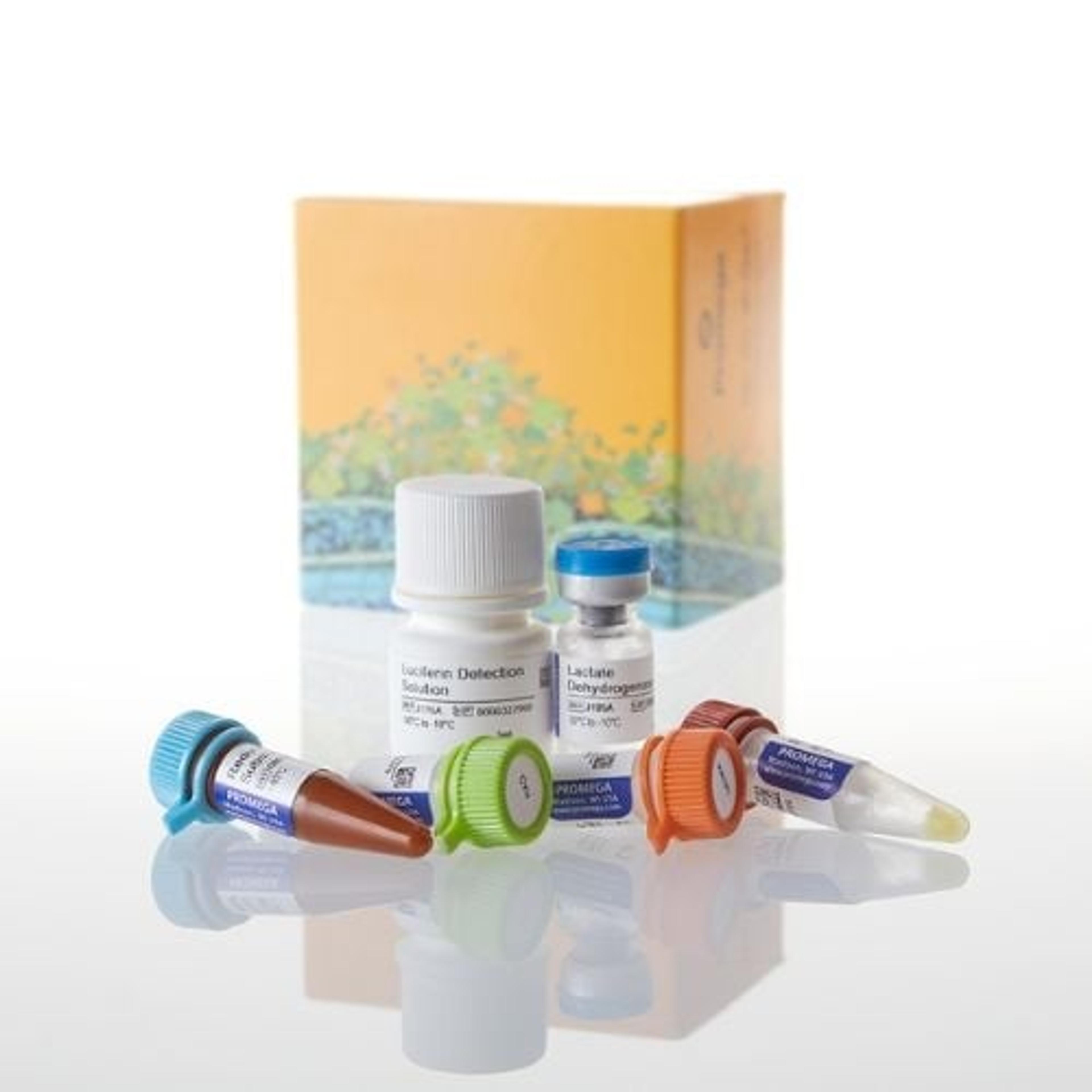
Lactate-Glo® Assay

Promega Corp.

The Lactate-Glo™ Assay is a bioluminescent assay for rapid, selective and sensitive detection of L-lactate in biological samples. Lactate is produced by glycolysis, a major metabolic pathway responsible for glucose homeostasis and energy production (1,2). Once considered merely a byproduct of glycolysis, lactate is now considered an important regulatory molecule of intermediate metabolism involved in cancer development, diabetes and other diseases

(1)

Links

Tags

Combinatorial ChemistryCombinatorial chemistry, also known as combichem, is a technique used in drug discovery to create libraries of structurally related compounds. A library is generated by synthesis with a chemical reactor system or by computer-based modeling of compound combinations. When undertaking combinatorial chemistry consider reagents, buffers, resins and standards.Data AnalysisData analysis hardware and software is available to make data processing straight-forward yet powerful. Data software can be used for math and stats, technical graphing and image analysis. In addition, software is available for specific data analysis of electrophoresis, densitometry, ELISA and DNA sequencing.HematologyIn Haematology / Hematology, complete blood cell counts (or full blood counts) are obtained using automated blood count analyzers to enumerate blood cell types.  Hematology also encompasses haemostasis and coagulation, thrombophilia and hemophilia, plasma viscosity and ESR analysis, hemoglobinopathies, cell morphology and haematinic measurement.ImmunologyImmunological techniques measure and characterize immune responses. Immunology kits and analysis systems often use techniques such as ELISA, radioimmunoassay (RIA) and immunodiffusion assays, Immunohistochemistry, and flow cytometry. Immunologists use equipment such as flow Cytometers, plate readers, plate washers and fluorescent microscopes.Cellular PathologyCellular Pathology deals with the microscopic analysis of tissue samples and cells. Sample preparation and processing includes fixation, staining, sectioning and slide mounting, using equipment such microtomes and cryostats. In choosing immunohistochemistry and immunocytochemistry kits, consider chromogens, staining method, antibodies, microscopes and imaging.Biopharmaceutical AdvancesBiopharmaceutical advances follow the development of pharmaceuticals derived from biotechnology, also known as biotechnology medicines. Biopharmaceuticals may be produced from cell lines, plants, or microbial cells. Important considerations of biopharmaceutical use include application, cost, production process and purification.Clinical TrialsClinical Trials, an essential part of drug discovery process, assess the safety and effectiveness of a new medication or device in the pharmaceutical industry. Clinical Trials are a phased process (Phase 0, Phase I, Phase II, Phase III and Phase IV) which begins after initial preclinical testing.Clinical ChemistryBiochemistry (or clinical chemistry) involves the analysis of bodily fluids using chemical tests. Techniques used include HPLC, chromatography, spectroscopy, mass spectrometry, immunochemical, electrophoresis, turbidometric / spectrophotometric assay, MRI and ISE analysis. Tests are often carried out on plasma or serum but urine (urinalysis) and fecal specimens are also processed.Clinical GeneticsMolecular Genetics covers the analysis of hereditary genetic disease and chromosomal abnormalities. Genetics can be analysed using DNA, RNA, and protein microarrays, PCR, RT PCR and DNA sequencing. Genetic equipment includes genetic workstations, thermal cyclers, cooling blocks and electrophoresis products. Diagnostic kits are used for DNA / RNA extraction and purification.Drug DeliveryDrug Delivery refers to dosage form, route of administration, formulations, technologies, and systems for transporting a pharmaceutical compound in the body as needed to safely achieve its desired therapeutic effect. Drug delivery is often approached via the biopharmaceutical or small molecule drug's formulation, but it may also involve medical devices or drug-device combination products. Considerations include instrumentation, software and services. RegulatoryPharmaceutical regulations impact on all areas of drug development, manufacture and control and supply. Services are provided from the early stages of drug development and clinical trials through to dossier submission, approval and marketing. Regulatory also includes submission of analytical studies from the pharmaceutical product and safety. Companion DiagnosticsCompanion diagnostics are tests, often <i>in vitro</i>, that are used to determine whether a therapeutic product will be safe and effective for use on an individual. They also identify which patients will benefit most from them. Companion diagnostic tests are often developed in conjunction with the pharmaceutical industry.Cancer DiagnosticsThere are a wide variety of diagnostic tests for cancer available, and this range continues to expand as our knowledge of cancer improves. Current diagnostic methods include biopsy, imaging and blood tests for known biomarkers. New methods in research development include liquid biopsies and cancer breathalyzers.CollaborationDrug DiscoveryDrug discovery is the process of identifying potential new medications, involving stages such as target identification, compound screening, and preclinical development. It relies on cutting-edge technologies like high-throughput screening, artificial intelligence, and molecular modeling to accelerate the identification of drug candidates. Drug discovery plays a pivotal role in developing new therapies for diseases ranging from cancer to rare genetic disorders. Browse our peer-reviewed product directory to find the latest drug discovery technologies, compare options, check customer feedback, and get pricing directly from manufacturers.