Process and interpret your NMR data faster than ever before with ACD/NMR Workbook

13 Jul 2020
Samantha Rosoman
Campaign Coordinator

Product news

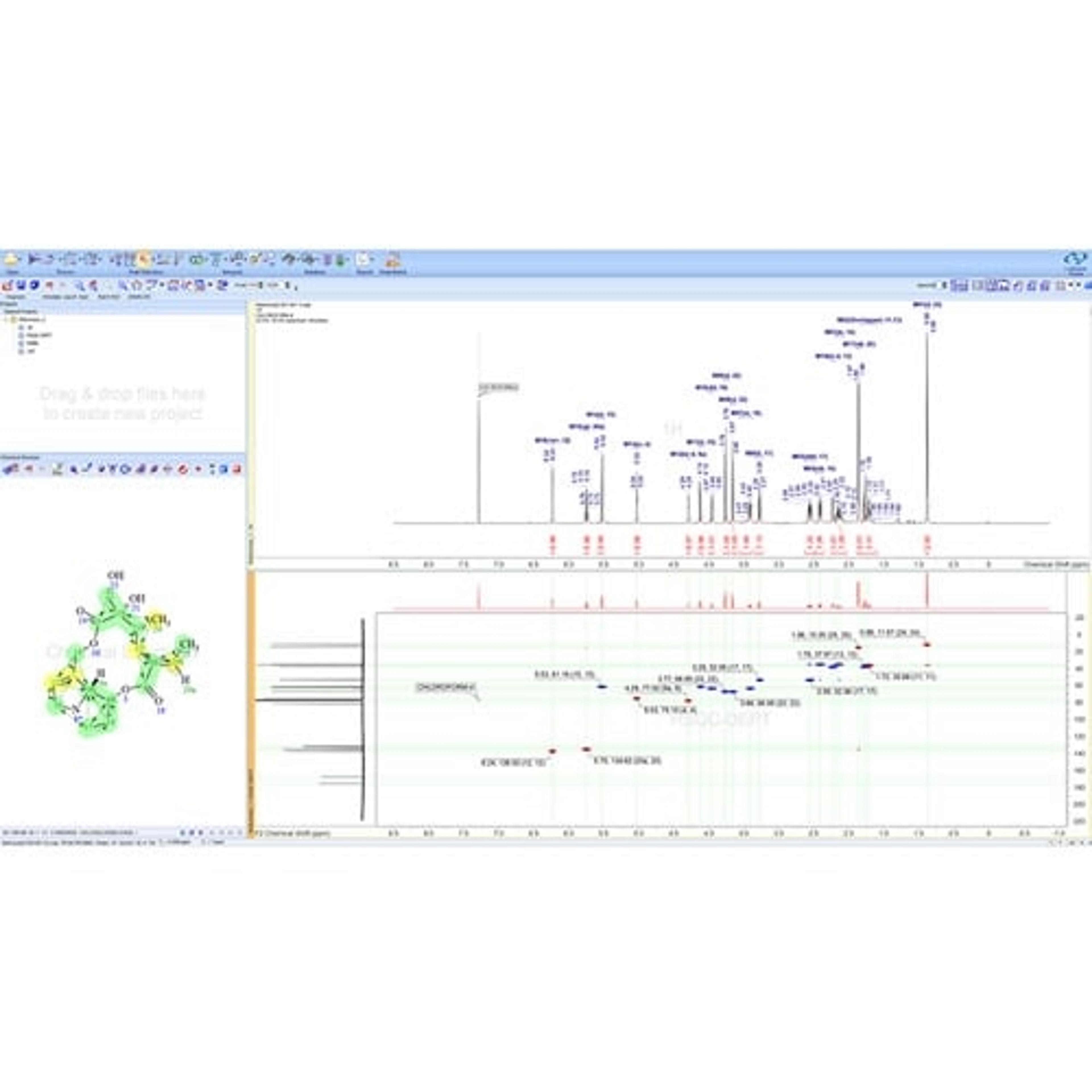
NMRSync by ACD/Labs is a game-changing technology that drastically reduces the time required to interpret and assign 1D and 2D NMR data. Available since ACD/NMR Workbook Version 12, this feature allows you peak pick and make assignments to datasets containing multiple types of NMR spectra for one sample much more efficiently.

Working-up NMR spectra for a set of several experiments can be laborious and tedious. Furthermore, while annotating paper spectra with notes and assignments is convenient, it does not equal the benefits of performing this task electronically. ACD/Labs offers a solution to greatly accelerate this process—ACD/NMR Workbook with NMRSync Technology.

At ACD/Labs we have a strong commitment to help organizations leverage the expert knowledge gained from their data. Having NMR Spectroscopists in mind, the focus is to allow them to be more efficient in their day-to-day routine. NMRSync automatically processes and aligns all NMR data associated with a given sample upon import. Following this procedure, it is then possible to synchronize all peak picking and structure assignment, drastically reducing the amount of time it takes to interpret and assign a full NMR dataset. It also makes the shift from paper to electronic media a no-brainer.

In addition to superior processing features, ACD/NMR Workbook also has databasing capabilities that let you store all of your assigned experimental spectra along with their chemical structures, assignments, data tables, and other associated data. Create links to all of your raw data for re-processing later. Find the information anytime you need through a variety of text, structure, sub-structure, or full and partial spectral searches.

For more information about ACD/NMR Workbook, visit here.

Learn how to synchronize your NMR data processing using NMRSync, watch video here.

For more of the latest science news, straight to your inbox, become a member of SelectScience for free today>>

Links

Tags

NMR and EPR SpectroscopyNuclear magnetic resonance (NMR) spectroscopy is used to resolve the local chemical environment of atomic nuclei with spin, revealing information on molecular structure, dynamic processes and chemical reactions of organic molecules, from proteins to synthetics. Electron paramagnetic resonance (EPR) also known as electron spin resonance (ESR) spectroscopy is used to detect and quantify paramagnetic species in a sample, including free radicals as transition metal ions. By immersing the sample in a strong magnetic field, both NMR and EPR spectrometers probe the sample with either radio waves or microwaves respectively. A range of benchtop, solid-state and time domain NMR spectrometers & EPR spectrometers are available, as well as NMR tubes, NMR solvents, software, coils, and magnets. Find the best NMR & EPR equipment in our peer-reviewed product directory: compare products, check customer reviews and receive pricing direct from manufacturers.Electronic Laboratory NotebooksElectronic Laboratory Notebooks (ELNs) are becoming increasingly popular for documenting experimental processes and for lab data management. An ELN is informatics software which can be biology specific, chemistry specific, cross-disciplinary or web-based. Advantages of an electronic lab notebook include increased data protection, efficiency and straightforward data searching and sharing.Raman SpectroscopyRaman spectroscopy is used to discern the vibrational and rotational states of molecules and hence the chemical composition of a sample by measuring the inelastic scattering of monochromatic light. Explore a range of Raman spectrometers, including handheld/portable Raman spectrometers for QC/QA labs and in situ spectrometers for processes. Conduct Raman imaging for microanalysis of mixed samples using a Raman microscope. Raman spectrographs are also available. Find the best Raman spectroscopy products in our peer-reviewed product directory: compare products, check customer reviews and receive pricing direct from manufacturers.SpectroscopySpectroscopy is a technique that analyzes the interaction of light with matter to study molecular properties, concentrations, and structural information. Widely used in chemical, pharmaceutical, and environmental analysis, spectroscopy offers insights into molecular composition and helps identify unknown compounds. It plays a key role in quality control, research, and diagnostics. Browse our peer-reviewed product directory to compare spectroscopy tools, read reviews, and get prices directly from manufacturers.NMR
Process and interpret your NMR data faster than ever before with ACD/NMR Workbook