Prior Scientific Launches the Z-Deck Range of Motorized, Manual and Fixed Electrophysiology Platforms

2 Oct 2016

Lois Manton-O'Byrne, PhD
Executive Editor

Product news

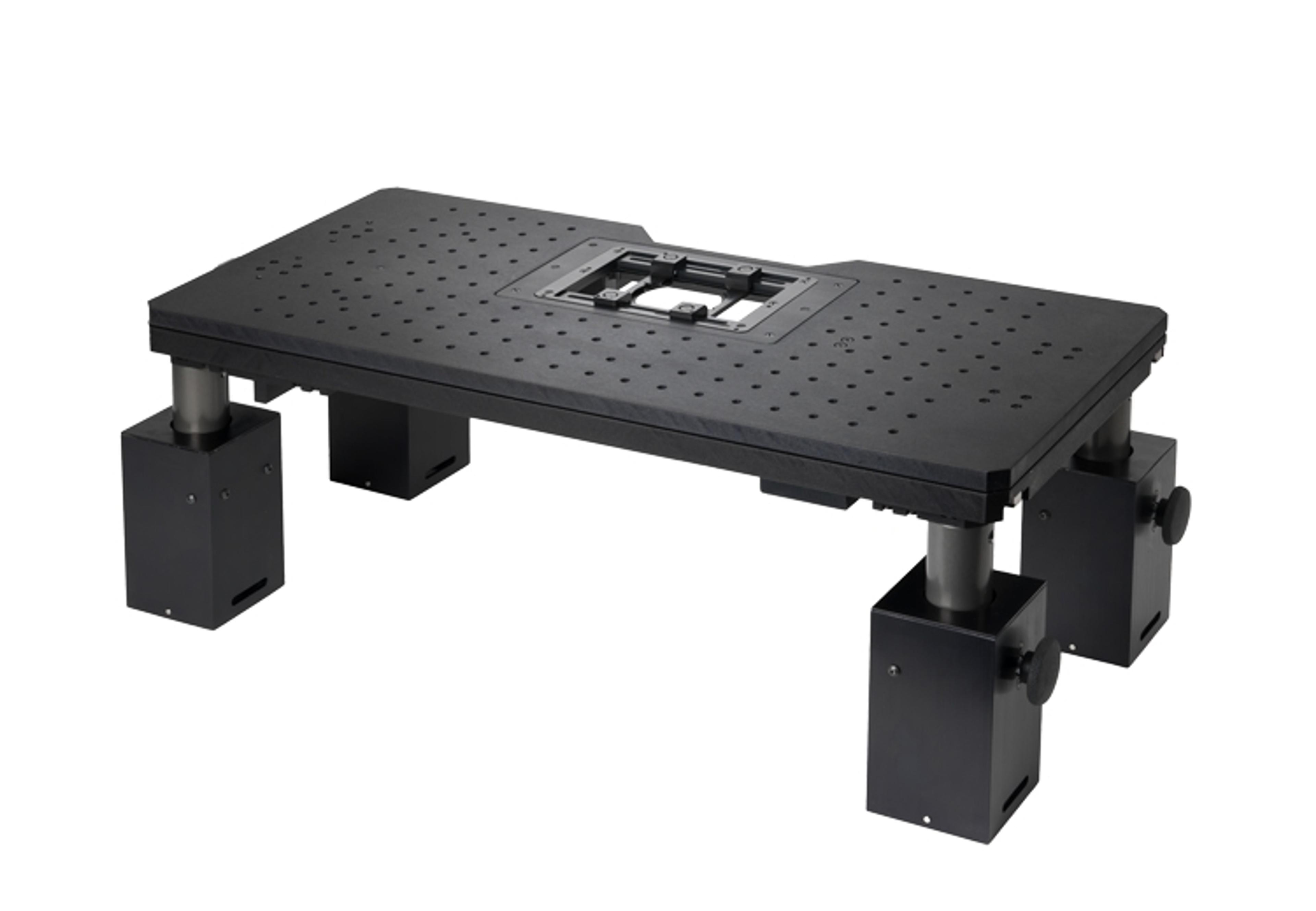
The Z-Deck range from Prior Scientific sets the benchmark for top quality, height adjustable platforms designed specifically for upright microscopes used in electrophysiology and neuroscience applications, including Nikon FN1, Olympus BX51WI or BX61WI, Zeiss Axio Examiner and Leica DM6 microscopes.

Compatible with most commercially available vibration isolation tables, the exceptionally stable Z-Deck platform offers a large surface working area, allowing for the creation of even the most complex experimental set-ups. Using the Z-Deck you can switch between whole organism and cellular imaging heights in seconds without the use of tools. The design of the platform facilitates undertaking Köhler illumination experiments at a range of focus heights.

To meet the differing requirements and budgets of scientists, Prior Scientific offers a range of Z-Deck platforms. For experiments that demand precise movements in the X and Y axes the motorized Z-Deck with sub-micron resolution and Prior’s patented IST technology provides unmatched accuracy and repeatability. The motors of the Z-Deck can be easily switched off during recording without the loss of position.

By comparison the manual Z-Deck enables manual experiment movement in the X and Y axes, at an entry-level price. If your experiment does not require XY movement from the stage at all, the Fixed Z-Deck offers a robust, stable, and rapidly height adjustable platform. Both the fixed and manual Z-Deck platforms have no electrical motors and thus produce no electrical noise making them ideal for researchers performing extremely precise measurements requiring constant electrical silence.
Links

Tags

ElectrophysiologyElectrophysiology is the study of biological voltage changes, from a single ion channel through to a whole organ scale. Voltages can be measured using patch clamping, automated workstations, electrophysiology rigs or cell based assays. Specific cell lines, manipulators and microinjectors are also available for electrophysiology research.Light MicroscopyLight microscopes or optical microscopes are used to visualize microscale objects under magnification, including cells, clinical specimens and materials. Lab equipment for light microscopy includes confocal microscopes, fluorescence microscopes, zoom and stereo microscopes. Microscope slides and imaging reagents are available for visualizing samples, as well as various microscope stages and incubators for large or temperature-sensitive samples. Find the best light microscopes in our peer-reviewed product directory: compare products, check customer reviews and receive pricing direct from manufacturers.NeuroscienceNeuroscience research investigates the neurological mechanisms underlying behavior, neurodegenerative diseases, and other brain conditions. Learn about the innovative technologies for bioimaging, electrophysiology, cell culture, chromatography and other techniques used in this field.MicroscopyMicroscopy is a technique used to observe small objects in detail, from cells to materials, using light or electron microscopes. It enables researchers to examine structures with high resolution, aiding in fields such as biology, medicine, and materials science. With advanced microscopy techniques, scientists can gain insights into cellular processes, tissue structures, and material properties. Explore the best microscopy solutions in our peer-reviewed product directory, compare products, read customer reviews, and get pricing directly from manufacturers.
Prior Scientific Launches the Z-Deck Range of Motorized, Manual and Fixed Electrophysiology Platforms