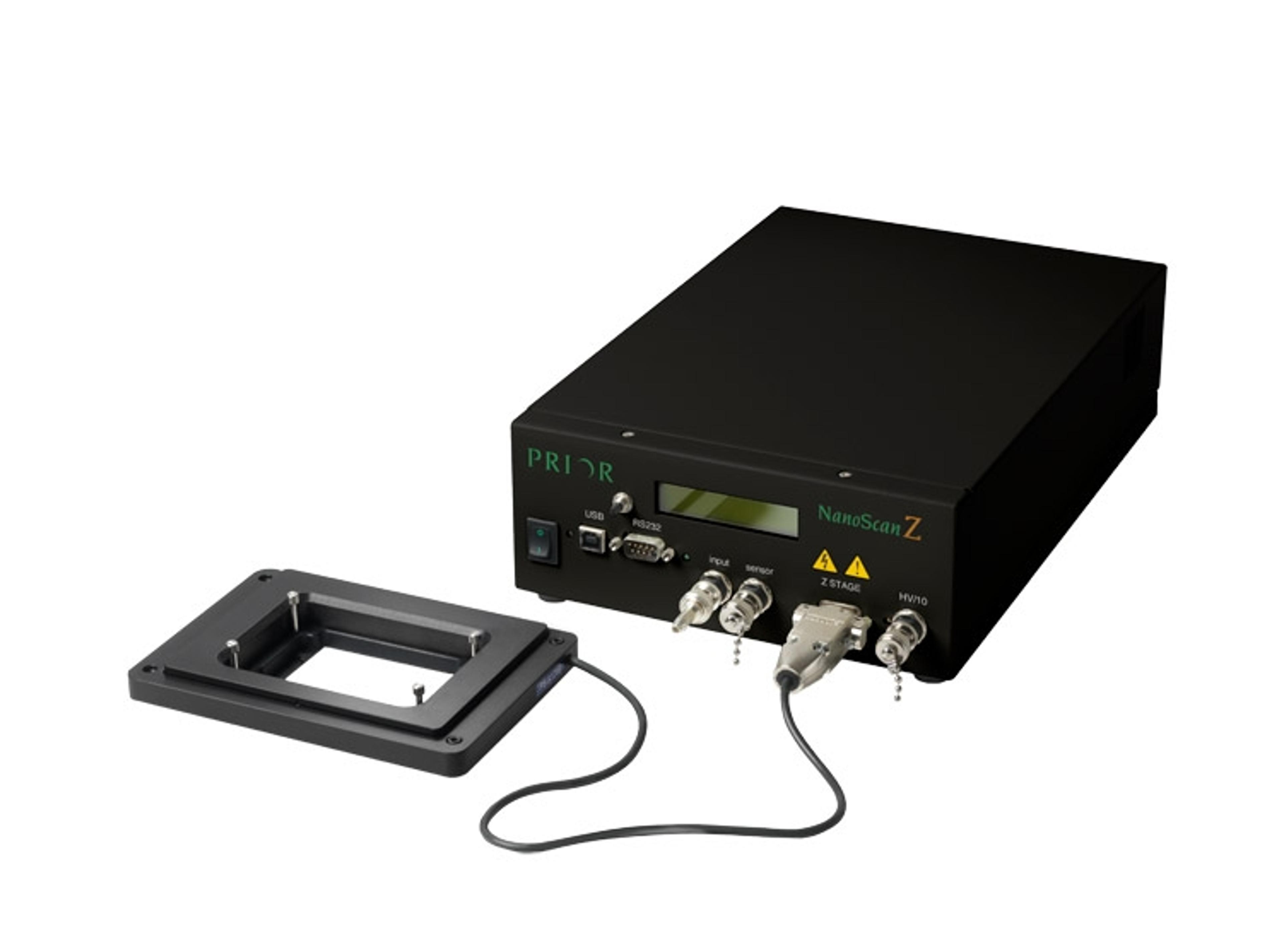
Prior Scientific Introduces the H117IX3 ProScan Stages for Olympus IX3 Microscopes
31 Jan 2013Product news
Prior Scientific introduces the H117IX3 flat top stage for the Olympus IX3 microscope range. While the H117IX3 is ideal for all high precision biomedical and material science scanning operations, specific attention was given to designing the H117IX3 to assist the researcher who is doing prolonged live cell studies. By mounting all of the drive components below the top plate, the H117IX3 provides easy access for micromanipulators, environmental chambers and robotic loaders.
The stage allows for scanning using a very broad range of sample holders, including microtiter plates, slide holders, petri dishes, well plates, flasks, haemocytometers and metallurgical sample holders. The stage offers a travel range of 114mm x 75mm and is enabled with the patented Intelligent Scanning Technology (IST) to ensure the highest precision available. Stages can be driven by the Prior series of motor controllers or compatible systems in existing OEM configurations. The controller can be accessed via USB, RS-232 serial port or with an optional joystick or keyboard.