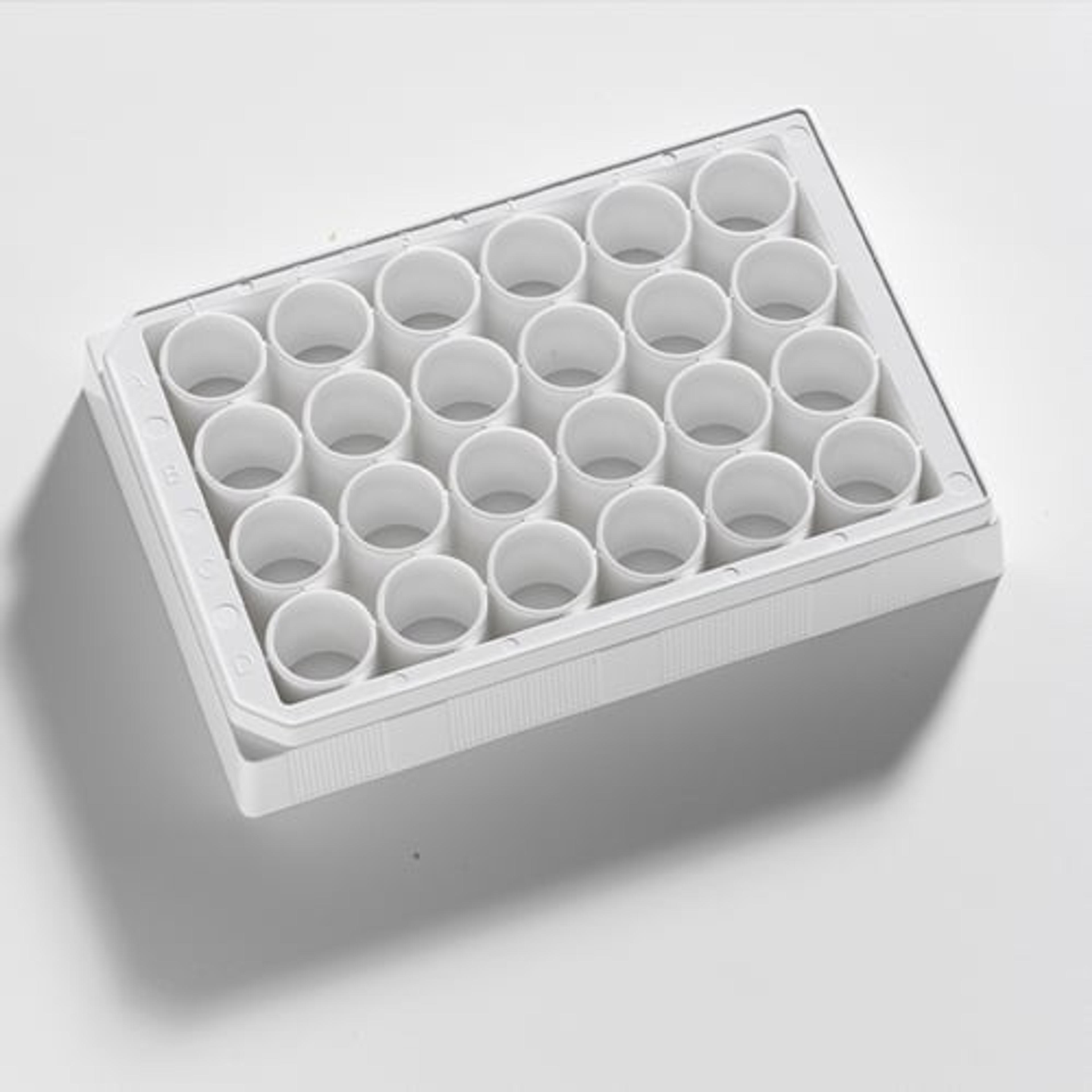
Porvair Sciences introduces next-generation microplate for phospholipid removal

10 Feb 2020

Diane Li
Assistant Editor

Product news

Porvair Sciences has announced the Microluteä PLR - a new benchmark product for phospholipid removal. The 96-well microplate provides effective removal (>99%) of phospholipids and proteins with higher levels of reproducibility from plasma and serum samples while maintaining maximum recovery of target analytes.

Phospholipid-based matrix effects are a major source of variability and inaccuracy in bioanalytical mass spectrometry (MS) analysis. Popular sample preparation techniques like protein precipitation, dilute and shoot or liquid-liquid extraction methods do not completely remove phospholipids. Microlute PLR is the only product that ensures minimal enhancement or suppression of analyte response by truly eliminating the source of matrix effects and not just masking the problem.

Porvair Sciences phospholipid removal technology differs from conventional methods. Instead of a loose-filled base product, Microlute PLR is composed of a solid interconnected network of evenly distributed pores that allow biological fluids to flow smoothly and consistently throughout the active media. This proprietary feature overcomes common channelling and breakthrough issues by enhancing the flow of samples throughout the filter thereby maximising the recovery of analytes with unrivalled reproducibility and improving the overall performance of phospholipid removal.

Proven in comparative tests with competitive products to provide the most efficient removal of the widest range of phospholipids from plasma and serum samples - Microlute PLR microplates enable you to increase the sensitivity and integrity of your UHPLC/HPLC methods.

Benefiting from an easy-to-use protocol, Microlute PLR microplates ensure you get consistent phospholipid removal and analyte recovery from well-to-well and batch-to-batch first time and every time. As a result, high-throughput studies will benefit from a reproducible, high performing sample preparation workflow.

Do you use Porvair Sciences products in your lab? Write a review today for your chance to win a $400 Amazon gift card>>

Links

Tags

MicroplatesMicroplates are multi-well plates used to increase the throughput of biological investigations. The number of wells microplates contain can range from 6 to 3243 wells, with the 96-well format being the most commonly used. Microplates can come tailored for a range of applications including cell culture, PCR, filtration, storage, non-binding surface, protein crystallization, as well as pre-coated, deep well and normal Standard microplates. Additionally, options for microplate colors include clear , black, white or black with clear bottom and white with clear bottom for absorbance microplate reader applications. Find the best microplates for your lab in our peer-reviewed product directory: compare products, check customer reviews and receive pricing direct from manufacturers.Mass SpectrometryMass spectrometry (MS) is a powerful analytical technique used to identify and quantify molecules based on the mass-to-charge ratio of gas-phase ions. It provides detailed information about the structure, composition, and properties of compounds and is widely used across fields such as environmental monitoring, materials science, drug discovery and development, food and beverage testing, and wider chemical research. Key MS techniques include tandem mass spectrometry (MS/MS), liquid chromatography–mass spectrometry (LS-MS) and inductively coupled plasma (ICP-MS). Choosing from these wide range of techniques and technologies can be a daunting task, so keep up to date with scientific applications, performance expectations, and customer reviews here all in one place. Visit our product directory to receive quotes direct from the manufacturer. Particle CharacterizationParticle characterization instruments are used to determine particle size distribution, shape, surface area, zeta potential, density and porosity of particles and materials. Multiple tecchniques are available for determining particle size, shape and count including dynamic light scattering (DLS), laser diffraction, electrozone (Coulter technique), imaging particle analysis and single particle optical sensing. Determine the density of your material with a gas pycnometer or examine its surface area and porosity with gas adsorption analyzers and mercury porosimeters. Find the best particle characterization instruments in our peer-reviewed product directory: compare products, check customer reviews and receive pricing direct from manufacturers.Microplate Reader SoftwareSpectrometrySpectrometry is a technique used to measure the mass-to-charge ratio of ions. It provides valuable information about the composition, structure, and molecular weight of compounds. Used across a variety of fields, including chemistry, biology, and environmental science, spectrometry is essential for identifying substances, analyzing mixtures, and developing new products. Explore the best spectrometry tools in our peer-reviewed product directory; compare products, check reviews, and get pricing directly from manufacturers.