Portable System for Aspiration and Disposal of Biological Waste

15 Aug 2012
Sonia Nicholas
Managing Editor and Clinical Lead

Product news

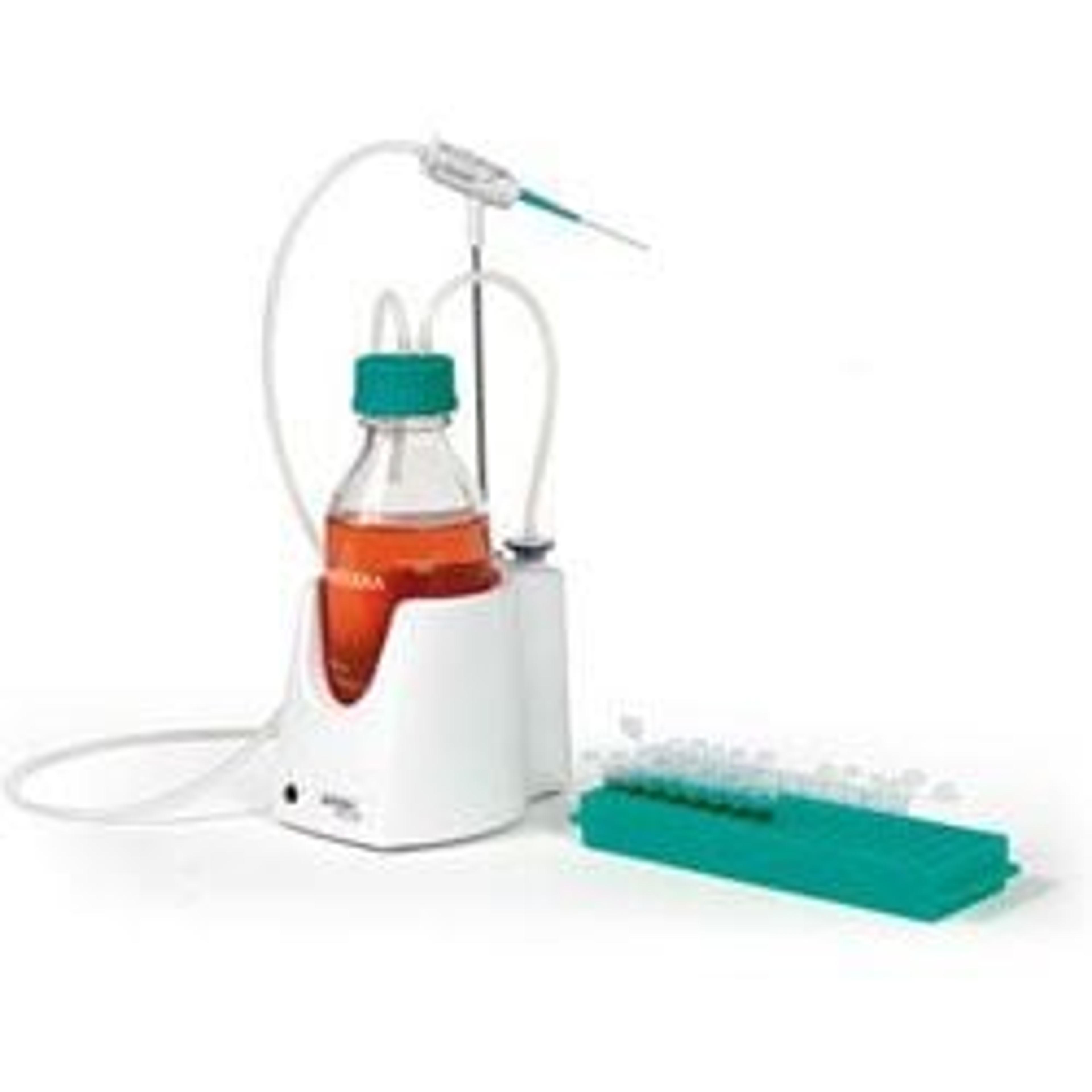
The VACUSIP from INTEGRA provides an ideal benchtop solution for the safe aspiration and disposal of small volumes of liquid waste in clinical, molecular biology, biochemistry and microbiology labs.

With integrated vacuum pump and long-life battery the VACUSIP from INTEGRA is completely portable, enabling aspiration and waste disposal where and when you need it. To optimize battery run-time, the pump automatically switches on and off according to the vacuum needed for an aspiration task. With its space saving footprint, silent operation and optimal organization, the VACUSIP is a true asset to any lab performing liquid aspiration tasks.

The unique VACUSIP hand operator enables precise fine regulation of liquid aspiration flow. A wide range of adapters are available for the hand operator enabling the VACUSIP to handle almost any liquid waste disposal task. A hydrophobic filter protects the unit from contamination and liquid entry. All components coming in contact with liquids can be autoclaved. Exchanging a full collection bottle is both safe and easy, making VACUSIP the system of choice for the convenient removal and disposal of liquid waste.

To download a product brochure, watch a video and learn more about how VACUSIP has provided an enhanced solution for aspiration of supernatants after centrifugation steps in DNA extraction and removal of washing solutions from multi-well plates, please follow the company website link below.

VACUSIP - Benchtop Aspiration System

INTEGRA Biosciences

VACUSIP – Liquid waste gone in a sip In the laboratory small volumes of liquid need be disposed of on a daily basis. This includes the removal of excess liquids from reaction tubes, aspiration of supernatant after centrifugation steps, removal of washing solutions from microplates and much more. Until today, this is often accomplished by self-made systems. VACUSIP provides an out-of-the-box solution for the wide array of liquid waste disposal tasks carried out at the laboratory bench. It features a reliable low noise pump, enabling it to operate independently from an external vacuum source. The battery version of VACUSIP contains a rechargeable battery for even more flexibility. A unique hand operator allows a fine regulation of the aspiration flow and accepts a variety of adapters. The 0.5 l glass bottle is quickly exchanged and all components coming in contact with liquids can be autoclaved. If the inactivation of the liquid waste is carried out externally, a disposable bottle may be used. Features and benefits: • Integrated, silent pump makes the VACUSIP location-independent. • The battery version eliminates cable mess in a laminar flow hood and increases mobility. • Automated pump shut-off optimizes battery run-time and pump life. • Quick exchange of waste bottle due to screw cap sealing. • Hydrophobic filter prevents aerosols and liquid from entering the system. • Very compact and space saving, HxWxD: 345x120x162 mm only. • No additional equipment necessary and maintenance free

(5)

Links

Tags

Pipettes and DispensersPipettes and dispensers are essential lab equipment used to dispense measured volumes of liquid accurately. Explore a range of manual and electronic pipettes, including single and multichannel, serological and volumetric pipettes, as well as a range of pipette tips. Bottle-top dispensers are also available for simple and fast solvent dispensing. Find the best pipettes & dispensers in our peer-reviewed product directory: compare products, check customer reviews and receive pricing direct from manufacturers.MicrobiologyMicrobiology is the study of microorganisms including protists, prokaryotes, fungi, and, often, viruses. Microorganisms are a useful research tool as genetic vectors and, in immunology, for antibiotic susceptibility testing, cellular biology and genetics. Microorganisms commonly grow readily in incubators with microbial culture media; this can contain chromogenic supplements to differentiate between cell lines. Estimate your culture’s density of microorganisms with colony counters, or screen and select colonies for desirable clones with automated colony pickers. Additionally, equipment is available to monitor environments for the presence of microbes and identify with microbial identification instruments. Find the best microbiology products in our peer-reviewed product directory: compare products, check customer reviews and receive pricing direct from manufacturers.Blood TransfusionBlood Transfusion involves giving donor blood to a recipient patient. Screening is essential to avoid transfusion reactions. Blood banks use immunohematological techniques to determine rh and ABO blood group, and screen for antibodies using specific antisera. Blood Banks use Direct Coombs Tests (DCT) and Indirect Coombs Tests (IAT) to detect hemolysis and Haemolytic Disease of the Newborn (HDN).HematologyIn Haematology / Hematology, complete blood cell counts (or full blood counts) are obtained using automated blood count analyzers to enumerate blood cell types.  Hematology also encompasses haemostasis and coagulation, thrombophilia and hemophilia, plasma viscosity and ESR analysis, hemoglobinopathies, cell morphology and haematinic measurement.ImmunologyImmunological techniques measure and characterize immune responses. Immunology kits and analysis systems often use techniques such as ELISA, radioimmunoassay (RIA) and immunodiffusion assays, Immunohistochemistry, and flow cytometry. Immunologists use equipment such as flow Cytometers, plate readers, plate washers and fluorescent microscopes.Cellular PathologyCellular Pathology deals with the microscopic analysis of tissue samples and cells. Sample preparation and processing includes fixation, staining, sectioning and slide mounting, using equipment such microtomes and cryostats. In choosing immunohistochemistry and immunocytochemistry kits, consider chromogens, staining method, antibodies, microscopes and imaging.Clinical ChemistryBiochemistry (or clinical chemistry) involves the analysis of bodily fluids using chemical tests. Techniques used include HPLC, chromatography, spectroscopy, mass spectrometry, immunochemical, electrophoresis, turbidometric / spectrophotometric assay, MRI and ISE analysis. Tests are often carried out on plasma or serum but urine (urinalysis) and fecal specimens are also processed.Clinical GeneticsMolecular Genetics covers the analysis of hereditary genetic disease and chromosomal abnormalities. Genetics can be analysed using DNA, RNA, and protein microarrays, PCR, RT PCR and DNA sequencing. Genetic equipment includes genetic workstations, thermal cyclers, cooling blocks and electrophoresis products. Diagnostic kits are used for DNA / RNA extraction and purification.Clinical MicrobiologyMicrobiology is the study of microorganisms including protists, prokaryotes, fungi, and, often, viruses. Microorganisms are a useful research tool as genetic vectors and, in immunology, for antibiotic susceptibility testing, cellular biology and genetics. Microorganisms commonly grow readily in incubators with microbial culture media; this can contain chromogenic supplements to differentiate between cell lines. Estimate your culture’s density of microorganisms with colony counters, or screen and select colonies for desirable clones with automated colony pickers. Additionally, equipment is available to monitor environments for the presence of microbes and identify with microbial identification instruments. Find the best microbiology products in our peer-reviewed product directory: compare products, check customer reviews and receive pricing direct from manufacturers.Waste Disposal
Portable System for Aspiration and Disposal of Biological Waste