Photosynthesis of chiral building blocks for drug discovery

27 May 2021

Diane Li
Assistant Editor

Industry news

A new white paper, written by scientists at Liverpool ChiroChem (LCC), describes how the Asynt Illumin8 parallel photoreactor is being used to synthesise a range of new 2-Aryl N-Heterocycles.

The discovery of a novel enantioselective synthetic pathway for reduction of pyridines to the corresponding chiral piperidines led to the formation of LCC in 2014. Since inception, LCC have enhanced their expertise enabling them to provide leading scientific organisations with access to chirally-pure compounds that play their part in small molecule drug discovery.

The white paper describes how using a combination of photoredox-mediated hydrogen atom transfer (HAT) and nickel catalysis - scientists were able to synthesise di- and tri-functionalised N-pyrrolidines of high interest to the drug discovery community.

Dr Shaun Smullen, a senior research chemist at LCC commented "Our initial photochemical reaction set-up using Kessil 40 W lamps was rather time consuming. The introduction of Asynt’s Illumin8 parallel photoreactor drastically improved our efficiency by allowing us to perform eight reactions simultaneously. The yields and selectivity of these reactions were comparable in both set-ups".

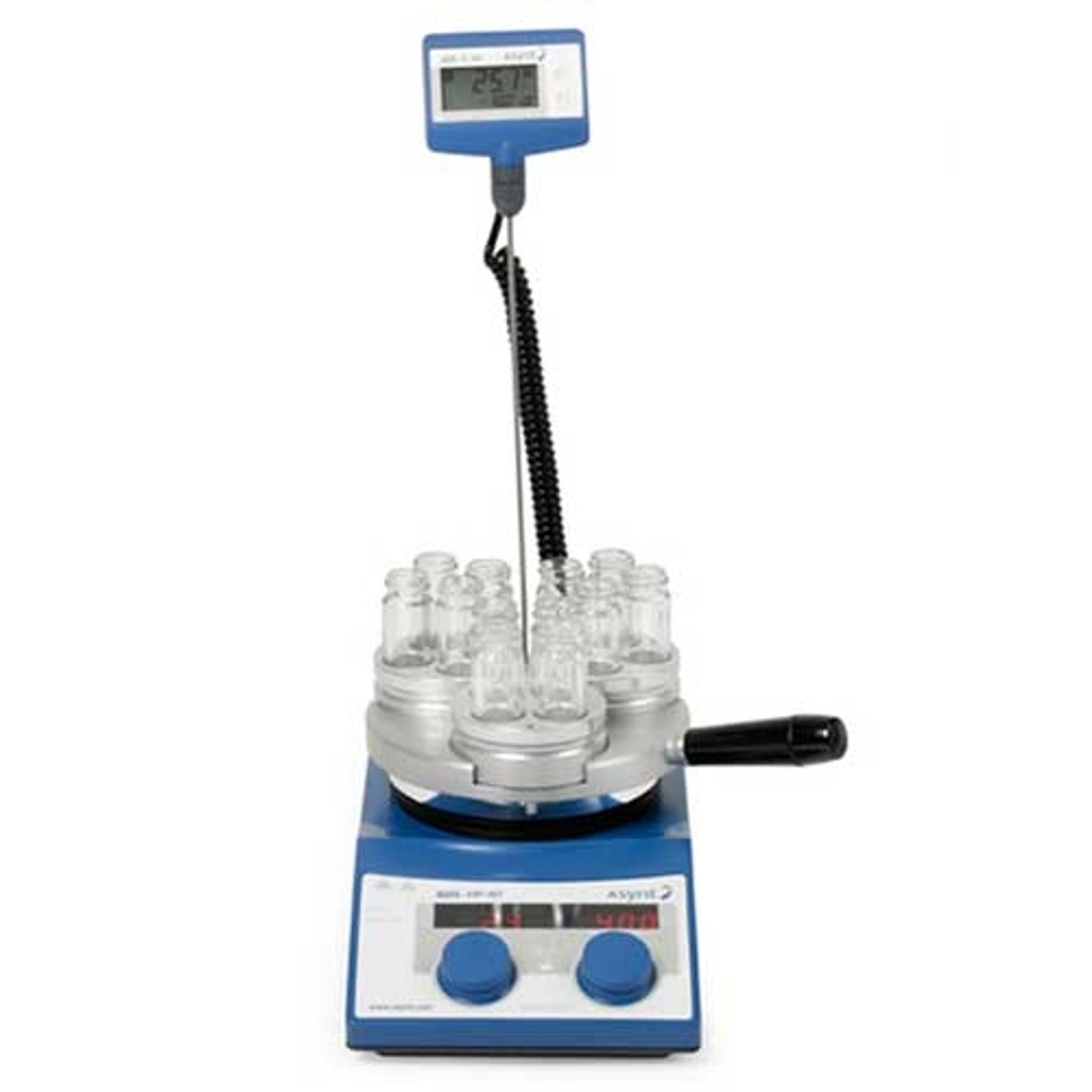
The Illumin8 parallel photoreactor is designed to be simple to set-up, flexible in operation and easy-to-use. It allows users to run up to eight photochemical reactions at a time in 6 mL borosilicate tubes. The unit mounts on a standard magnetic hotplate stirrer enabling powerful agitation and heating (up to 80 °C). Easy to use connectors, on top of the Illumin8, allow for an inert atmosphere or vacuum to be applied to each reaction tube. Compact in size, the Illumin8 parallel photoreactor features a ring of eight high power UV (365 nm) or blue (450 nm) light emitting diodes (LEDs) with safety interlocks to ensure light tight photochemical reactions. With each LED positioned close to a corresponding reaction tube, Illumin8 efficiently delivers an even photon flux to each reaction enhancing the consistency of your photochemical reactions.

Want the latest science news straight to your inbox? Become a SelectScience member for free today>>

Links

Tags

Combinatorial ChemistryCombinatorial chemistry, also known as combichem, is a technique used in drug discovery to create libraries of structurally related compounds. A library is generated by synthesis with a chemical reactor system or by computer-based modeling of compound combinations. When undertaking combinatorial chemistry consider reagents, buffers, resins and standards.Lab-on-a-ChipLab-on-a-chip (LOC) technology uses microfluidic chips, such as microarrays, to perform biochemical assays on a small scale. Benefits of lab-on-a-chip include the small volume of sample required as well as the speed of analysis. In selecting lab-on-a-chip devices consider the assay, cost, reliability, sensitivity and signal to noise ratio.Compound LibrariesCompound libraries, or chemical libraries, are used in drug discovery for the identification of potential therapeutics compounds. Used in conjunction with high-throughput screening, the libraries of stored compounds are often generated for specific purposes as a drug target or disease model. Cheminformatics are commonly used when designing a compound library and software can be used to analyze the screening process.  Process ChemistryProcess chemistry is an important stage of drug development for scaling-up drug production or chemical synthesis reactions. It is useful for optimizing economical and efficient drug production. Process chemistry uses reactors and pump systems as well as reagents, standards and buffers.Biopharmaceutical AdvancesBiopharmaceutical advances follow the development of pharmaceuticals derived from biotechnology, also known as biotechnology medicines. Biopharmaceuticals may be produced from cell lines, plants, or microbial cells. Important considerations of biopharmaceutical use include application, cost, production process and purification.Plate ProcessingAutomated plate processing is used in microplate technologies for high-throughput, speed and efficiency. Plate processing systems include microplate handlers for moving plates, heat sealers, stackers and carousels for storage, retrieval and delivery, microplate washers and piercers. Useful features of plate processors include walk-away automation, compatibility and easy integration with microplate systems.GC-MS GC-MS (gas chromatography-mass spectrometry) instruments and equipment are used to separate, quantify and identify mixtures of small and volatile compounds, such as polycyclic aromatics, fatty acids and alcohols. Often used in drug detection, forensic investigation and environmental analysis for pesticides and contaminants, GC-MS is a powerful addition to your lab’s analytical capabilities. GC-MS/MS instruments equipped with a qTOF or triple quadrupole analyzers can give greater sensitivity and resolution to your analysis. Find the best GC-MS instruments and equipment in our peer-reviewed product directory: compare products, check customer reviews and receive pricing direct from manufacturers.LEDDrug DiscoveryDrug discovery is the process of identifying potential new medications, involving stages such as target identification, compound screening, and preclinical development. It relies on cutting-edge technologies like high-throughput screening, artificial intelligence, and molecular modeling to accelerate the identification of drug candidates. Drug discovery plays a pivotal role in developing new therapies for diseases ranging from cancer to rare genetic disorders. Browse our peer-reviewed product directory to find the latest drug discovery technologies, compare options, check customer feedback, and get pricing directly from manufacturers.Lab EssentialsLab essentials include laboratory consumables that are vital to the operation of all laboratories.Drug DevelopmentDrug development refers to the process of bringing a new drug to market.Drug Discovery & Development ScreeningPhotometry