PerkinElmer to acquire cell engineering company Horizon Discovery

Addition of CRISPR and RNAi offerings to complement PerkinElmer's life sciences and applied genomics solutions, with future opportunities to improve cell based discovery for precision medicine

5 Nov 2020

Diane Li
Assistant Editor

Industry news

PerkinElmer, Inc. and Horizon Discovery Group plc, are pleased to announce that they have reached an agreement on the terms of a recommended all cash offer whereby PerkinElmer will acquire Horizon for approximately $383 million (£296 million). The transaction has a total enterprise value of approximately $368 million (£284 million), is expected to close in the first quarter of 2021 subject to customary closing conditions.

With this investment, PerkinElmer will expand its portfolio of leading, automated life sciences discovery and applied genomics solutions to include gene editing and gene modulation tools. The acquisition will enable PerkinElmer to better partner with academic and pharma/biopharma scientists to help meet today’s research challenges. It will also provide an opportunity to provide important tools for exploring next-generation cell engineering and customized cell lines for relevant biological models – important for the future of precision medicine.

Headquartered in Cambridge, UK, Horizon is a leading provider of CRISPR and RNAi reagents, cell models, cell engineering and base editing offerings which help scientists better understand gene function, genetic disease drivers and biotherapeutics delivery. Horizon has approximately 400 employees across multiple countries, including the UK, the US, and Japan, and reported revenue from continuing operations of $75.5 million (£58.3 million) in 2019.

PerkinElmer’s discovery and applied genomics solutions feature a range of immunoassay platforms, high content screening (HCS) and in vivo imaging, along with microfluidics, robotic liquid handling technologies and next-generation sequencing library preparation kits.

Unifying PerkinElmer’s and Horizon’s complementary offerings across the genotypic and phenotypic approaches for drug discovery and development will help researchers accelerate decision making with better information, automated workflows and greater quality and control over data.

Commenting on the agreement, Prahlad Singh, President and Chief Executive Officer, PerkinElmer said, “One of the key fundamentals for molecular research and drug discovery is being able to knock down a gene or function and explore the results to discover actionable insights and new clinical trial candidates faster. We’re excited to team up with Horizon to not only add CRISPR and RNAi capabilities into our existing portfolio, but also to leverage our combined life sciences screening and applied genomics solutions to help propel the next phase of cell and gene research for precision medicine. PerkinElmer leads with science and creates total solutions to bring today’s leading innovations together for our customers, while also working at the cutting edge of what’s next. Today’s announcement delivers on both of these fronts.”

In total, PerkinElmer’s life sciences solutions span across early-stage research, drug discovery, drug development and QA/QC for drug manufacturing. For more information please visit: https://www.perkinelmer.com/corporate/what-we-do/markets/life-sciences.html.

In terms of financial impact, PerkinElmer expects the acquisition to be modestly accretive to non-GAAP earnings in year-one following the close, and the Company forecasts Horizon’s business to be attractively positioned in markets that are projected to grow at a compound annual growth rate of high-single digits over the next few years.

Do you use PerkinElmer products in your lab? Write a review today for your chance to win a $400 Amazon Gift Card>>

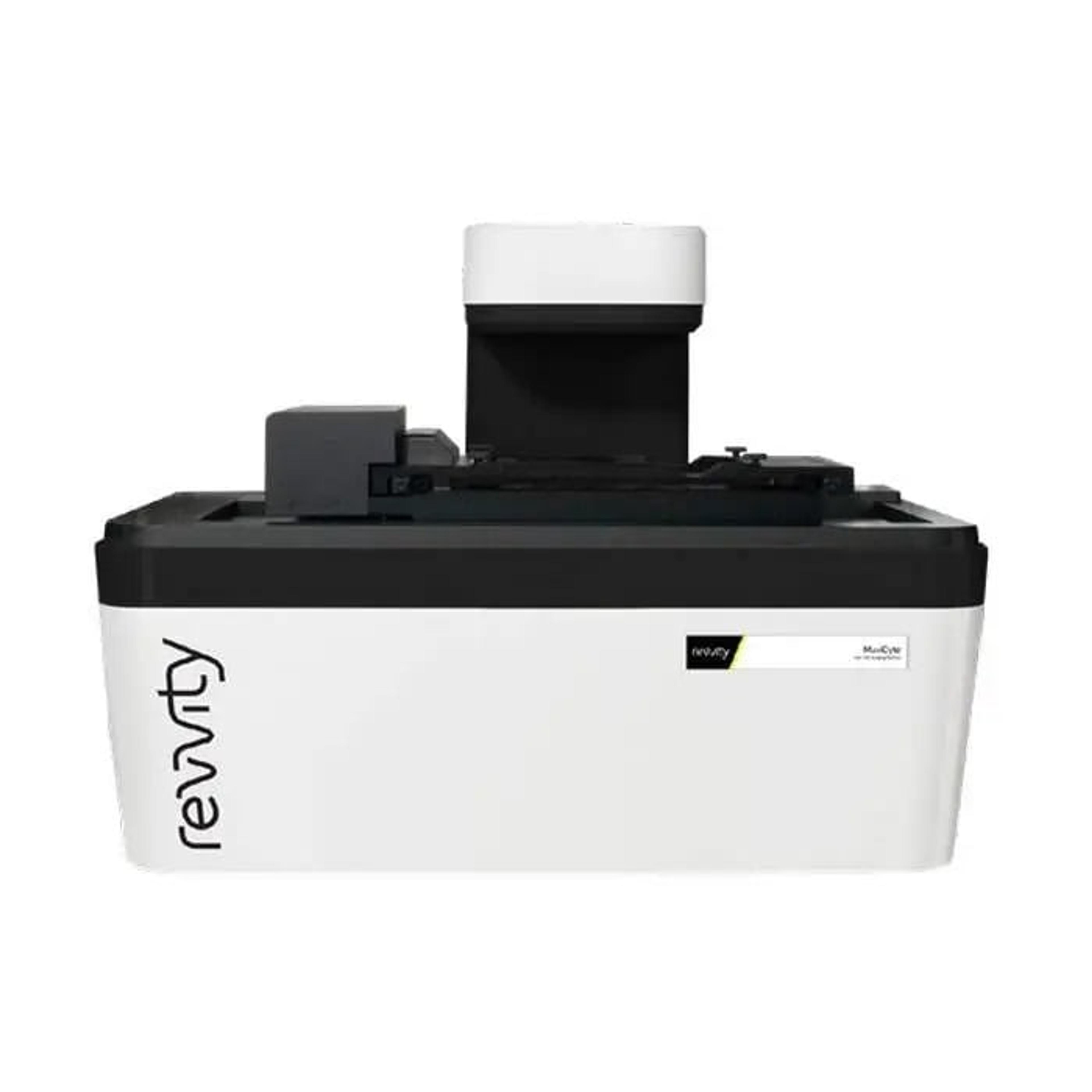
MuviCyte Live-Cell Imaging Kit

Revvity

The MuviCyte™ live-cell imaging system is designed to operate inside your cell-culture incubator, enabling you to maintain your cells under optimal conditions and perform a wide range of assays in a variety of culture vessels.  
(0)

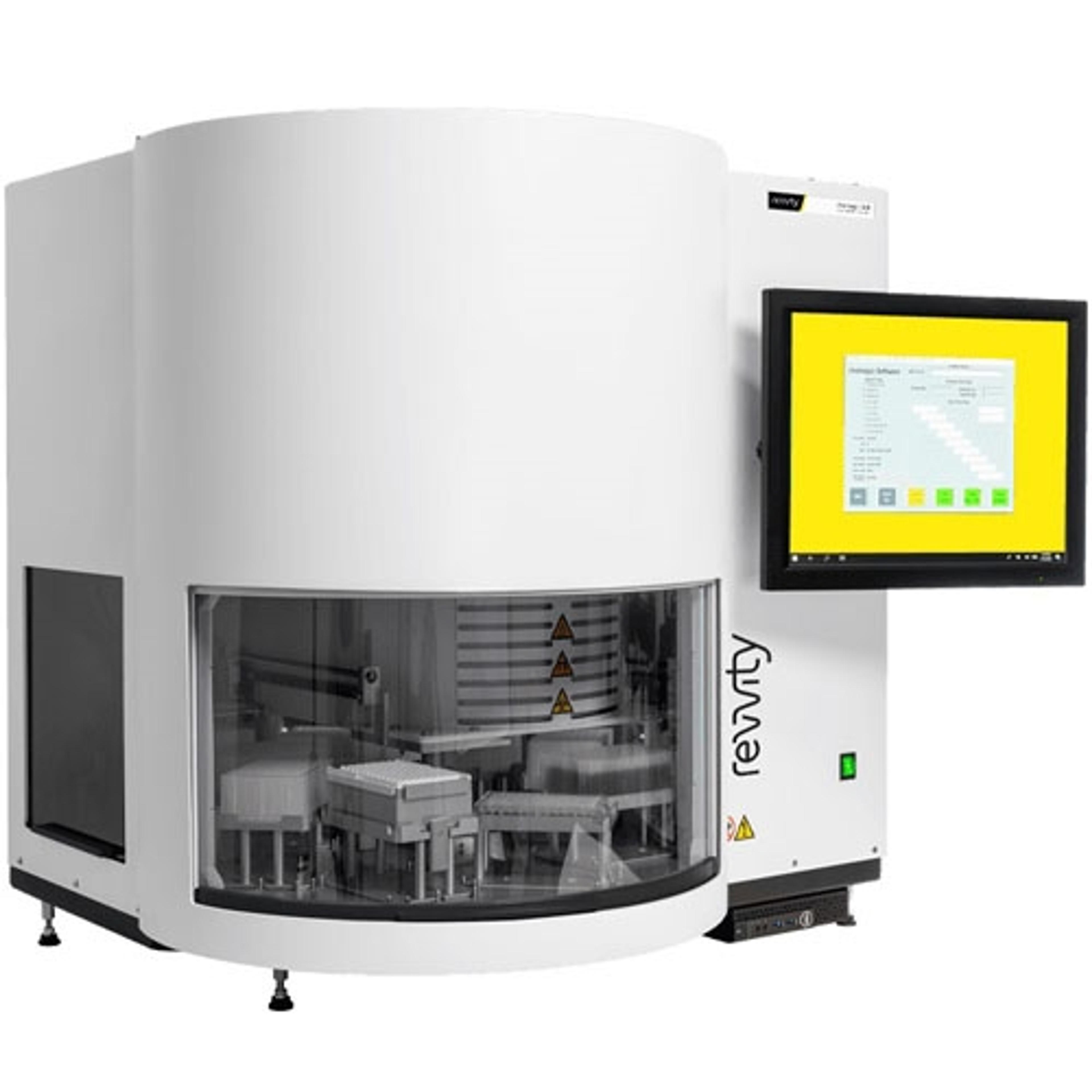
chemagic 360

Revvity

The chemagic™ chemagic 360 instrument is a flexible compact solution for automated nucleic extraction from diverse sample materials.

(5)

Links

Tags

Combinatorial ChemistryCombinatorial chemistry, also known as combichem, is a technique used in drug discovery to create libraries of structurally related compounds. A library is generated by synthesis with a chemical reactor system or by computer-based modeling of compound combinations. When undertaking combinatorial chemistry consider reagents, buffers, resins and standards.Genome AnalysisGenomics, the study of genomes, includes functional genomics, evolutionary genomics and comparative genomics. There are many genomic technologies such as DNA sequencing of whole genomes, computational biology and bioinformatics. DNA and nucleic acids must be isolated and concentrated from cells for analysis with kits, automated analyzers and software. Other useful technologies for studying genomics include PCR, microarrays and electrophoresis.Cell Lines Stem Cells and Primary CellsPrimary cell cultures, established cell lines and stem cells are vital for <i>in vitro</i> and <i>ex vivo</i> experimentation. High-quality cells, optimized for your applications, alongside optimized cell substrates, growth medium and supplements, are critical for experimental success. Explore a range of cells suitable for your applications, including isogenic cell lines, competent cells, induced pluripotent stem cell (iPSC)-derived cell lines, fungal/bacterial/mammalian cell lines, stem cells and cancer cell lines. Find the best cells for your research in our peer-reviewed product directory: compare products, check customer reviews and receive pricing direct from manufacturers.Cell-Based AssaysCell-based assays are used to monitor the presence, quantity and activities of a desired cellular analyte including drug molecules or biomarkers. This can reveal information on cell health (apoptosis, cytotoxicity, viability and proliferation assays), cell metabolism, cell migration and cell signaling mechanisms. Find the best cell-based assay products, kits and equipment with our peer reviewed product directory: compare products, check customer reviews and receiving pricing direct from manufacturers.Gene Expression and Molecular CloningMolecular cloning is a set of techniques that utilizes vectors to transfer recombinant DNA into host cells and is an essential tool for investigating the expression of genes and proteins in bacterial or mammalian cells. A variety of vectors optimized for gene cloning and expression in a range of host organisms are available, alongside competent cells for genetic replication. Here, you can explore a range of molecular tools, high-quality genomic and cDNA libraries, premade clones, transformation and transfection reagents and mutagenesis or gene expression detection assays and expression arrays. Find the best gene expression and molecular cloning products in our peer-reviewed product directory: compare products, check customer reviews and receive pricing direct from manufacturers.Biopharmaceutical AdvancesBiopharmaceutical advances follow the development of pharmaceuticals derived from biotechnology, also known as biotechnology medicines. Biopharmaceuticals may be produced from cell lines, plants, or microbial cells. Important considerations of biopharmaceutical use include application, cost, production process and purification.Clinical ChemistryBiochemistry (or clinical chemistry) involves the analysis of bodily fluids using chemical tests. Techniques used include HPLC, chromatography, spectroscopy, mass spectrometry, immunochemical, electrophoresis, turbidometric / spectrophotometric assay, MRI and ISE analysis. Tests are often carried out on plasma or serum but urine (urinalysis) and fecal specimens are also processed.Cell AnalysisThe analysis of cells allows researchers to understand the factors which contribute to cell health and function. These influencing processes can then be predicted and altered, leading to the development of medication and disease treatments.Gene EditingGene editing is the precise alteration to an organism's DNA, with CRISPR being the most well-known technique. It is used in a wide range of applications, including the development of disease models and gene therapy, and crop improvement. Browse our peer-reviewed product directory to find the best gene editing solutions, compare products, check reviews, and get pricing directly from manufacturers.GenomicsGenomics is the study of genomes, focusing on the sequencing, analysis, and interpretation of genetic material. It is key in understanding genetic diseases, evolutionary biology, and personalized medicine. Techniques like next-generation sequencing (NGS) are commonly used in genomics research. Browse our peer-reviewed product directory to find the best genomics tools, compare products, check reviews, and get pricing directly from manufacturers.Cell BiologyCell biology studies the structure, function, and behavior of cells. Understanding cellular processes is essential for research in areas such as cancer biology, stem cell research, and neurobiology. Techniques like flow cytometry, microscopy, and cell culture enable researchers to explore cellular mechanisms in detail. Browse our peer-reviewed product directory to find the best cell biology tools and equipment, compare products, check customer reviews, and get pricing directly from manufacturers.Genetic EngineeringGene RegulationhiPS Cell LinesGene TherapyGene therapy is a technique that modifies or replaces genes within an individual's cells to treat or prevent diseases. This approach holds potential for curing genetic disorders, cancers, and certain viral infections. Advances in gene editing technologies like CRISPR are driving the growth of gene therapy. Explore gene therapy tools and technologies in our peer-reviewed product directory; compare products, check reviews, and get pricing directly from manufacturers.