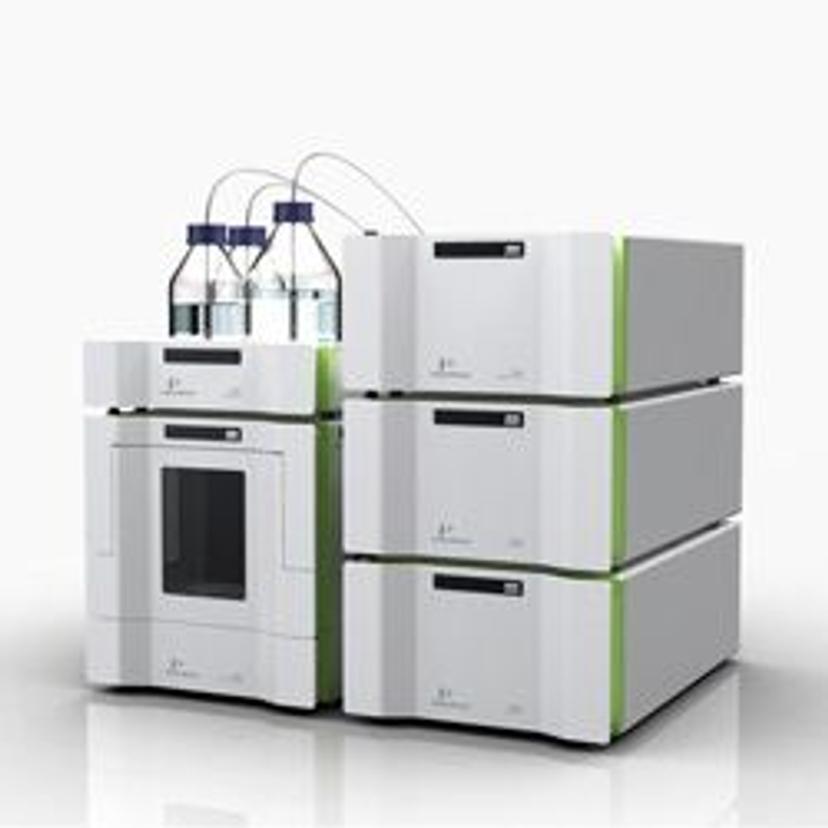
PerkinElmer’s Chromatography Instruments Integrate with Agilent’s EZChrom Elite Data Collection Analysis & Reporting System

4 Dec 2012
Laura Burnett
cfcfcgfc

Product news

WHAT:

The EZChrom Elite™ driver system is a unified computing strategy engineered by PerkinElmer® that seamlessly integrates with their high performance liquid and gas chromatography instruments. Designed to provide a uniform user interface for analytical laboratories, this new capability can perform instrument control and data collection, data analysis and centralized reporting from a variety of instruments, now including the Flexar™ LC and Clarus® GC systems.

WHY: Agilent’s® EZChrom Elite™ is one of the most widely deployed chromatography data systems (CDS) in the industry. Now that PerkinElmer has developed compatibility with this system, users have more flexibility, choice and access to high quality, reliable hardware with one consistent operating system.
APPLICATIONS:Environmental contaminant testing:

  • Soil
  • Water

Purity analysis:

  • Food quality and safety
  • Pharmaceutical production


WHAT IT DOES:This chromatography data system (CDS) performs two noteworthy operations:

Specific ‘drivers’ work with the software to allow for instrument control.

  • Example: A lab user can operate the detector in a GC or LC instrument using the EZChrom program instead of directly controlling the instrument.
  • EZChrom Elite™ monitors feedback from components in PerkinElmer Flexar or Clarus hardware, such as data from the detector or feedback on how much pressure is in the pump.


    THE BENEFITS:Ease of one system – The EZChrom drivers seamlessly integrate with PerkinElmer Flexar and Clarus chromatography systems, giving users more flexibility and choice of hardware with a unified software platform.

    A consistent and reliable workflow - Operators can avoid unnecessary training on new CDS if they transfer between labs. EZChrom drivers can eliminate this type of interruption to workflow.

    Better data management - For Clarus GC users in regulated and non-regulated labs, the EZChrom driver helps streamline workflows and simplifies the management of large volumes of data.

    COMPATABILITY: PerkinElmer Chromatography Instruments are compatible with:
    Software Solutions
    Agilent® EZChrom Elite™ (LC, GC)
    Waters ®Empower (GC)
    TotalChrom® (LC,GC)
    Chromera® (LC)

    Clarus 680 GC

    PerkinElmer

    The Clarus® 680 GC is designed for fast-paced, high-volume laboratories that require fast analytical cycle times. It maximizes throughput with the fastest injection-to-injection time of any conventional gas chromatograph. The Clarus 680 GC incorporates many other PerkinElmer innovations that provide unprecedented operational simplicity and outstanding flexibility while removing the barriers to productivity that can arise with more demanding samples and applications. The fastest temperature programmable inlets available combined with programmable pneumatic control (PPC) provides simple and straightforward solutions to complex analyses such as analysis for methanol in crude oil or determination of pesticides in food. Its near-ambient performances make the Clarus 680 GC the instrument of choice for the separation of light volatile components or when Large Volume Injection is required to run high-sensitivity GC/MS applications. Complete instrument control is available through TotalChrom and TurboMass as well as Waters® Empower™ 2 and Agilent® EZChrom Elite™ drivers. Features/Benefits Patented high-performance oven - the unique oven design of the Clarus 680 GC provides the fastest available heat-up and cool-down rate, enabling shorter injection-to-injection and analytical cycle times, maximizing your sample throughput and achieve maximum return on your investment •  Its twin-walled oven design with concentric air exhaust* allows the user to achieve greater separation at near-ambient temperatures without the use of special coolants, especially important for the analysis of Volatile Organic Compounds (VOCs). •  Fast oven heat-up allows faster chromatography, particularly useful when speeding up the elution of late eluting compounds. •  Fastest available cool-down rate is delivered using forced convection air. This greatly reduces non-productive time between runs. •  Universal Programmable Split-Splitless (PSS) and Programmable On-Column (POC) injectors design enables Large Volume Injection of volatile solvents and cold on-column injections without the use of expensive cooling agents •  Novel Swafer™ micro-flow technology dramatically simplifies complex tasks helping to make the Clarus 680 GC easily used by operators at all skill levels •  Complete instrument control is available through TotalChrom™, TurboMass™ as well as Waters® Empower™ 2 and Agilent® EZChrom Elite™ drivers.

    (19)

    Links

    Tags

    Gas ChromatographyGas chromatography (GC) is an analytical technique used to separate and quantitate mixtures of small and volatile compounds. Gas chromatographs or GC systems include components such as GC columns, detectors, pumps and autosamplers. Choose from packed or capillary GC columns, flame ionization (FID), photoionization (PID) electron capture detectors and selective or non-selective detectors. Find the best gas chromatographs in our peer-reviewed product directory: compare products, check customer reviews and receive pricing direct from manufacturers.UHPLC and HPLCHigh performance liquid chromatography (HPLC) and ultra high performance liquid chromatography (UHPLC), also known as UPLC, are analytical techniques used to separate, identify and quantitate components of complex mixtures including biological samples such as proteins and lipids as well as chemical mixtures of pesticides, drugs and oils. Both techniques are liquid chromatographic methods but differ by operating pressures (HPLC < 6000 psi < UHPLC ). Components of HPLC and UHPLC systems include columns, detectors, pumps, autosamplers and column heaters. Explore a range of UHPLC and HPLC columns for your specific sample needs including reverse phase, normal phase, ion exchange, HILIC, ion exclusion and size exclusion columns. For more specialized HPLC, explore FPLC, countercurrent LC and simulated moving bed systems. Find the best UHPLC and HPLC equipment in our peer reviewed product directory: compare products, check customer reviews and receive pricing direct from manufacturers.LC-MSLC-MS (liquid chromatography-mass spectrometry) systems and equipment are used for separation and quantitative analysis of complex mixtures, combining liquid chromatography and mass spectrometry. Quantify proteins, contaminants, pesticides or screen for drug metabolites with a high level of sensitivity. LC-MS systems and equipment include reverse phase, normal phase and specialized columns integrated with various MS detectors such as time-of-flight (TOF), quadrupole, orbitrap or ion trap mass analyzers. LC-MS/MS instruments equipped with a qTOF or triple quadrupole analyzer give greater sensitivity and resolving power to your analysis. Find the best LC-MS equipment in our peer-reviewed product directory: compare products, check customer reviews and receive pricing direct from manufacturers.Data AnalysisData analysis hardware and software is available to make data processing straight-forward yet powerful. Data software can be used for math and stats, technical graphing and image analysis. In addition, software is available for specific data analysis of electrophoresis, densitometry, ELISA and DNA sequencing.LIMSLIMS (Laboratory Information Management System) is an informatics software system used to improve the quality assurance and quality control (QA / QC) of data management. LIMS can be a standard for common lab workflows, such as commercial off the shelf systems (COTS), or customized for more specialized lab use. Systems are available for mainframe computers or PC.Integration ServicesIncorporate lab systems, software and equipment with integration services.Data MiningData mining is an important process for extracting information, patterns and trends from data. Data mining software, databases, reference materials and storage packages are available to process lab data.GC-MS GC-MS (gas chromatography-mass spectrometry) instruments and equipment are used to separate, quantify and identify mixtures of small and volatile compounds, such as polycyclic aromatics, fatty acids and alcohols. Often used in drug detection, forensic investigation and environmental analysis for pesticides and contaminants, GC-MS is a powerful addition to your lab’s analytical capabilities. GC-MS/MS instruments equipped with a qTOF or triple quadrupole analyzers can give greater sensitivity and resolution to your analysis. Find the best GC-MS instruments and equipment in our peer-reviewed product directory: compare products, check customer reviews and receive pricing direct from manufacturers.Chromatography Method DevelopmentChromatography method development is the process of designing and optimizing chromatographic techniques to separate and analyze complex mixtures. This includes selecting appropriate stationary and mobile phases, determining flow rates, and optimizing detection methods. Successful method development is essential for high-quality results in fields like pharmaceuticals, food safety, and environmental analysis. Explore chromatography method development tools in our peer-reviewed product directory; compare products, check reviews, and get pricing directly from manufacturers.Soil TestingSoil testing helps determine the nutrient content, pH level, and other factors affecting soil health. This information is critical for agriculture, environmental science, and land management. Explore soil testing solutions in our peer-reviewed product directory; compare products, check reviews, and get pricing directly from manufacturers.Water AnalysisAnalytical methods used to test the purity of drinking water include determining the level of contaminants abides to the level set by the Environmental Protection Agency (EPA).Food SafetyFood safety describes the prevention of food-borne illnesses. Contamination with a variety of pathogens can be prevented with adequate temperature control, hygiene and labeling. Food samples can be tested using GC/MS, HPLC, SPE, and qPCR to ensure their adherence to regulations.PharmaceuticalsPharmaceuticals are medicinal drugs used in healthcare to diagnose, prevent, cure and treat illnesses. Pharmaceuticals that are excreted after use appear in wastewater and can have detrimental effects on the environment.