PatSnap Launches Cloud Platform to Accelerate Drug Research
Over 114 million chemical structures, clinical trial information, regulatory details, toxicity data, over 121 million patents and other sources included in database - don’t miss the video guide.
27 Jul 2017Product news
PatSnap, a global Intellectual Property Analytics company backed by Sequoia and used by innovative companies to accelerate their research and development (R&D), has announced the launch of Chemical by PatSnap, a Software as-a-Service (SaaS) platform that combines innovation data with vital and relevant scientific information into one single and easily searchable interface.
Chemical by PatSnap enables intellectual property professionals at science-led organisations to easily validate chemical development projects by analysing big data through machine learning and artificial intelligence (AI). Its database links over 114 million chemical structures, clinical trial information, regulatory details, toxicity data, over 121 million patents and a number of other sources, quickly validate chemical development projects.
Having recently secured series C investment from venture capital group Sequoia, and experiencing rapid growth, PatSnap is now turning its established expertise in machine learning and artificial intelligence to helping pharmaceutical and chemical manufacturers map the innovation process from investment to commercialisation.
“The main challenges in R&D are that companies use resources in a way that’s not productive, for example hiring people to do studies and accumulate lots of data, but at the end of the day, they do not assimilate all that information into a coherent strategy. Successful commercialisation of a drug is expensive and fraught with high risk. Estimated costs can rise to as much as $2.6 billion, while 14 drug candidates will fail clinical trials for every one that makes it to market. Current strategies have not been able to bring down the costs of Research and Development, and the pressure to adopt value-based and outcome-based pricing models has rapidly intensified,” said Ali Hussein, UK Product Leader at PatSnap.
“It’s a well-established principle that Big Data holds the potential to address these problems, but until now it has been difficult to extract this information from the worlds of chemistry and innovation intelligence in either a cost-effective or resource-efficient way. Particularly challenging is the accurate integration of multiple relevant data sets and the skill set required to analyse and interpret results.”
Organisations need to fail fast and fail cheap, and need to harness the power of big data analysis to overhaul the current rate of research, and rapidly seek out corresponding areas of innovation. Organisations are no longer content for data providers to be mere points of reference, but expect them to be able to generate immediate answers to an array of critical business questions.
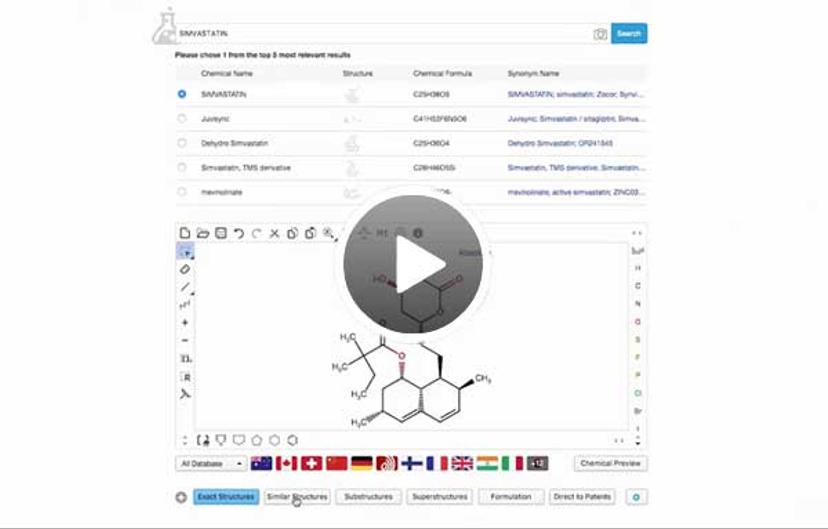
Watch this video for a quick explanation of how it works.