Pall Life Sciences Showcases New Contamination Control and Sample Prep Products at ASM General Meeting

15 May 2011
bridget bridget
Laboratory Director

Product news

Pall Corporation will present advanced filtration products to optimize laboratory processes at the 2011 American Society for Microbiology General Meeting. The meeting will take place at the Morial Convention Center in New Orleans from May 21-24.

Highlights of Pall’s product showcase (ASM booth 1233) will include the following:

Sentino™ Microbiology Pump maximizes workspace and minimizes contamination risk. Our new compactly-designed pump has a small footprint offering large flexibility in workspace efficiency and workflow. The Pump’s fluid path is completely disposable to eliminate potential biofilm build-up, thereby eliminating a chance for contamination.

GeneDisc® Rapid Microbiology System provides rapid, reliable results in as little as two hours. Our microbiology system enables a highly simplified operation with consistently reproducible results. The system is based on real-time quantitative Polymerase Chain Reaction (qPCR) technology.

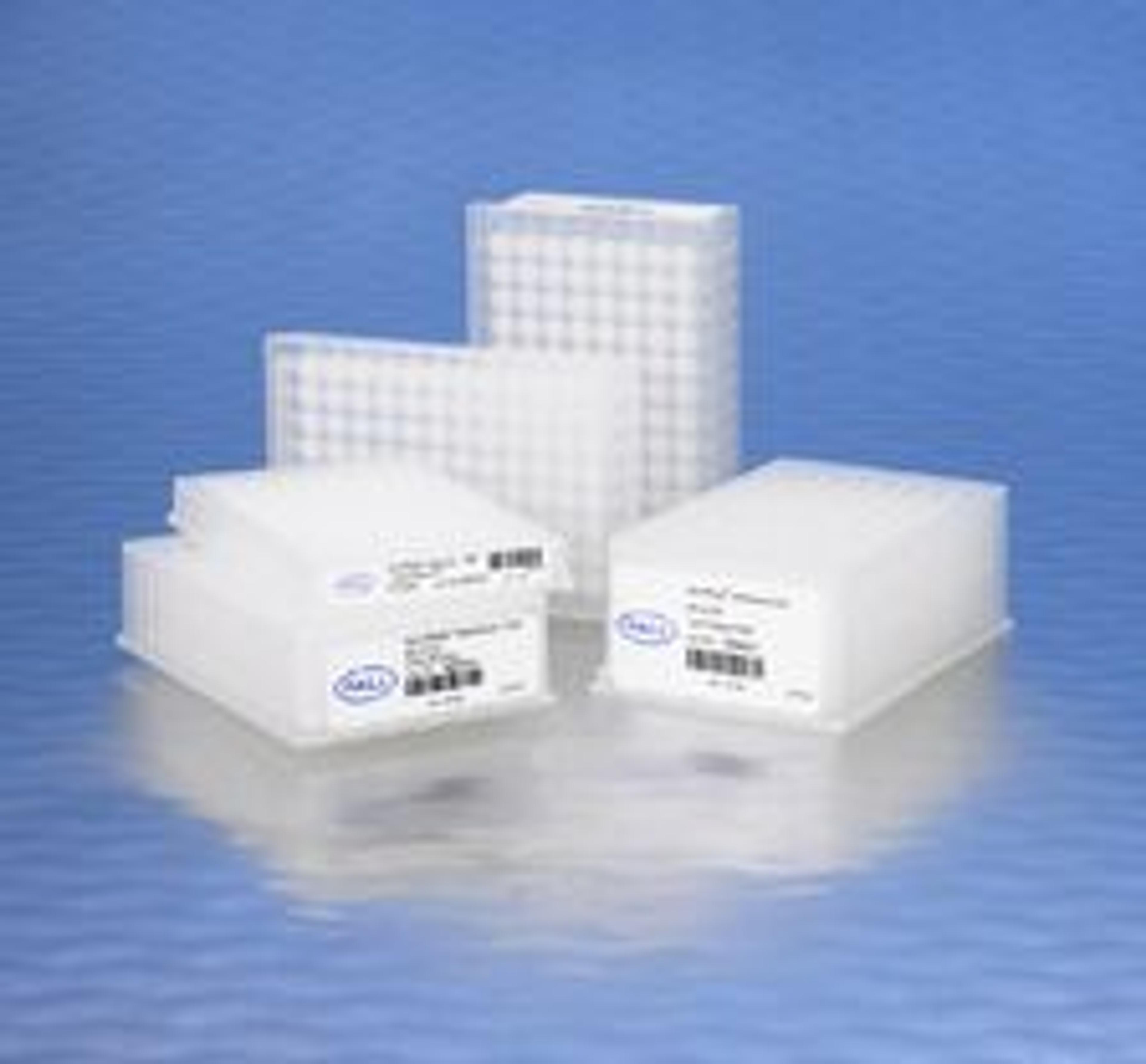
AcroPrep™ Advance Filter Plates provide high performance membranes in an optimized filter plate configuration for diagnostic, genomic and protein applications. New sealing technology and advanced tip design result in faster, uniform filtration rates, improving well-to-well, plate-to-plate and lot-to-lot consistency.

Pall’s new Microsep™ Advance and Macrosep® Advance Ultrafiltration Centrifugal Devices simplify many common nucleic acid and protein handling procedures, facilitating higher volumes of pure product and high recovery rates of up to 90%. Ultrafiltration reduces the amount of handling that can cause damage to samples, leaving concentrated samples ready for direct incorporation into downstream applications at critical stages in the discovery process. Pall’s microfiltration centrifugal devices are used in separation and small-scale general filtration procedures, and can be combined with chromatography resins to create a fast, efficient method for purifying proteins.

Visit us in booth #1233 to learn more about Pall Life Sciences cutting-edge products and services. From field to lab, we’ll help you meet your demanding need for discovery, development, and production. Plus you’ll see a living terrarium showcasing live reptiles.
Links

Tags

Cell / Tissue CultureCell culture or tissue culture is used to study the biology of cells or tissues and to isolate cellular products in an environment which can be manipulated and well defined. Accurately control your culture environment with bioreactors or culture incubators, bind your cells to a surface or together with an extracellular matrix. Distinguish cell types with differential media or proliferate cells with certain characteristics using selective media. Enrich your media with supplements such as growth factors, sera and vitamins. Find the best cell and tissue culture products, kits and equipment in our peer-reviewed product directory: compare products, check customer reviews and receive pricing direct from manufacturers.Cell Lines Stem Cells and Primary CellsPrimary cell cultures, established cell lines and stem cells are vital for <i>in vitro</i> and <i>ex vivo</i> experimentation. High-quality cells, optimized for your applications, alongside optimized cell substrates, growth medium and supplements, are critical for experimental success. Explore a range of cells suitable for your applications, including isogenic cell lines, competent cells, induced pluripotent stem cell (iPSC)-derived cell lines, fungal/bacterial/mammalian cell lines, stem cells and cancer cell lines. Find the best cells for your research in our peer-reviewed product directory: compare products, check customer reviews and receive pricing direct from manufacturers.FiltrationFiltration and microfiltration are used to separate solids, particulates or large molecules from fluids (liquid or gases) in order to purify the filtrate. Explore a range of filter formats, including filter paper, plates and membranes for your separation needs. While larger particulates may be separated by gravity filtration, smaller particulates may require additional force for timely separation. Microfiltration equipment includes vacuum filters, as well as positive pressure, crossflow and centrifugal filtration devices. Find the best filtration products in our peer-reviewed product directory: compare products, check customer reviews and receive pricing direct from manufacturers.Labware and Lab SuppliesLabware and lab supplies include various forms of glassware, plasticware, reagents and personal protective equipment (PPE) and are used across all scientific laboratories, enabling daily tasks to be performed. Explore a range of flasks and beakers, petri dishes, carboys and storage bottles. Labware such as condensers, desiccators and burettes are also available for more specific tasks. Find the best labware and lab supplies in our peer-reviewed product directory: compare products, check customer reviews and receive pricing direct from manufacturers.CentrifugesCentrifuges are used to separate particulates suspended in a liquid via the application of a centrifugal force including cells, macromolecules, nanoparticles and precipitates. Centrifuges come in three sizes: microcentrifuges, benchtop and floor-standing centrifuges, depending on the volume and number of samples that require separation. When choosing a centrifuge, consider its maximum separation power indicated by its relative centrifugal force (RCF) value. Low force centrifuges reach a maximum RCF of 8,000 g, high-force centrifuges can reach maximum RCF values of 80,000 g. For extremely high forces, consider ultracentrifuges (up to 800,000 g). Refrigerated and vacuum centrifuges also known as concentrators are available for more specialized applications. A range of volumes are available for centrifuge tubes and microfuge tubes, depending on sample sizes. Find the best centrifuges in our peer-reviewed product directory: compare products, check customer reviews and receive pricing direct from manufacturers.Protein PurificationProtein purification is a vital step in drug discovery, therapeutics, biotech and life science research. The purification process typically involves subcellular or membrane protein extraction with cell lysis kits, separation of proteins from cell debris by filtration or spin columns, and the isolation of proteins of interest from other proteins and impurities with affinity purification (including fusion protein tags and antibody binding proteins A, G and L), immunoprecipitation or chromatographic methods, such as ion exchange, size exclusion and immobilized metal affinity chromatography. All purification methods come in multiple formats for your laboratory needs, including agarose or magnetic beads, resins, columns and filter plates. Find the best protein purification equipment in our peer-reviewed product directory: compare products, check customer reviews and receive pricing direct from manufacturers.
Pall Life Sciences Showcases New Contamination Control and Sample Prep Products at ASM General Meeting