
Pall introduce New Sentino™ Filter Dispenser to Simplify Laboratory Workflows
27 Feb 2013
Product news
Pall Corporation today launched the Sentino Filter Dispenser to simplify membrane handling and maximize workflow in high throughput microbiology testing laboratories. The Sentino Dispenser aseptically dispenses individual membrane filters with a single press on its soft-touch keypad. The Pall Sentino range is a complete system of products for evaluation of microbial contamination of aqueous samples using the Membrane Filter (MF) Technique. Disposable filter funnels also are available to accompany the Sentino Pump.
"The Sentino Microbiology System is now complete. It provides the flexibility needed to best suit the economic, ergonomic, and workflow needs in a busy microbiology laboratory,” said Larry O’Connell, senior vice president, Pall Laboratory Products.
The Sentino Pump streamlines analysis by replacing traditional vacuum filtration systems with a small peristaltic-action pump to draw samples through a membrane filter. The unit’s compact design makes it easy to use in confined spaces, frees valuable bench top space, and provides workspace flexibility. It’s extremely portable, with a rechargeable battery for point-of-use sampling or field filtration.
The new Sentino Filter Dispenser complements the Sentino Pump. It provides a fast, ergonomic way to handle individual membranes. It aseptically dispenses one disc of membrane with the push of a button and its easy-load design ensures highly reliable dispensing. Process interruptions are minimal. The 200-membrane capacity makes it the largest dispenser available. In keeping with the design principles, the dispenser is compact and portable for workspace optimization.
Completing the range, the Sentino Magnetic Filter Funnel is compatible with both the new Sentino Dispenser and the Sentino Pump. The strong magnetic attachment of cylinder to base provides one-handed operation and a leak-free seal of the membrane filter.
“The Sentino range is a good example of our commitment to improving efficiency and reducing overall costs for high throughput laboratory testing,” added Mr. O’Connell.
Related products
Request Quote for All Products
Sentino Microbiology Pump
CytivaFor analyzing aqueous-based fluids for microbial contamination using MF technique
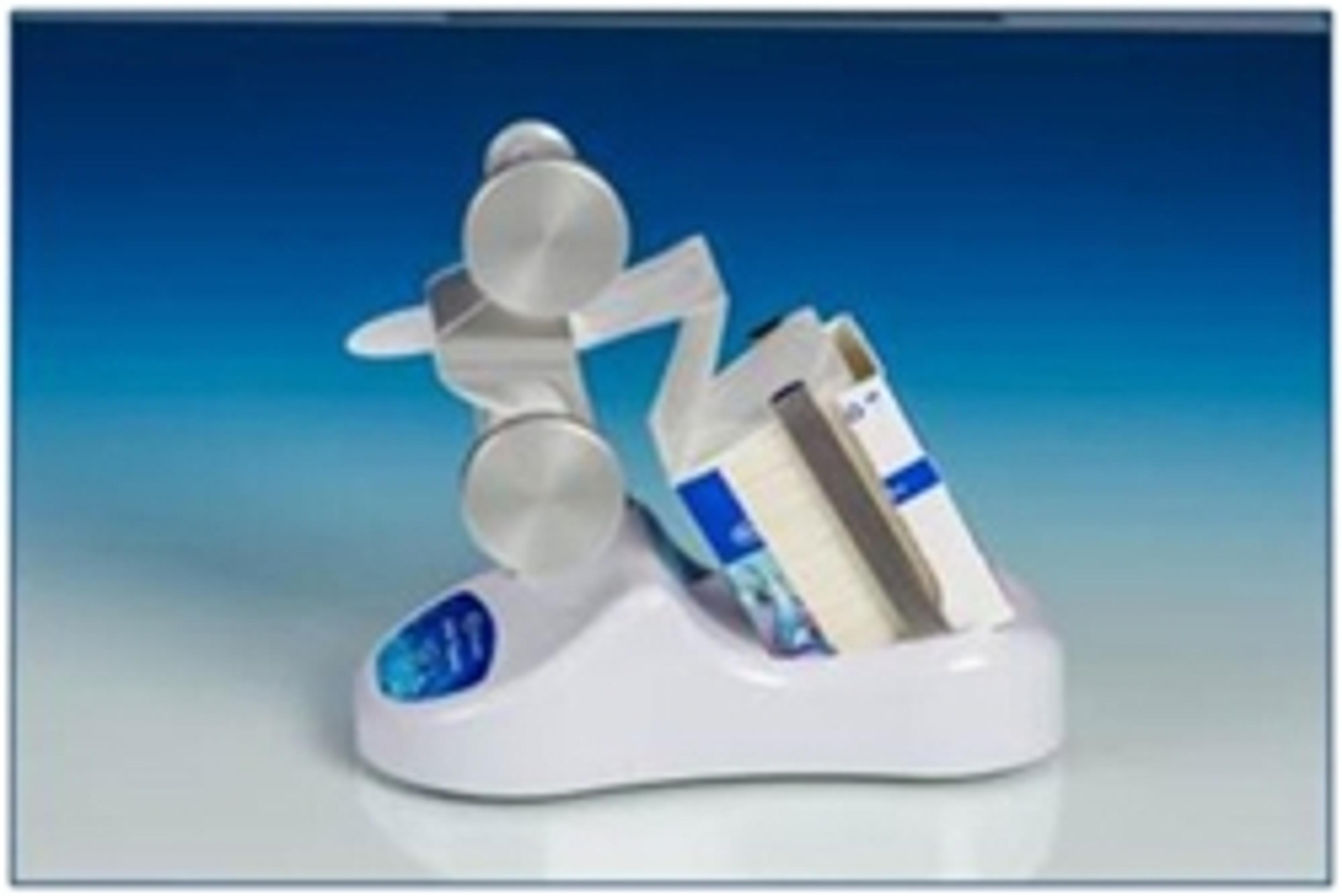
Sentino™ Filter Dispenser
Pall Life Sciences - Laboratory, Food, BeverageSimple design, reliable dispense Features: Easy to load — Simple loading and unloading of refill pack at any point during use No jamming — Guide plates assist loading and keep refill web in alignment during use to avoid jamming of the instrument Soft touch keypad — Aseptically dispense a disc of membrane at the touch of a button Designed to hold 200 membrane discs — Saves time by eliminating interruptions to reload dispenser Compact design — Small footprint frees valuable bench top space and provides flexibility in arranging workspace for optimal efficiency and workflow Miniaturized refill pack — Sized to minimize storage space resulting in less packaging material waste Portable — Use plugged into main power source or charge battery for use anywhere. Indicator lights let you know when the battery charge is running low Easy to clean — Sanitize with standard laboratory disinfectants