
PAA promises flexible, safe, and reliable laboratory automation solutions at SLAS2020
Discover PAA’s new collaborative robot and interactive S-CEL laboratory workcell on booth 1313
22 Jan 2020
Product news
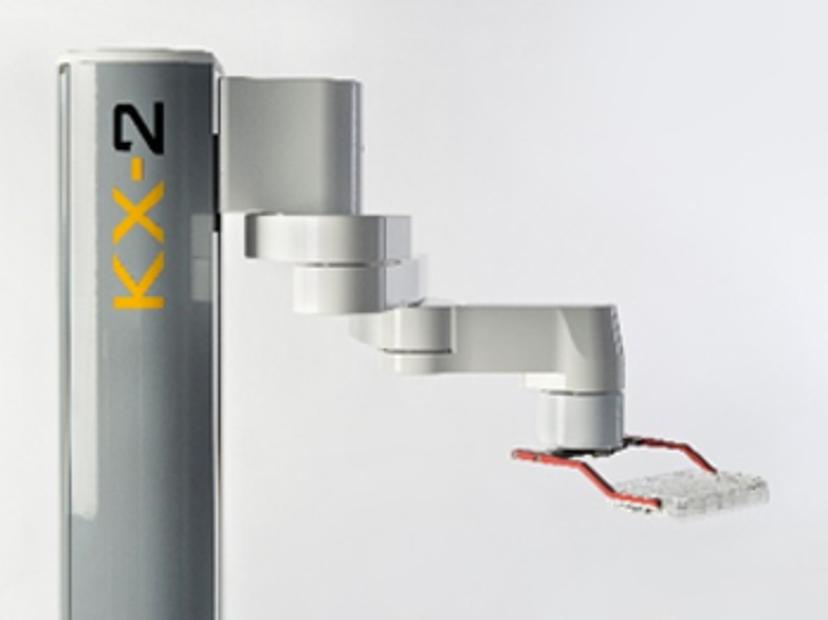
Peak Analysis & Automation (PAA), a global leader at the heart of laboratory automation, will be showcasing its new flexible, safe, and reliable KX-2™ collaborative robot and providing interactive tours of its S-CEL™ laboratory workcell with expert automation support on booth 1313 at SLAS2020 (San Diego, CA, January 25-29th). The company will also have guest speakers from Novartis and Integrated DNA Technologies (IDT) presenting an exhibitor tutorial. The speakers will describe how they have automated and streamlined their R&D and QC processes by integrating multiple instruments in workcells - all managed by PAA’s Overlord™ scheduling and control software.
2019 was a significant year for PAA. The company unveiled new corporate branding in line with its customer-centric approach to enabling faster scientific breakthroughs and expanded its reach in China and Hong Kong to meet growing demand. Now, at SLAS2020, PAA is launching its new KX-2 collaborative robot, designed to meet a need in the market for capable robotics accessible to laboratories of all sizes. The KX-2 robot provides flexible, safe, and reliable automation, combining extensive reach and continuous 360-degree rotation on the shoulder and wrist axes with radial compactness that simplifies instrument placement.
PAA will also be demonstrating the benefits of its S-CEL laboratory workcells at the show with full-function interactive tours of the system led by its automation experts. S-CEL laboratory workcells break the mould of traditional laboratory automation by streamlining equipment utilisation and throughput while reducing the specialist knowledge necessary to operate, all within a safe, contemporary design. These workcells exceed Biosafety Level 2 and provide laminar air flow across the whole system, delivering a clean, controlled environment for supporting, integrating, and automating a multitude of processes and instrumentation from R&D to QC. Visitors to the booth can learn more about these systems, PAA’s personalised and vendor-neutral approach, and receive expert advice on the best solution tailored to their needs.
In addition to showcasing its automation hardware, PAA’s guest speakers from Novartis and IDT will be sharing their experiences of using S-CEL workcells and Overlord software in an exhibitor tutorial, entitled “Overlord: From R&D to QC”, in Room 2 at 14:00 on Tuesday January 28th.
Brian Birdi, head of compound management at Novartis, will highlight how the company is building robotic workcells. This will include the selection and integration of hardware and software, the high-level workflow used to manage the automation, and how Overlord supports the entire workflow. Josh Kurtenbach, automation development manager at IDT, will then describe how the workcells have been used for oligonucleotide quantification and quality control sampling. He will also describe how Overlord enables quick implementation of workcell changes and integration with LIMS.
Caroline Buggisch, marketing manager at PAA, commented: “We are delighted to have Brian and Josh speaking about how they use our technologies in both R&D and QC contexts. The tutorial reflects PAA’s customer-centric approach to automation and we hope Brian and Josh’s experiences provide valuable insights to existing and prospective users. At PAA, we aim to provide the best-possible automation solutions to our customers, delivering a personalised, vendor-neutral service, and support from a large team of experts. The new KX-2 collaborative robot also reflects this philosophy. We saw the need for a capable, flexible, safe, and easy-to-use robot for any laboratory, and so we built one. Combined with our recently launched S-LAB plate handler and established S-CEL workcells, we enable our customers to integrate extensive hardware options into automated workflows managed by our Overlord software.”
Do you use PAA products in your lab? Write a review today for your chance to win a $400 Amazon gift card>>