
Overcoming the Challenges of Environmental Water Analysis using LC, GC and ICP-MS
Learn how the latest high sensitivity instruments are enabling environmental scientists to detect analytes in water at lower concentrations
30 Aug 2016
Editorial article
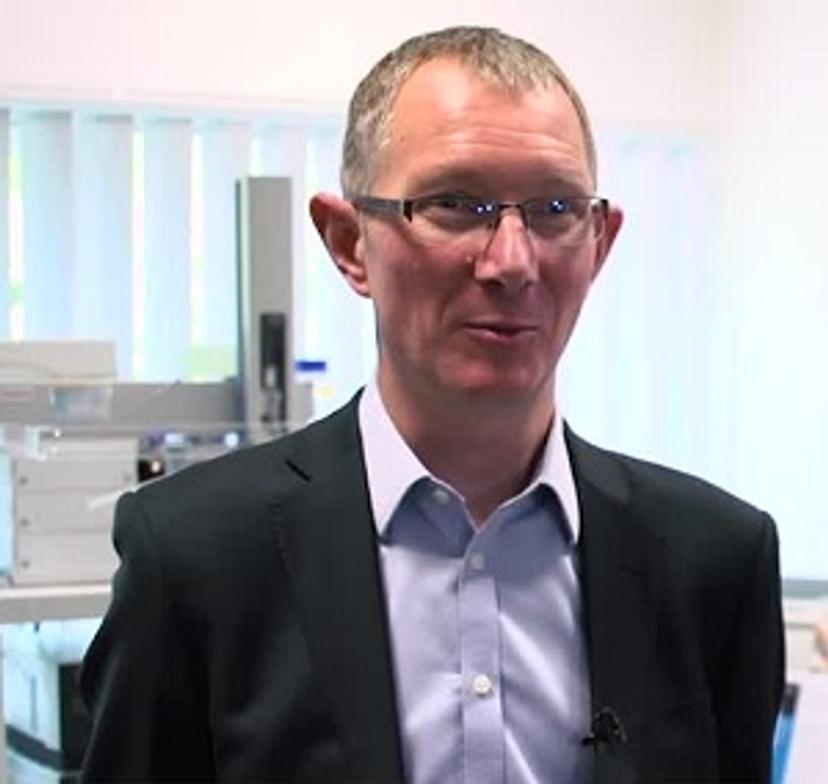
Paul Gribble, Technical Director at ALcontrol Laboratories

ALcontrol Laboratories’ provides environmental, food and oil analysis to support the regulatory and brand commitments of their clients and enable them to protect public health.
The key benefits are the sensitivity but also the robustness and backup support that we get from the manufacturers, both during development and routine work
Paul Gribble ALcontrol Laboratories
Efficiently detecting low concentration analytes in environmental water samples can be a significant challenge for environmental scientists. SelectScience® spoke to Paul Gribble at ALcontrol Laboratories to find out how the latest liquid chromatography, gas chromatography, and inductively coupled plasma mass spectrometry technologies enable him to meet low detection limit requirements for metals and other organic contaminants.
Q: What does your role at ALcontrol Laboratories entail?
A: I work in the environmental sector for ALcontrol Laboratories as the technical director at the UK site. My role is futurescaping what is going to be required for our customers through regulation and also looking at large-scale tender opportunities to ensure we have the right tests available, the right equipment, and we can achieve the LODs (limits of detection) for the requested analytes.
Q: What sort of regulatory work do you conduct?
A: The Water Framework Directive is an important regulatory part of our work. It comes out of Europe and gets pushed down into the member states. As part of that, there is a large-scale monitoring program, CIP2 (Chemical Investigations Program 2), and we are involved in that for a couple of the UK water and sewage companies.
Q: What are the analytes of interest that you investigate?
A: In the CIP2 program, we are looking for a range of metals and also a range of organic contaminants. The organic contaminants in particular have been very taxing as they are at very low detection limit requirements, aligned with current and forthcoming EQS (Environmental Quality Standard) levels.
Q: Could you tell us more about the methods you use for this analysis?
A: There are two distinct phases with the development and methods. One is extraction – making sure that we can get the analytes that we need to look for from the matrix we have; and the other is ensuring that we can detect them at the very low concentrations, using the instrumentation. Typically, that part is more of a challenge than the extraction, as there has not been instrumentation with suitable sensitivity on the market until very recently. So, we have worked with partner companies, such as Thermo Fisher Scientific, to ensure that we have the most up-to-date and sensitive equipment, to achieve what is required.
Q: Which technologies enable you to perform your analysis?
A: For organic analytes, we are primarily using LC triple quadrupole mass spectrometers and GC triple quadrupole mass spectrometers for the analysis and for metals, we’re primarily using ICP-MS. They are all brand new instruments, purchased within the last twelve months and they are all the latest versions of the instrumentation from the manufacturers.
Q: What are the benefits to using this technology?
A: The key benefits are the sensitivity but also the robustness and backup support that we get from the manufacturers, both during development and routine work. A lot of the samples that we get for the CIP2 program are river samples that vary in composition depending on which river they are from and what time of year they are collected. After heavy rainfall events there is a lot of sediment in the samples, so we have to extract the whole sample. As a result, we may also extract a lot of interferences, so the instrumentation has to be very robust to cope with those. This allows us to get an accurate quantitation of the results but also ensures that results are robust and that instruments maintain consistency on a day-to-day basis.
Q: How do you see trends in water analysis affecting the future of this field? What is the future for this field of work?
A: I think overall, there will be a trend for pushing down detection limits and faster turnaround of analysis. The priority substance directive, from 2013, states that the next branches of analytes we will need to look at are from the pharmaceutical base. This will change the aspect of what is looked at and also how the framework and environmental control are perceived. As it is changing from industrial chemicals to chemicals that people take themselves, such as medication to improve their quality of life, there will be a shift in emphasis. I also think that there will be a shift in public perception, which may well lead to changes in behaviors and larger screening programs too.
Watch our exclusive interview with Paul here.
What products do you use for your water analysis? Review them now to help other scientists around the world and for the chance to win great prizes!
Related products
Request Quote for All Products
Thermo Scientific™ Q Exactive™ GC Orbitrap™ GC-MS/MS System
Thermo Fisher ScientificThe Thermo Scientific™ Q Exactive™ GC system is the first-ever combination of high resolution gas chromatography with high-resolution/accurate-mass (HR/AM) Orbitrap detection for the most comprehensive sample characterization. This easy-to-use system provides the most comprehensive characterization of samples in a single analysis for the highest confidence in compound discovery, identification, and quantitation. Building upon the flexible modularity of the Thermo Scientific™ TRACE™ 1300 Series GC, including user-exchangeable injectors and detectors, the Q Exactive GC system has the quantitative power of a GC triple quadrupole MS combined with the high precision, full scan high-resolution/accurate-mass capability that only Orbitrap technology can offer. Key Features: Advanced quadrupole technology (AQT) for high transmission of selected masses Resolving power up to 120,000 at m/z 200 Part-per-trillion-level sensitivity Thermo Scientific™ Extractabrite™ ion source for robust, rugged electron impact (EI) and chemical ionization (CI) performance Curved linear C-trap for precise ion injection HCD collision cell for higher energy collisional dissociation provides MS/MS ion characterization Intelligent identification software elucidates the nature of each injected sample. Applications: Untargeted and targeted metabolomics Food and beverage Industrial analyses Environmental Pharmaceutical Clinical and toxicology