Our Mission to Make Science More Sustainable
How Manchester University, UK, is taking a front seat in the drive to protect the planet more effectively from the impact of scientific waste
12 Jun 2018
Editorial article

The University of Manchester is the largest physically extant university in the UK. At nearly 200 years old, and with over 45,000 students and staff, it’s no surprise that it has established itself as a world-leading research institution. Did you know it was where graphene was first discovered?
Behind every powerful research centre, however, is a hidden consumable catch: millions of tons of lab disposables damaging the environment year on year. In an endeavour to lessen the problem, Manchester University is at the forefront of an environmental initiative in scientific research. In this fascinating interview with Geoff Blunt, technical operations manager of the Faculty of Biology, Medicine and Health, we discover more.
Bridging the gap between bench and bedside
The Faculty of Biology, Medicine and Health integrates discovery biology with clinical applications into one large-scale collaborative research powerhouse that is making waves within the field of molecular and translational research. Set up in 2016, the faculty now encompasses over 3,000 staff members working across multiple research hubs, such as the Stoller Biomarker Discovery Centre.
Geoff Blunt has spent 18 years working for the university, making a shift from research seven years ago towards managing faculty stores. This was followed by a recent move into technical operations where he is involved in leveraging the university’s resources, including lab equipment and consumables, to maximize their research potential. “Our faculty has an annual expenditure on biological consumables alone of between 40 and 80 million pounds, so there’s a fair amount going on,” says Blunt, who splits the bulk of his time between labs at Wythenshawe Hospital, Salford Hospital, and the Manchester Royal Infirmary.
“It’s really fulfilling, I feel like I’m directly impacting research across the division. The Biomarker Centre, for example, tests the efficacy of new cancer drugs using state-of-the-art mass spectrometry systems, and the Brain Bank at Salford Hospital facilitates studies into the progression of neurological conditions at the molecular level."
The consumable catch
When we think of landfills we think of coffee cups and plastic bags, rather than pipette tips and microcentrifuge tubes. But when you consider the volume of disposables in your lab and extrapolate that to your entire institute, country, even worldwide, it quickly becomes clear that the size of the issue is incalculable.
As Blunt describes, the very nature of basic and translational research is disposable, particularly when it comes to assays highly sensitive to contamination. On average, technical spaces such as laboratories consume as much as five times more energy per square foot than a typical office. “You don’t have to work in research for very long to appreciate the enormous amounts of disposal plastic that accumulates. Best-case scenario it will be burnt and made into fuel and worst-case scenario it goes into landfill for subsequent generations to sort out. The scale of the problem is overwhelming.”
The scale of the problem is overwhelming.
Sustainable science
Manchester University is dedicated to making a difference for the future, by guiding its research activities through commitment to sustainability. In fact, environmental sustainability forms one of five strategic priorities that sits within its 2020 agenda. One approach to adopting sustainable research has been by increasing resource efficiency within labs.
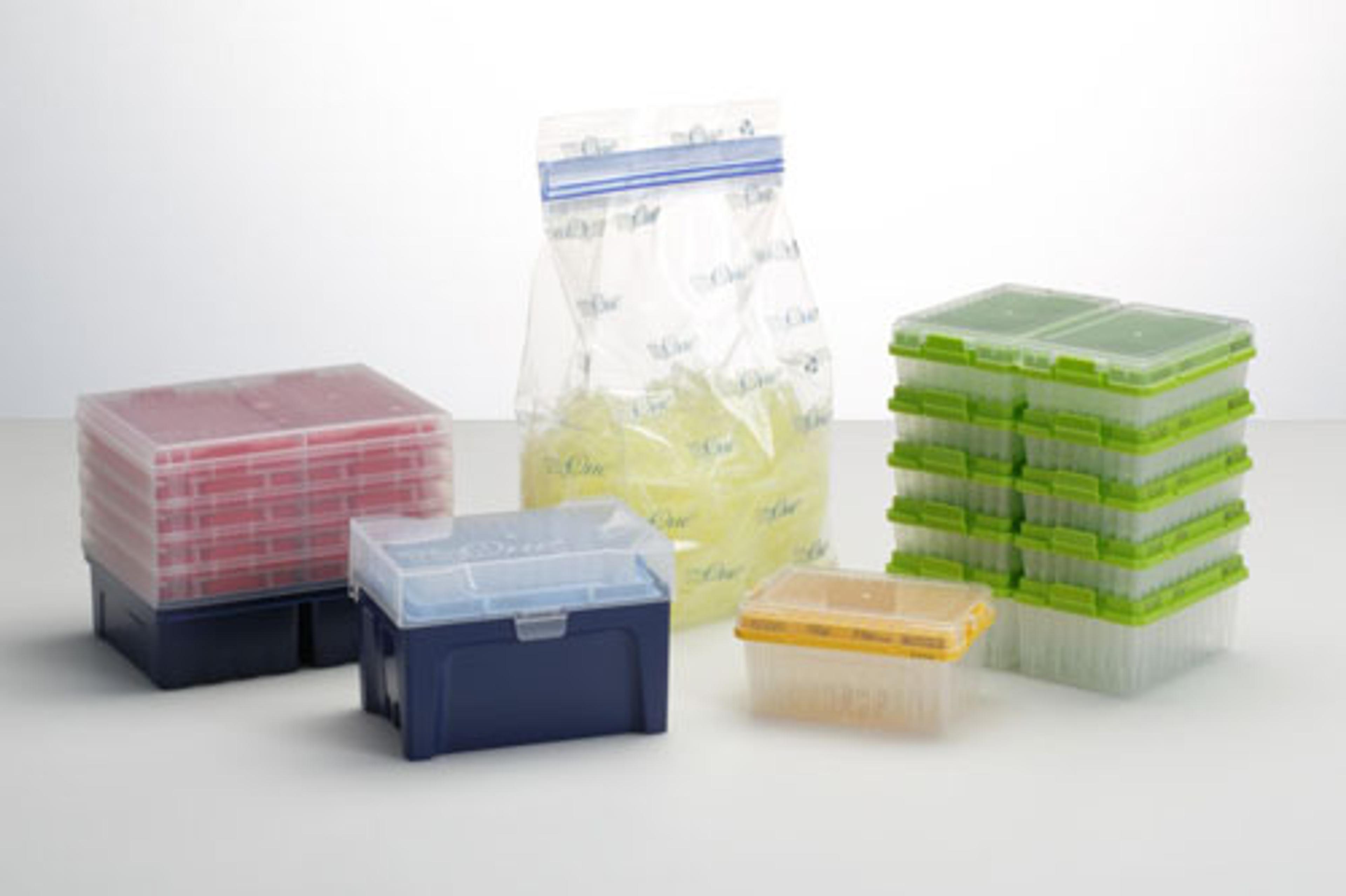
The key to this is working with suppliers that engage in strategies to reduce environmental impact. “Around 90 percent of our tip sales go to STARLAB, and this is because they provide an awful lot of services around their tip provision, with a particularly honourable approach towards the re-use and recycling of their consumables,” says Blunt. “Tip inserts are separated, bagged, and assembled for collection at the university and recycled into new products. STARLAB were also one of the first companies to produce racking systems that eliminate ancillary plasticware waste, like the boxes and the lids that you put tips in for autoclaving.”
Fostering innovation with environmental integrity
STARLAB’s vision aligns so well with Manchester University that it has been an embedded supplier of laboratory consumables since 2001.
“They have also made sure they are bettering the technology of other providers,” explains Blunt. “Sometimes it’s the simplest thing that makes a huge difference to workflow efficiencies in the lab, such as changing tip insert colours to make them volume specific. This is especially useful when you have new people or students in the lab. It really shows that they have that connection to the lab.”
On top of all that, STARLAB provides a comprehensive pipette calibration service, as well as offering regular training and extremely attentive customer service. “If we ever have any queries our rep will turn up before the end of the day and address anyone’s concerns; that’s the kind of hands-on service that we are provided with,” says Blunt.
Clearly, Manchester University has taken a bold step in moving to address the growing concerns of sustainability in science. By adopting similar partnerships across the industry, scientists can begin to foster pioneering research alongside minimal environmental distress.