
ORTHO Optix™ Reader now available in CE Mark countries
3 Dec 2020Industry news
Ortho Clinical Diagnostics, a global leader of in vitro diagnostics dedicated to improving and saving lives through innovative laboratory solutions, has announced the CE Mark availability of the semi-automated ORTHO Optix™ Reader, which allows lower-volume transfusion labs to elevate their standard of patient care with the quality of results expected of an automated platform.
The ORTHO Optix Reader's high-resolution camera captures color, grayscale, front and back images of each test without operator intervention, which provides objective data for automated results interpretation and eliminates the subjectivity and discrepancies of multiple operators reviewing images by eye.
When paired with the ORTHO™ Workstation, the ORTHO Optix Reader provides a complete semi-automated testing platform for transfusion labs with low- to mid-volume throughput. Because the ORTHO Optix Reader has been shown to deliver 99.9% concordance1 with the fully automated ORTHO VISION® Analyzer, it also offers larger volume labs and health care networks a way to back-up or scale up their operations without having to invest in an additional full-automation analyzer. The concordant and high-resolution images of the ORTHO Optix Reader also help to support the technologist during remote review of results from across the laboratory.
"The ORTHO Optix Reader allows transfusion medicine labs with smaller testing volumes the same high-quality, consistent results demonstrated from the award-winning, fully automated ORTHO VISION Analyzer," said Bob Stowers, Ortho's head of transfusion medicine product portfolio. "With the ORTHO Optix Reader now included in Ortho's comprehensive portfolio of automated and semi-automated solutions, labs of all sizes can customize Ortho's solutions to optimize their resources without compromising quality and accuracy."
The ORTHO Optix Reader leverages the same proven ORTHO BioVue® System Column Agglutination Technology as the ORTHO VISION Analyzer and a comprehensive testing menu including antibody panels, selected cells and dilution series.
When connected to the customer's LIS, column grades and images can be automatically sent for long-term retention of result interpretations, therefore reducing and/or eliminating the need for manual documentation of results. The system audit log and reporting module enhances traceability to help labs stay compliant with accreditations and regulations. It also includes QC management capabilities along with assay and reagent tracking to help standardize lab practices.
The ORTHO Optix Reader is supported by Ortho Care™, Ortho's award-winning, holistic service and support solution, and is now available in countries that accept CE Mark.
1 For direct and indirect antiglobulin testing, as determined by External Validation Testing using BioVue® Technology. The acceptance criteria for concordance for direct and indirect antiglobulin was ≥98.0% with a lower bound 95% CI of 99.7%.
SOURCE Ortho Clinical Diagnostics
Want more of the latest science news straight to your inbox? Become a SelectScience member for free today>>
Related products
Request Quote for All Products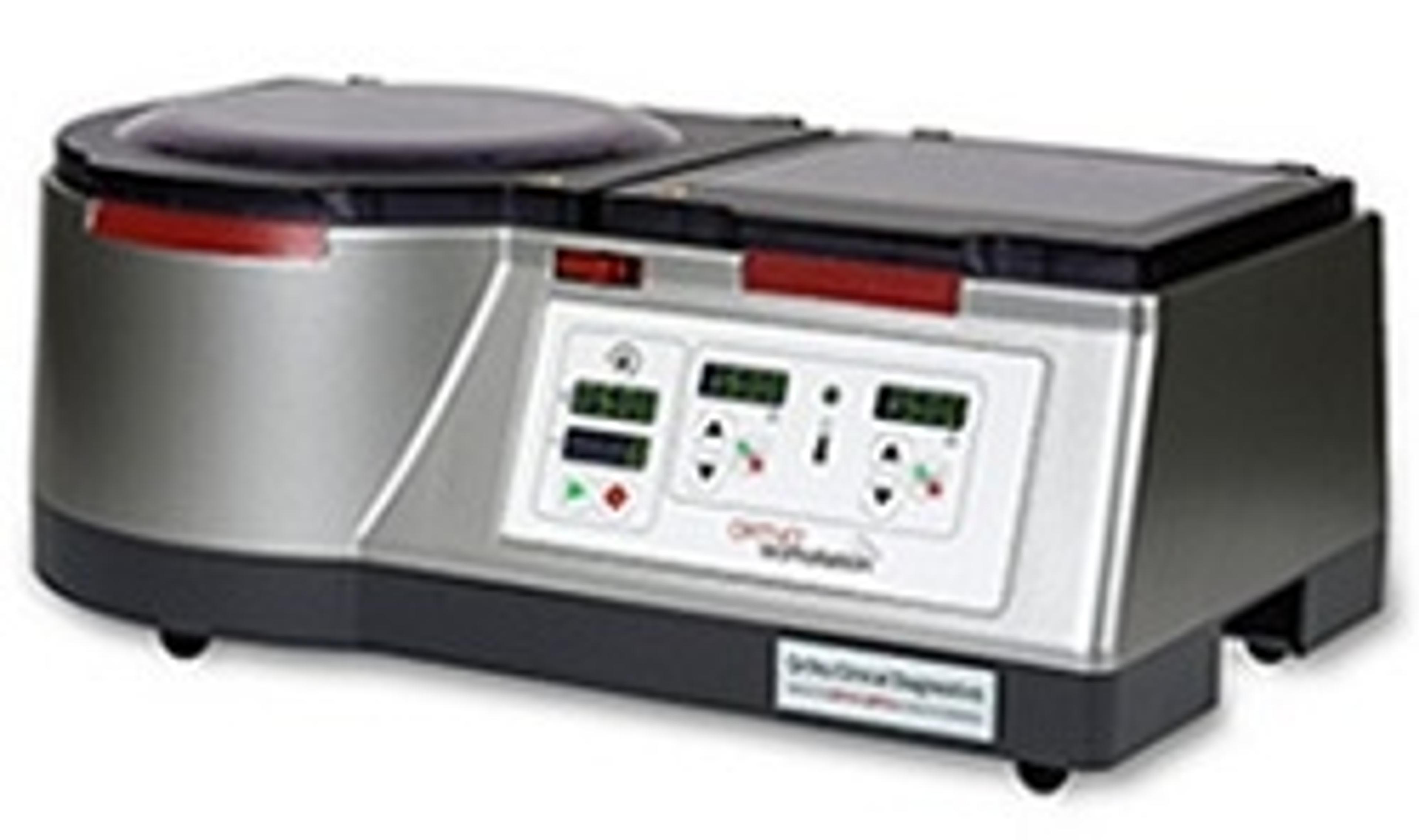
ORTHO™ Workstation
Ortho Clinical DiagnosticsPrecision and accuracy are critical in labs of any size. The ORTHO™ Workstation is the only compact 2-in-1 blood testing system with reliable ID-Micro Typing System™ (ID-MTS™) Gel Column Agglutination Technology (CAT). It’s a system engineered to help ensure the accuracy your patients deserve—with the convenience and ease of use your lab needs.